With the exponential adoption of artificial intelligence into everyday lives, educators around the globe are getting worried about the technology disrupting classrooms.
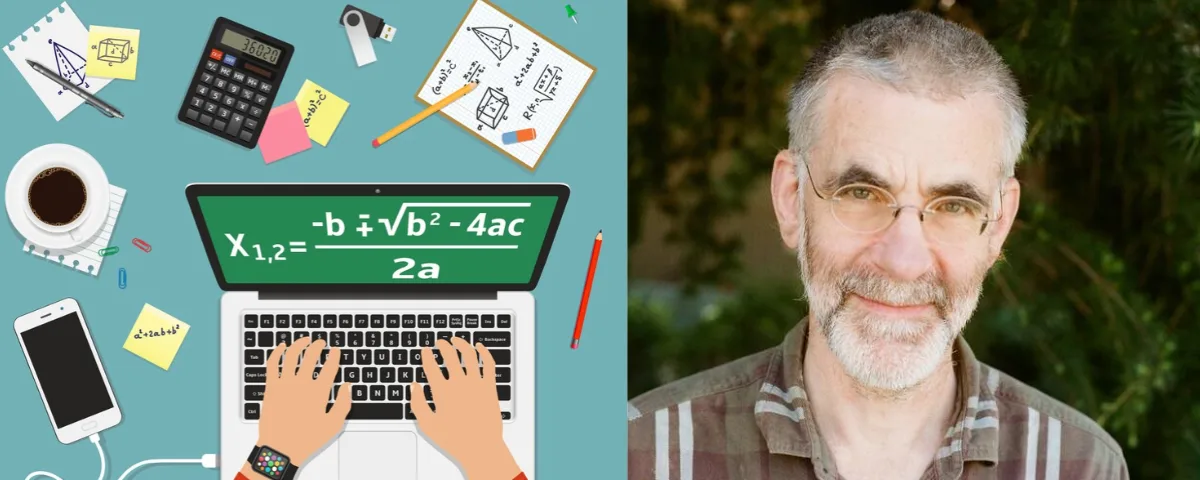
A UC Berkeley Mathematics professor and field medalist Richard Borcherds recently revealed that he has stopped grading homework of his students after realizing that they are using AI to consistently receive top scores.
In an interview with The Daily Californian, Professor Richard Borcherds says that he sees “no point” in paying professors to grade students’ homework for correction given the level to which AI has been embedded in modern education.
The professor informed that currently he only grades on completion if a student hands in their homework, while admitting that he no longer knows whether to encourage students to get into mathematics research.
His comments come in the context of recent news of OpenAI claiming that an internal model had resolved more than 100 long-standing open mathematical problems, including the Navier–Stokes Millennium Prize problem.
The company released a broad set of new mathematical results, with 722 documents spanning 372 groups of results, including lean ( a programming language) formalizations of proofs and reasoning details, claiming they were generated by a new internal frontier AI model, and published them on GitHub.
It had let to a fierce protest by The Association for Human Mathematics (AHM) , which urged mathematicians to “discontinue their work with OpenAI” , accusing the company of ignoring what it called the central premise of the group’s position and said this demonstrated a “total disregard for the norms of scientific research.”
Meanwhile, UC Berkeley Maths professor Borcherds said he currently grades on completion if a student hands in their homework.
He admitted that it is “not a very good system,” but at the moment, he has no alternative.
Borcherds stated he no longer knows whether to encourage students to go into the math department, as it seemed five years ago that being a mathematician was one of the safest careers from the AI boom.
“I have no idea what to advise. I even asked ChatGPT this exact question, and even ChatGPT said it didn’t have any idea what was going to happen,” Borcherds said to The Daily Californian
He described a plentiful amount of “inertia” in the academic system and said he wouldn’t be surprised if things stayed the same in the math department for a couple years despite AI developments.
Borcherds’ comments come in the wake of multiple study reports pointing towards the growing menace of students using AI chatbots to cheat in homework and exams.
A recent study “AI Use in Schools: Taking Action Now” conducted by an Australian education research group, warns about the negative impact of AI on students’ learning in schools.
The researchers surveyed 3,377 teachers and 766 school leaders in New South Wales, Australia and found that around half of secondary teachers reported students using AI for schoolwork. More specifically, 56% of senior secondary teachers and 43% of lower secondary teachers confirmed student AI use with the problem most acute in the final years of schooling where results carry the greatest weight.
Another report “Gen AI (Generative AI) use and misuse call for assessment reform in higher education” analysed responses from more than 95,000 undergraduate students across 20 major public research-intensive universities in the United States and found that 37.1 percent of students reported using generative AI tools almost monthly while 9.3 percent admitted to using it for cheating.
Also Read: Five AI Risks to Mathematics Identified by 16 Researchers From 15 Universities