Mathematicians across the world have warned that the growing use of artificial intelligence in the field of mathematics is putting its fundamental values under threat. They have raised concerns over some of the challenges such as unreliable mathematical proofs, lack of citation, research bias posed by artificial intelligence in the field.
This concern has led to the drafting of a declaration called “Leiden Declaration on Artificial Intelligence and Mathematics” by a working group of sixteen researchers from fifteen universities across the world with an aim to safeguard the core values of mathematics in the age of AI.
The declaration has since attracted 1,900 signatories from universities and research institutions worldwide.
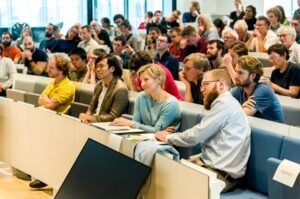
The idea for a declaration emerged during the NIAS-Lorentz Workshop on Mechanization and Mathematical Research held in September 2025 in Leiden, which discussed the implications of rapid developments in technology for the practice of mathematics.
The event brought together around sixty researchers from ten countries, including mathematicians, computer scientists, and scholars from the humanities and social sciences and also included a public symposium.
“Researchers already use AI to help write papers, generate proofs and assist in peer review. The challenge is to ensure that the technology benefits rather than irreparably harms the discipline,” the authors of the declaration said.
The declaration, which is officially supported by the International Mathematical Union (IMU), does not call for AI to be banned from mathematics, but instead urges clear community norms for its use.
“We take the rapid development and impact of AI on our discipline very seriously: It opens new and exciting opportunities, but also raises questions that cannot be left unexamined,” said Ulrike Tillmann, vice-president, IMU.
“By endorsing the declaration, the IMU affirms that the future of mathematical research must be guided by human judgment, fair and transparent practices, and the shared values of the global mathematical community. Mathematics is, and should always remain, a profoundly human endeavour,” she further expressed.
Peter Scholze, director of the Max Planck Institute for Mathematics and Fields Medal laureate, called it “a wonderful declaration, coming at the right time,” adding that “mathematics can only thrive in a community of human mathematicians.” Terence Tao, professor at the University of California, Los Angeles, said the declaration was the result of “months of community input” and that he “wholeheartedly endorses the statements and recommendations.”
The declaration has identified five threats which AI poses to mathematics.
Unreliable Results
According to the declaration, mathematics is built on rigorous proofs that provide clear understanding. However, AI can produce proofs that look convincing but contain almost invisible errors.
‘Inaccurate AI-generated drafts are cheap to produce, and there is a risk of cluttering the literature with claimed results that are simply wrong. These errors are then likely to propagate as new results are built on faulty foundations,’ said Leslie Ann Goldberg, head of computer science at the University of Oxford.
Lack of Proper Attribution and Copyright Violations
AI models often produce results without citing the human work they build on. This raises questions about recognition and intellectual property.
Many current models are also built on data obtained by exploiting licenses and access arrangements that were not made with artificial intelligence in mind, or by simply violating copyright protections.
Dependence and Inequality
The declaration highlighted that there is a risk that mathematicians will soon depend on access to the latest proprietary AI technology and expensive computational resources in order to produce competitive results and this can lead to inequality between researchers.
Overhyping of Results
Press releases and blogs often make AI claims without proper scientific scrutiny. This leads to overestimating AI’s capabilities and underestimating human contributions. This practice seeks publicity for new results on market timelines before the accepted processes of community evaluation in mathematics can take place.
Loss of Autonomy
The declaration warns that technical feasibility or commercial interests shape research directions, and mathematics risks losing autonomy in setting its research agenda. The declaration also flags that AI trained on mathematical theorem proving is being deployed in warfare and mass surveillance. “By failing to act, we run the risk of becoming complicit in the support of technologies which threaten much more than the practice of mathematics,” the declaration states.
The declaration has put forward some of the suggestions aimed at reducing these risks. “Researchers should clearly disclose which AI tools, prompts, and methods they have used. AI should be treated as a tool rather than an author, with human researchers remaining fully responsible, including for proper attribution,” the declaration states.
The authors have asked mathematicians to engage in the public debate and stay informed about emerging technologies, and to carefully consider the tools they use and their ethical implications.
According to the declaration, governments should regulate the AI industry and invest in public alternatives to commercial technologies, so that power is not concentrated in private hands. The declaration requests collaborations with industry to abide by the same standards expected of academic research.
Although the declaration focuses on mathematics, the authors flagged that similar issues arise in other academic fields and creative industries. The declaration maintained that although AI offers major opportunities, but without deliberate choices and shared responsibility, it may place the foundations of science under pressure.