Huawei has announced a new chip design principle called the Tau Scaling Law, which it says can improve chip performance without depending only on smaller transistors. The announcement paves the way for China to find another route around the advanced chip scarcity that has kept NVIDIA at the centre of the global AI race.
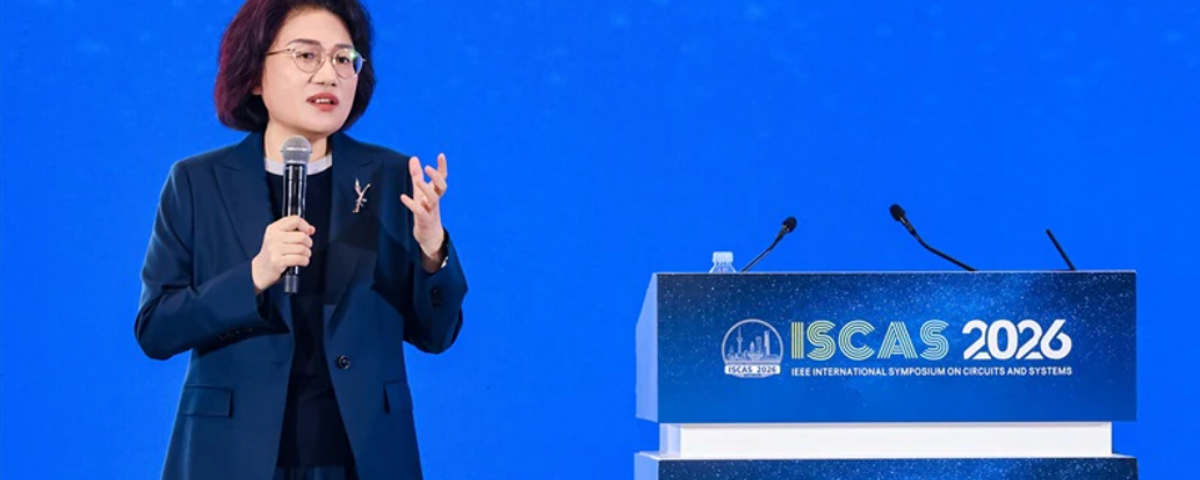
At the 2026 IEEE International Symposium on Circuits and Systems in Shanghai on May 25, Huawei’s He Tingbo presented what the company calls the Tau Scaling Law. Huawei said the principle replaces traditional geometric scaling with time scaling as a way to guide future semiconductor and electronic system design.
The announcement matters because the global AI industry is still built around access to advanced chips. NVIDIA remains the company most closely associated with that market, especially through its data center GPUs used for training and running AI models. In November 2025, NVIDIA reported record quarterly revenue of USD 57 billion, with data center revenue of USD 51.2 billion.
Huawei is not claiming that Tau Scaling immediately replaces NVIDIA’s most advanced AI systems. What it is claiming is more specific. The company said Tau Scaling, along with technologies such as LogicFolding, can reduce signal propagation delay, improve transistor density, and raise system performance without depending only on the old path of shrinking transistors.
The AI chip race, thus, is no longer only about who has the smallest process node anymore. It now is also about who can get more performance out of constrained hardware, tighter design, and system level optimisation. Huawei’s announcement comes at a time when US export controls have limited China’s access to advanced AI chips.
NVIDIA has itself acknowledged the scale of that pressure. In its fiscal 2026 filings, the company said it was effectively foreclosed from competing in China’s data center compute market under the current rules and geopolitical landscape.
With the Huawei announcement, China does not have to wait for unrestricted access to the most advanced foreign chips to keep building AI systems. The company is arguing that part of the answer can come from changing how chips are designed, not only from making transistors smaller.
Huawei said it has designed and mass produced 381 chips over the past six years based on the Tau Scaling Law. It also said Kirin chips scheduled for fall 2026 will be the first to adopt LogicFolding architecture, and claimed that by 2031, its high end chips based on Tau Scaling could reach transistor density equivalent to 1.4 nm processes.
However, these claims remain company claims and the real test will be whether Huawei can turn the design principle into competitive AI compute at scale.
For now, the announcement shows how Huawei is trying to answer NVIDIA’s dominance from a different route. Not by saying it has matched NVIDIA chip for chip, but by arguing that AI compute scarcity can be attacked through design, architecture, and system optimisation.
Also Read: Why Taiwan Still Sits at the Center of the US-China AI Race