Journalism begins where hype ends

,,

The use of AI is never a purely technical matter: when it enters processes that affect people’s lives, it touches on rights, opportunities, status and freedom"

—Pope Leo XIV

Stanford Study Uncovers Flaws in AI Chatbots Answering News Questions

AI chatbots are increasingly becoming a gateway to news, raising questions about accuracy and reliability.

A Stanford study found that while leading AI chatbots scored above 90% on many real-time news questions, those results masked significant weaknesses in regional performance, source attribution and responses to flawed prompts.

Anthropic Expands Claude Partner Ecosystem as 40,000 Firms Apply

Illustration of collaboration between Anthropic and consulting partners supporting enterprise Claude deployments.

Anthropic has launched the Services Track and Claude Partner Hub as it seeks to scale enterprise adoption of Claude through consulting and implementation partners.

Five AI Risks to Mathematics Identified by 16 Researchers From 15 Universities

Researchers at a Leiden workshop that helped shape the Leiden Declaration on AI and mathematics.Or slightly sharper:

The Leiden Declaration on Artificial Intelligence and Mathematics warns that AI-generated proofs could erode trust in mathematical research by producing convincing but difficult-to-detect errors.

Anthropic Creates AI and Rule of Law Team, Opens First Role

Staff work inside an Anthropic office. The company has launched an AI and Rule of Law team and opened its first role.

Anthropic has formed a dedicated AI and Rule of Law team to study how advanced AI systems could affect executive power, courts, elections, and other democratic institutions.

OpenAI Launches Biodefense Program for Public Health and Pandemic Preparedness

DNA strands symbolize the biological research and biosecurity applications supported by OpenAI's Rosalind Biodefense program.

OpenAI has launched Rosalind Biodefense, a program that aims to help developers build biodefense and pandemic-preparedness tools using its GPT-Rosalind AI model. The company is also expanding access for select public-health and biodefense partners.

NVIDIA Launches Open-Source Physical AI Skills and Tools

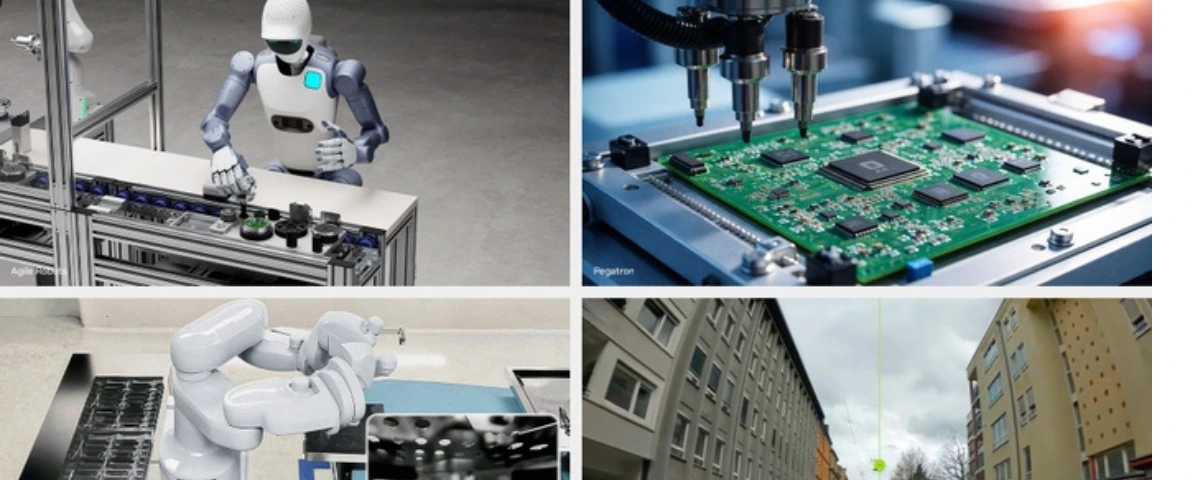
NVIDIA showcased physical AI applications spanning robotics, manufacturing, computer vision and digital twin simulation as part of its new open-source agent tools and skills announcement.

Nvidia has released a collection of open-source physical AI skills and tools that enable coding agents to automate workflows across robotics, autonomous vehicles, vision AI and industrial digital twins.

University of Chicago Rolls Out Claude Enterprise Campus-Wide, Faces Backlash

University of Chicago has partnered with Anthropic to provide Claude Enterprise access to faculty, staff and students across campus.

The University of Chicago is rolling out Anthropic’s Claude Enterprise campus-wide, drawing criticism from some academics over the growing use of AI in higher education.

Blackstone-Backed AirTrunk Bets $30 Billion on India’s Data Centre Growth

AirTrunk plans to invest $30 billion in India to develop 5GW of data centre capacity by 2030.

Blackstone-backed Australian data centre company AirTrunk has announced plans to invest $30 billion to develop 5 gigawatts of data centre capacity in India by 2030, one of the largest proposed digital infrastructure commitments in the country.

ADNOC Deploys AI Inspection Robot as Physical AI Expands Into Oil and Gas Industry

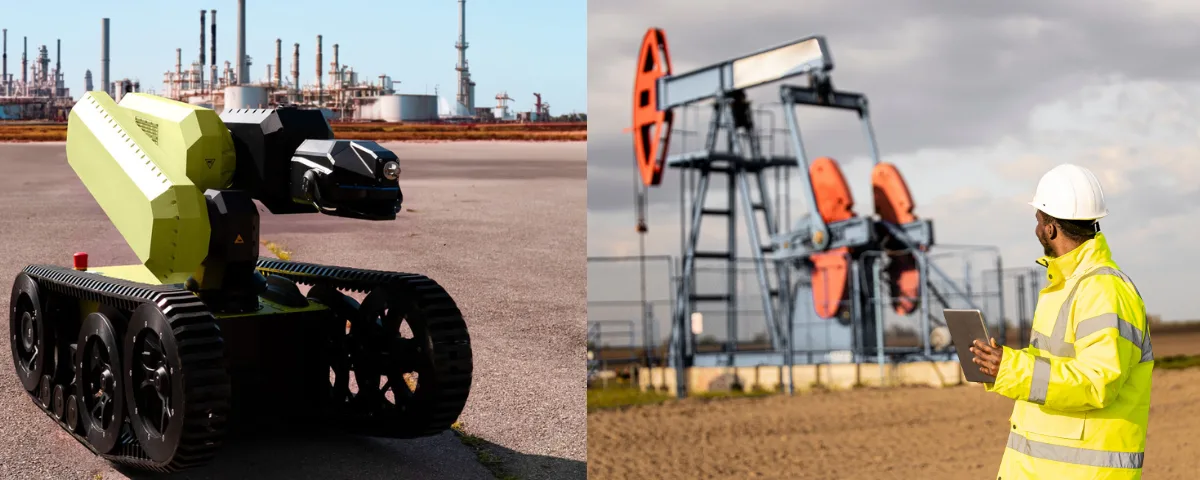
ADNOC's deployment of an AI-powered inspection robot highlights the growing role of autonomous robotics in improving safety and operational efficiency across the oil and gas sector.

Abu Dhabi National Oil Company (ADNOC), one of the world’s largest energy companies, has deployed an AI-powered heavy-duty inspection robot at its Taweelah Gas Compression Plant to conduct autonomous inspections and industrial safety.

NYT Publisher: ‘Tech Giants Strip-Mine Original Journalism, Repackage Stolen Goods as Their Own’

At the WAN-IFRA World News Media Congress, New York Times publisher A.G. Sulzberger warned that AI companies' use of publishers' content without permission threatens the future of independent journalism.

New York Times Publisher A.G. Sulzberger warned that Artificial Intelligence (AI) companies are committing a “brazen theft of intellectual property at an unprecedented scale,” siphoning off the revenue news organizations need to fund the difficult work of original reporting, pushing the world toward a future with “fewer and fewer journalists.”