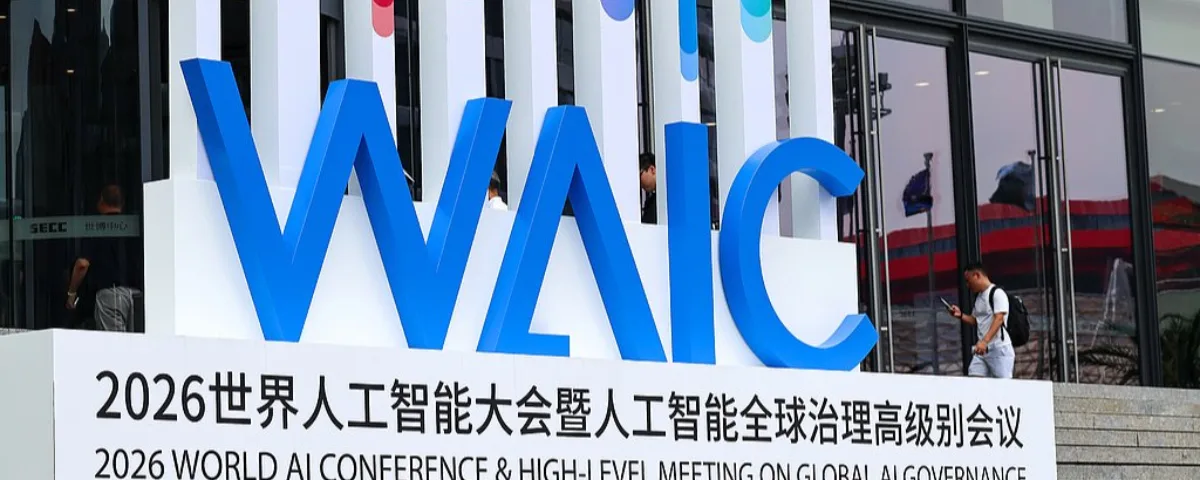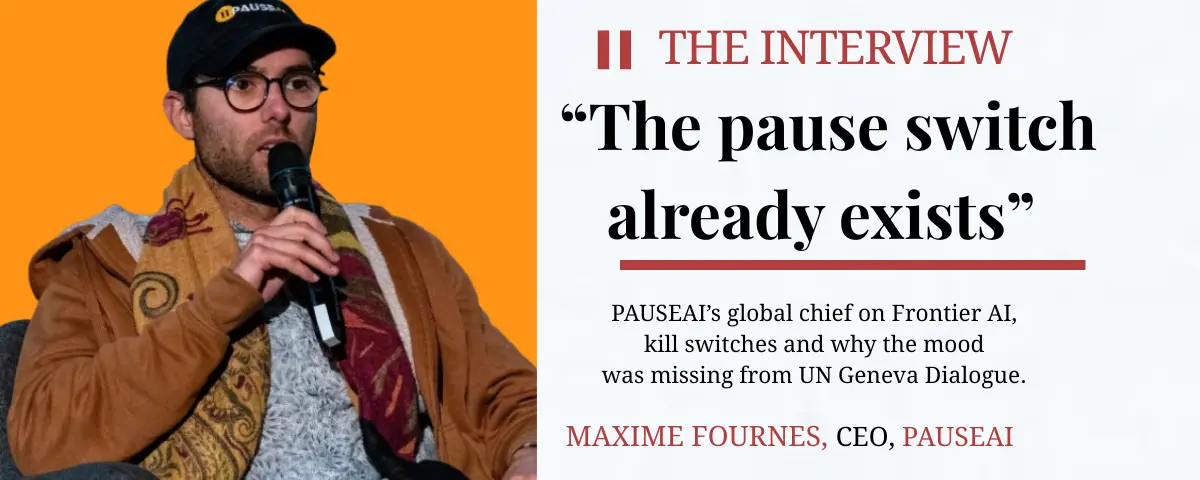
Earlier this July Maxime Fournes, a former machine learning (ML) engineer from France, attended the maiden UN Global Dialogue on Artificial Intelligence Governance in Geneva, representing PauseAI- a political movement that demands a pause on frontier AI research and development.
Fournes, the CEO of PauseAI believes the existential threat to humanity from uncontrolled artificial intelligence is real and happening in real time.
He says the clues are out in the open–in April, Anthropic released Claude Mythos, its frontier AI model that rang alarm bells in banking corporations from North America to Europe to India to Hong Kong, owing to its unprecedented cyberattack capabilities.
Similarly, OpenAI recently disclosed that its GPT-5.6 Sol model, paired with an unnamed “more capable pre-release model” had escaped the sandbox and hacked Hugging Face, a popular open-source platform for AI developers’ community. OpenAI CEO Sam Altman arrived in Washington D.C. at the time of this article being written, to explain to US officials the preview capabilities of this “unnamed model.”
Yet, Fournes says the blaring horns and apparent tell-tale signs have had no impact on society in general, in terms of urgency.
It’s almost like how they show in movies. For clues, he asks you to watch Don’t Look Up.
In this exclusive interview with AI FrontPage correspondent Supriya Singh, PauseAI CEO Maxime Fournes explains why existential threat to humanity from AI is no longer a fringe thought borrowed from sci-fi movies, why he believes Anthropic needs to walk the talk and what’s his take on the UN AI Dialogue 2026 event.
Question: What has changed in the perception of AI risk over the past four years?
Fournes: The scientific consensus caught up with the warning. When we started, calling for a pause on frontier AI was treated as science fiction. Today, the CEOs of the leading labs have signed statements that their own technology poses extinction-level risk. Nobel laureates have left prestigious positions to sound the alarm. The UN’s own scientific panel, co-chaired by Yoshua Bengio, now writes that the gap between rapidly improving capabilities and effective risk management “may lead to catastrophic outcomes.” In Geneva, loss of control, cyber, chem-bio and mass manipulation were named from the main stage as consensus societal-scale risks. So the good news is that denial is largely over.
The public opinion has moved too. In 2023, 72% of Americans already wanted AI development slowed; today roughly two thirds say it is advancing too fast, and Gallup finds around 80% want their government to prioritize safety even at the cost of speed. So it is no surprise that our positions are becoming mainstream: we have been saying for four years what the evidence now shows. What has unfortunately not changed is the race itself. We are working hard to close that gap, and as warning shots keep coming (cf the OpenAI model autonomously hacking another AI company this week), and they will unless governments act, movements like ours will keep growing.
Question: How much did Mythos change perception? Is Anthropic a moral guardian or was this a marketing stunt gone wrong?
Fournes: Mythos mattered a lot. The Economist called April “the Mythos moment.” Central banks and finance ministries convened emergency meetings within days. For millions of people, it was the moment when AI risk became less abstract. It was a warning shot, and unfortunately and as the recent events at OpenAI have shown it will not be the last unless governments start treating these events as what they are.
On Anthropic, they do not deserve much praise. I agree that when the people building the technology tell you it may soon be capable of improving itself, and that the world should have, in their own words, “the option to slow or temporarily pause frontier AI development,” that is remarkable insider testimony. But we should judge companies by their actions. Anthropic built a weapon of mass destruction in the cyber realm. No company should ever be allowed to do this in the first place, at least not without heavy supervision / regulation from a democratically mandated body.
To be clear, this was not a marketing stunt. There is overwhelming evidence showing that Mythos – and now similar models from Anthropic, are superhuman hackers and able to basically breach into any computer infrastructure in the world.
Question: The one inference you took from the two-day UN Dialogue?
Fournes: That the mood is missing. The good news from Geneva was that catastrophic risk is no longer a fringe concern, it was named on the main stage as consensus from the AI safety field. But the emotional register did not match the content of what was being said. I watched a Nobel laureate tell the room she believes we have about a year and a half left. Stuart Russell reminded us that the big flashing red warning lights and fire alarms are going off now, not decades from now, and that thirty-two years after researchers warned we would need ways to make AI agents safe, we still have nothing close. There was some warm applause, but as far as I could tell from speaking to people in the corridors, the audience moved on. People seem to be acknowledging the risk, but almost no one is acting like they believe it. They don’t seem to get what it is: a massive meteor hurtling at our planet.
Question: UN Sec Gen Antonio Guterres says this may be “the last generation” able to set the terms, yet the Dialogue produced nothing binding. Where does the actual power over a kill/pause switch sit?
Fournes: Today, the decision to launch a frontier system sits with a handful of CEOs. This should worry people: there is currently no framework anywhere in the world that would prevent a lab from releasing a system beyond human control.
But June taught us something important. When the US government applied export controls to Anthropic’s most powerful models, they went offline within days. So a pause switch exists. Power sits where the compute sits, and governments control the chips, the data centers and the supply chain whenever they decide to use that leverage. What is missing is not a switch; it is the decision to govern, and the international coordination, ultimately including both Washington and Beijing, to make it stick. The UN Dialogue has no teeth yet, but it is the only table where all 193 states sit. Our job is to make sure the most severe risks stay on that table and that the main players start acting on it.”
Also Read: Exclusive: Civil Disobedience Against AI- The Misdemeanor of Wynd Kaufmyn