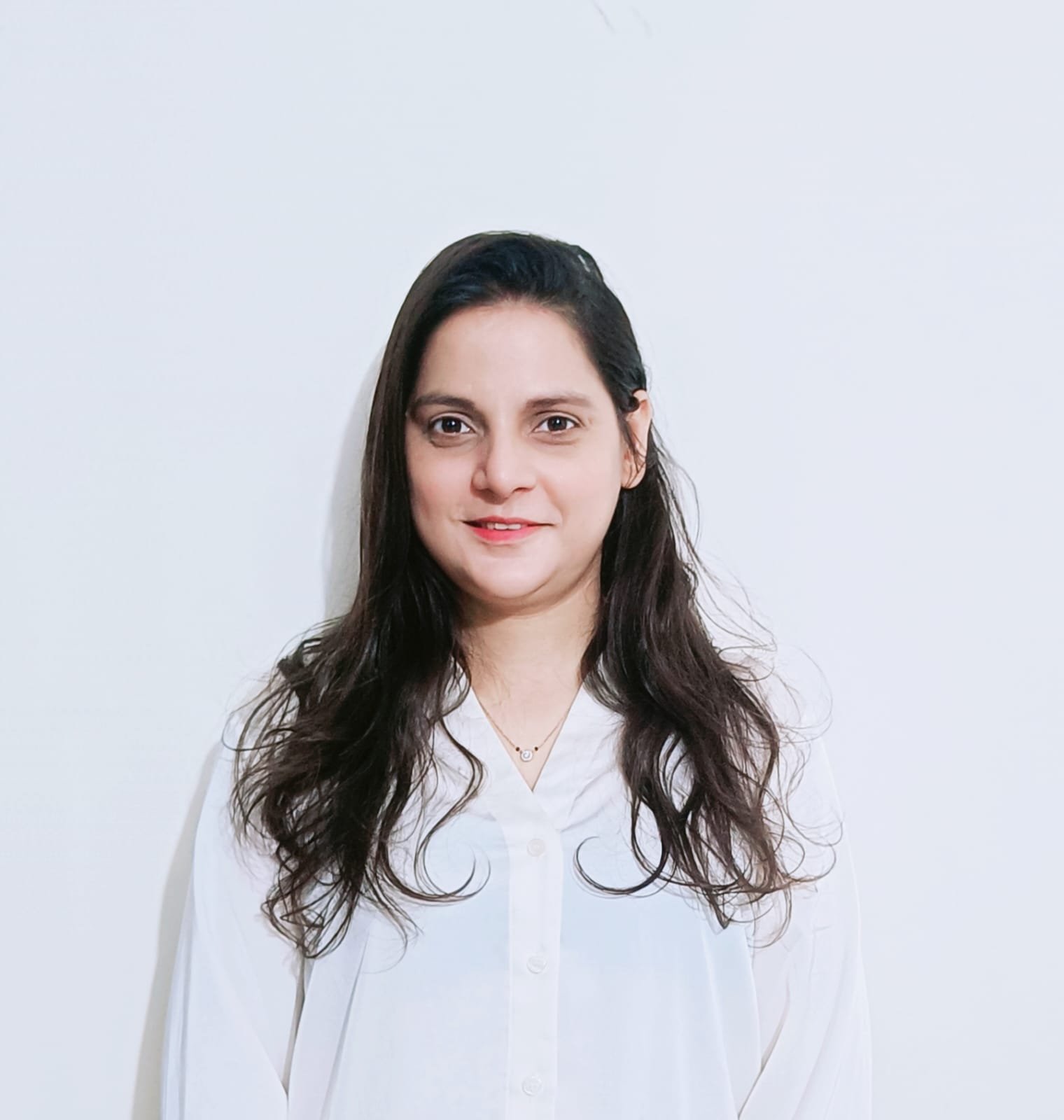
Today’s large AI models run on enormous amounts of power, and for most of the world that cost is the real barrier to using them. Globally, the International Energy Agency’s April 2025 Energy and AI report projects that total data-centre electricity demand will more than double by 2030 to around 945 terawatt-hours (TWh), with AI the single biggest driver according to Professor Manan Suri.
It also cautions that data centres will still account for around a tenth of global electricity demand growth to 2030, behind industrial motors, air conditioning and electric vehicles. A standard AI-focused data centre draws power equivalent to roughly 100,000 homes and the largest facilities now being built will demand 20 times that.
A June 2025 IEA news release added that demand from AI-focused data centres alone is set to more than quadruple by 2030.
In Europe, where both of Suri’s deals were signed, the European Commission’s November 2025 brief In Focus: Data Centres – An Energy-Hungry Challenge, citing IEA data, projects EU data-centre consumption will climb from around 70 TWh in 2024 to 115 TWh by 2030. The IEA’s November 2025 commentary Overcoming Energy Constraints is Key to Delivering on Europe’s Data Centre Goals noted that grid operators in Amsterdam and Dublin had paused new data centre projects, unable to connect the power they needed.
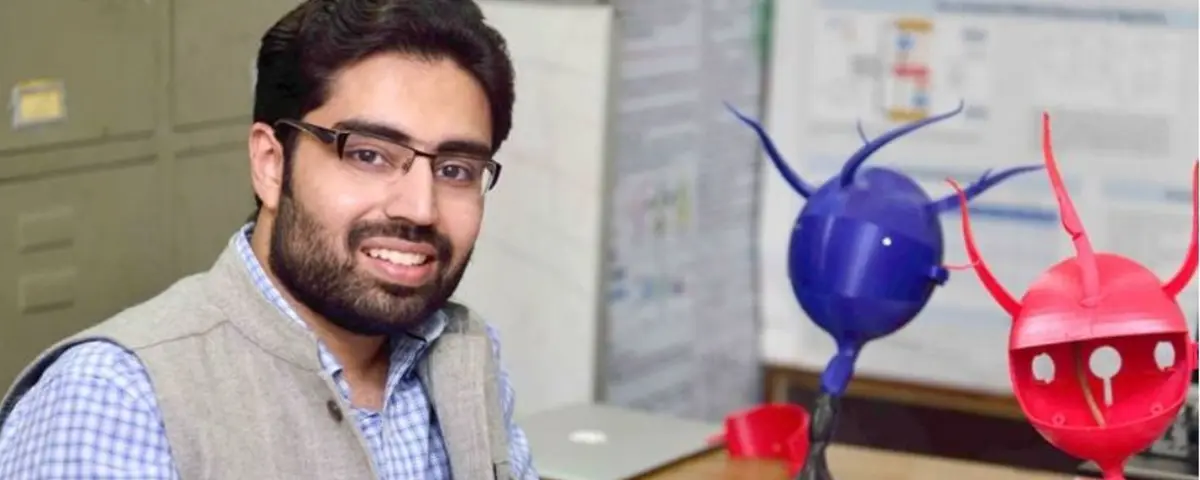
Professor Manan Suri founded the Indian deep tech startup CYRAN AI Solutions and was named by MIT Technology Review to its Innovators Under 35 list in 2018, for building chips that mimic the learning ability and energy efficiency of the human brain. For him, that energy gap is the problem worth solving. His bet is on neuromorphic computing, an approach he frames as the route to “sustainable AI for all”, bound up with a second idea, that every country should build AI capability of its own.
This past week Suri did both at once. At Bharat Innovates 2026, the inaugural edition of the Indian government’s flagship deep tech showcase, held in Nice, France, his startup CYRAN AI, a spinoff from the Indian Institute of Technology, Delhi, signed two strategic collaborations: a new partnership with French aerospace and defense major Safran Aircraft Engines, and an expanded one with Dutch semiconductor firm Innatera, building on a tie-up that had already produced a working prototype.
According to IIT-Delhi, the Innatera partnership aims to build ultra-low-power neuromorphic systems inspired by the way the human brain processes information, for wearables and intelligent sensing, while the Safran collaboration will deploy CYRAN AI’s real-time, multi-sensor edge AI platform for automated inspection and predictive maintenance in precision manufacturing and aero-engine maintenance, repair and operations (MRO).
In an exclusive interview with AI FrontPage, Suri discussed the thinking behind the collaborations, why AI needs to use less energy, and where India, and other nations, should draw the line on building sovereign technology.
Question: On the Innatera partnership, why does neuromorphic computing matter, and what does ultra-low-power technology unlock for physical AI products?
Professor Manan: Neuromorphic computing draws its inspiration from biology to design energy-efficient computational systems. Present-day AI systems are very energy- and resource-hungry. If AI is to democratize for the masses, it needs to become more energy efficient, lower power and more data efficient. Neuromorphic computing provides some of the answers towards the goal of achieving sustainable AI for all.
Question: You came out of IIT-Delhi and you’re up against players in the Netherlands, Canada and China. Does building this in India give you a real structural advantage?
Professor Manan: For us the goal is not about competing, but about developing capability and competence in India, empowering Indian use cases, Indian customers and users with sovereign AI. Each country needs to develop its own capabilities when it comes to AI.
Question: Is the goal for India to build its own everything, or only the critical pieces it can’t afford to depend on others for? Where’s the line?
Professor Manan: It has to be a mixed model. For certain critical use cases, a high degree of indigenization has benefits, while for the less critical ones it can be a combination of the best Indian and international solutions.
Question: Aero-engine maintenance is about as demanding as it gets. What’s the hardest part of building AI that aviation can trust, and how significant is the Safran collaboration for the Indo-French tech equation?
Professor Manan Suri: Our cooperation with Safran is about applying AI to improve production and MRO efficiency, alongside advanced R&D. It is a milestone for bilateral cooperation under the Indo-French Year of Innovation, exemplifying the level of trust between the two countries, a deep tech spinoff from academia and a French defense and aerospace prime joining hands. This aligns with the thinking of the top leadership in both countries.
AI’s rising demand for electricity is fast becoming a policy problem as much as a technical one. As grids strain to connect the data centres that AI requires, efficiency is moving to the center of the debate. For Suri, the challenge is not simply building more powerful AI, but building AI that can do more with less. As governments and companies grapple with the energy demands of large-scale computing, his vision places efficiency and technological self-reliance at the center of the next phase of AI development.
Also Read: Warren Calls for Taxes on AI Companies and AI Data Centers as Debate Over AI Wealth Grows