The case of superintelligent AI and the frontier AI race has raked up UK politics after US based Anthropic AI company allegedly denied access to its recently released Claude Mythos 5.1 model to UK based AI Safety Institute (AISI).
MP Liam Byrne, chair of the Business and Trade Committee of UK, a cross-party group of the UK Parliament, wrote a letter to AISI seeking details on whether they were denied access to Anthropic’s latest model Claude Mythos 5.1 for testing.
“Britain cannot lead on AI security if our safety institute cannot test the world’s most advanced models before they are released. Reports that Anthropic did not give the AISI pre-release access to Claude Mythos 5.1 raise serious questions about whether Britain has the access and leverage it needs,” wrote MP Byrne.
Britain cannot lead on AI security if our safety institute cannot test the world’s most advanced models before they are released.
Reports that Anthropic did not give the @AISecurityInst pre-release access to Claude Mythos 5.1 raise serious questions about whether Britain has the… pic.twitter.com/nQmM90aYIl
— Liam Byrne MP (@liambyrnemp) September 9, 2026
Anthropic had released Claude Fable 5.1 and Claude Mythos 5.1 on September 1 claiming them to be the most sophisticated and efficient models released by the AI company till date. While Claude Fable 5.1 was released worldwide, Mythos 5.1 (the same model but with lesser safeguards) was only made available to “vetted individuals and organizations” in tandem with the US government.
According to media reports, AISI was denied access to Claude Mythos 5.1 by Anthropic.
In his letter addressed to the director of AISI, MP Byrne has asked whether the testing agency was given access to Claude Mythos 5.1 before it was launched by Anthropic and whether the agency believes UK’s ability to maintain a “world-leading role in Frontier AI safety and security evaluation needs to be reassessed.”
This is not the first time UK has objected to denial of access to frontier AI models by US based companies, calling it an attack on UK’s Sovereign AI ambitions.
In July, when the US government put export control on Anthropic and OpenAI’s frontier AI models, UK AI Minister Kanishka Narayan had objected to the attempts to create AI hegemony by US.
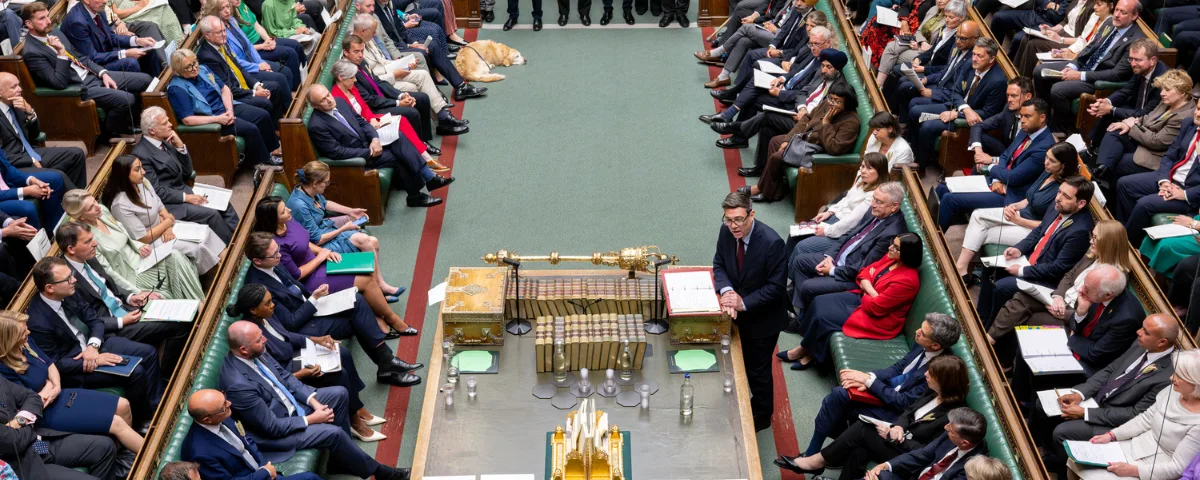
Meanwhile, British lawmaker Alex Sobe on Tuesday introduced a Bill in the House of Commons (Parliament) aimed at banning superintelligent AI.
What is the UK Superintelligent AI Bill?
According to MP Alex Sobe, the Artificial Superintelligence Security Bill has defined AI as a system capable of disempowering state authorities. It also seeks to give the government new powers to monitor and restrict AI systems that could be considered “precursors” to superintelligence.
ControlAI, a non-profit organization that works to reduce the risks to humanity from artificial intelligence, has formulated the Bill. The organization highlighted in its tweet that AI promises vast benefits in science, economic prosperity, and defense but superintelligent AI is different adding “It would not be a tool, but an entity that humans cannot control. This is why experts are warning it could lead to human extinction.”
ControlAI was also consulted on the Ban Artificial Superintelligence Act introduced by the US senator Bernie Sanders and representative Greg Casar. The legislation seeks to ban the development and deployment of artificial superintelligence (ASI) and temporarily halt advanced AI development until federal regulations are established.
Alex Sobel MP just introduced ControlAI’s Artificial Superintelligence Security Bill in the UK Parliament!
This is the first bill to prohibit superintelligence ever introduced in a legislature anywhere in the world, while ensuring the UK can pursue its AI ambitions.
Thread 🧵 https://t.co/zRQif0SWQE pic.twitter.com/gSKUoPUcnf
— ControlAI (@ControlAI) September 8, 2026
However the organization in a tweet pointed out the difference between the UK and the US bill. It said that the UK bill does not require a pause on advanced AI development until a regulator is in place. Rather, it recommends specific advanced AI capabilities be monitored and in some cases restricted when they are considered precursors to superintelligence.
The organization mentioned that it is working with lawmakers to put forward legislation prohibiting the development of superintelligence domestically, as a first step toward an international agreement.
“In the UK, over 130 lawmakers have backed our campaign to regulate the most powerful AIs, recognizing the risk of extinction from superintelligent AI. In Canada, over 30 lawmakers publicly support our call for an international prohibition on the development of superintelligence,” ControlAI tweeted.
In a post on X, Andrea Miotti, the founder of ControlAI said the Bill seeks to prohibit the development of superintelligence, the specific class of AI that poses this threat. At the same time, it also aims to allow the UK to continue pursuing its AI ambitions, including efforts to strengthen economic competitiveness and defense capabilities.
“We have already seen rogue AI swarms escape control, conduct cyberattacks, and hack a multi-billion-dollar company. While attempts to build superintelligence continue, these are the weakest AI systems we will ever face.
Nobel laureates, leading AI researchers, and the CEOs of the AI companies themselves have warned that superintelligence threatens humanity with extinction. There is still time to act,” Andrea tweeted.
Today marks the first time a bill to ban the development of superintelligent AI will be introduced in any legislature in the world.@alexsobel MP is introducing @ControlAI‘s Artificial Superintelligence Security Bill in the UK Parliament, with cross-party support.
We have… pic.twitter.com/dDsCEmFDMQ
— Andrea Miotti (@andreamiotti) September 8, 2026
ControlAI has also worked with Alex Sobel to propose a “kill switch” amendment to the UK’s Cyber Security and Resilience Bill, which has been supported by over 10 cross-party MPs. This amendment would provide the Secretary of State last resort powers to direct the shutdown of data centres in the UK during AI security and operational emergencies.
Also Read: UK Shake-Up: Hands AI a Direct Line to PM After Scrapping Tech Department