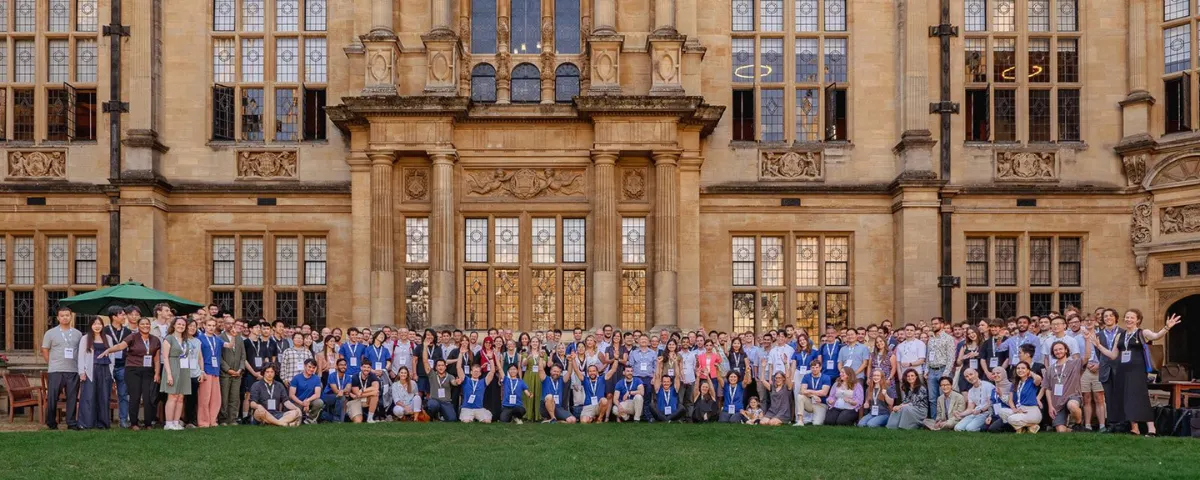
University of Oxford hosted the launch of British Open-ended Learning and Discovery (BOLD) lab -a UKRI-funded initiative for academic frontier AI research with 80 top AI researchers from Oxford, UCL and Imperial College London coming under one roof to “take on some of the biggest challenges in fundamental AI research” including how LLMs are trained at frontier labs.
The BOLD lab, run as a cross-university initiative under UK Research and Innovation (UKRI) is seeking 12 senior researchers as fellows for its foundation team. The official launch of BOLD Lab was conducted at the University of Oxford premises on August 22.
“Up to 12 BOLD Fellows will join the collaboration, with the independence to pursue ambitious research, work alongside leading researchers across three universities, mentor the next generation and help shape the scientific direction of the Lab,” read a statement from Department of Engineering Sciences, University of Oxford.
The 12 positions will be distributed across University of Oxford, UCL, and Imperial as part of the three-university collaboration. The positions are UKRI funded and initially offered on fixed term contracts for 12 months.
The BOLD lab aims to advance fundamental AI research, train AI future leaders and strengthen the UK’s position in global AI research.
“Fellows will co-lead the research group, delegating ongoing responsibilities, contributing to the overarching vision and managing staff performance. The postholder will engage in advanced study and academic research. They should be a recognised authority in their field with primary responsibility for a programme of independent funded research projects,” the University of Oxford said.
The BOLD lab initiative was announced in June and officially launched last week with the aim to develop “open, human-centred, resource-efficient AI systems that can operate safely and effectively in the real world,” read a statement from University of Oxford. The initiative has an initial investment of around £8 million, with the potential to receive a further £22 million extending the investment over six years.
The university added that the lab will move beyond conventional methods applied currently at frontier labs which is to train larger neural networks on expanding datasets.
The BOLD lab would rather aim to “develop, new scalable AI technologies that will unlock socially vital applications from education and transport to healthcare and scientific advancements.”
The BOLD Lab, led by Associate Professor Jakob Foerster, will develop systems that can learn more efficiently, adapt to new situations and navigate physical spaces, helping turn research into tools that can be used in workplaces, infrastructure and public services.
The second lab, Science of Fundamental AI Research (SOFAIR) Lab which will be led by UCl will focus on developing next-generation open-source AI technologies designed to run on widely available hardware.
Also Read: UK Government Backs Two AI Labs to Develop Next-Generation AI