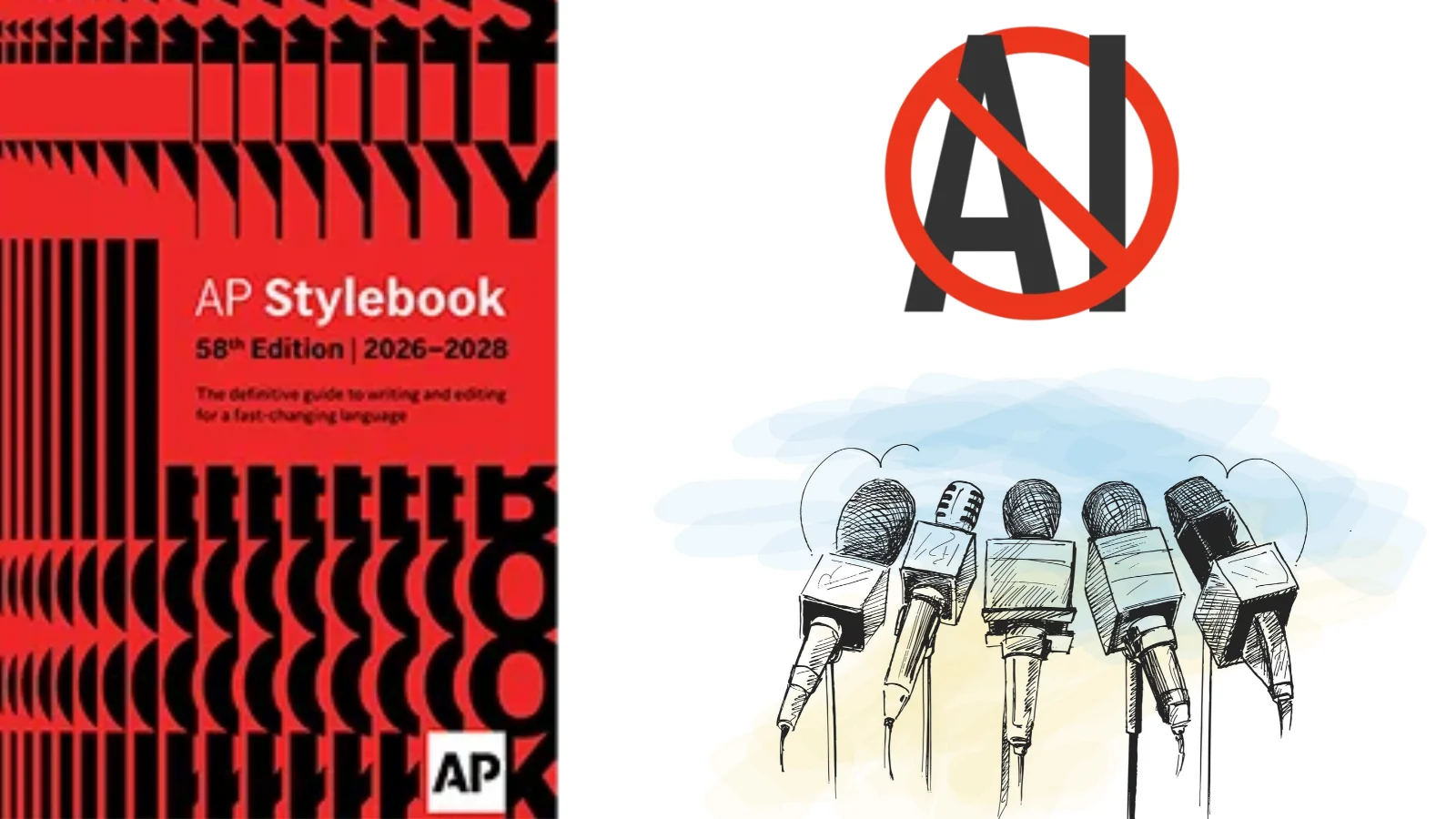
The Associated Press (AP) has introduced new artificial intelligence guidelines in the 58th edition of their AP Stylebook online, warning journalists across the world to treat any AI-generated output as unverified information
AP stylebook online is a searchable guide for writers and editors that is updated throughout the year. The online edition builds on the print stylebook and is widely used in newsrooms, classrooms and corporate offices worldwide.
The AP Stylebook AI guidelines states that AI-generated output should be treated as unverified source material and reviewed using editorial judgement and sourcing standards before publication.
“We have new artificial intelligence guidelines on Stylebook Online, informed by the AP’s own policies on what we do and don’t do with AI. One tip: Any output from an AI tool should be treated as unvetted source material. You must apply your editorial judgment and sourcing standards when considering and editing any information for publication,” AP tweeted.
We have new artificial intelligence guidelines on Stylebook Online, informed by the AP’s own policies on what we do and don’t do with AI.
One tip: Any output from an AI tool should be treated as unvetted source material. You must apply your editorial judgment and sourcing standards when considering and editing any information for publication.
For the full list of considerations, subscribe to AP Stylebook Online. https://t.co/fCfjYvsDco— APStylebook (@APStylebook) October 27, 2026
Meanwhile AP also updated its newsroom standards for artificial intelligence in July, expanding guidance on the use of AI tools in journalism while reiterating that editorial judgment, verification and accountability remain the responsibility of journalists.
The revised standards allowed AI tools to assist with early-stage research, document summarisation, transcription, translation, headline suggestions, story summaries, grammar and spelling. However AP journalists must review and edit AI generated output before publication. The guidelines prohibited the use of generative AI to create, alter or enhance news photographs.
They also outlined standards for verifying and reporting AI generated or manipulated content, requiring such material to be clearly identified and presented in context. Disclosure is required when generative AI plays a material role in published content.
Other prominent media organizations like the Editors Guild of India and Agence France Presse (AFP) have published standards that clearly do not allow any content to be published by editors that is directly generated by AI.
Also Read: 400 Newspapers Drag Microsoft and OpenAI to Court for “Stealing” Journalists’ Works