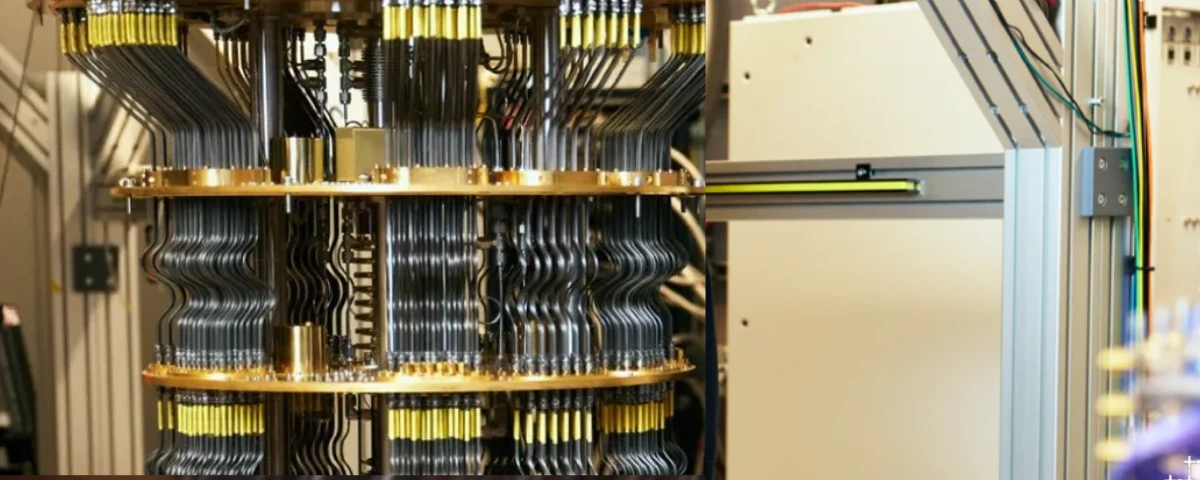
Google Quantum AI has demonstrated a technique called “magic state cultivation” on its Willow quantum processor (chip), reducing errors by 40 times compared with uncultivated states.
Google described the work as the “first demonstration of a practical solution to one of quantum computing’s most severe resource bottlenecks.” The company explained that cultivation works like a filter, using coordinated measurements to detect errors in noisy quantum states and reject faulty attempts.
Magic states are essential for universal quantum computing, which enables quantum computers to perform the range of operations needed to execute useful programs.
However, producing high-quality, error-corrected magic states requires significant computing resources. Some estimates suggest that the process could consume up to 95% of a quantum computer’s capacity.
Google aims to develop error-corrected quantum computers capable of solving problems that classical computers cannot solve efficiently.
The research builds on theoretical work developed by Google Quantum AI researchers Craig Gidney, Noah Shutty and Cody Jones in 2024. The technique involves injecting a noisy quantum state into a small region of a quantum chip and using coordinated measurements to identify errors.
According to Google, the protocol achieved a logical fidelity of 99.99% for T-states.
The team also demonstrated that cultivated states could be transferred between two quantum error-correction schemes: color codes and surface codes. The experiment involved transferring states from a distance-3 color code to a distance-5 surface code, demonstrating compatibility between the technique and Google’s quantum computing architecture.
However, Google said further research is needed to demonstrate magic state cultivation at a larger scale, with several technical challenges still to be addressed.
Also Read: Trump Signs Executive Order to Advance US Quantum Innovation