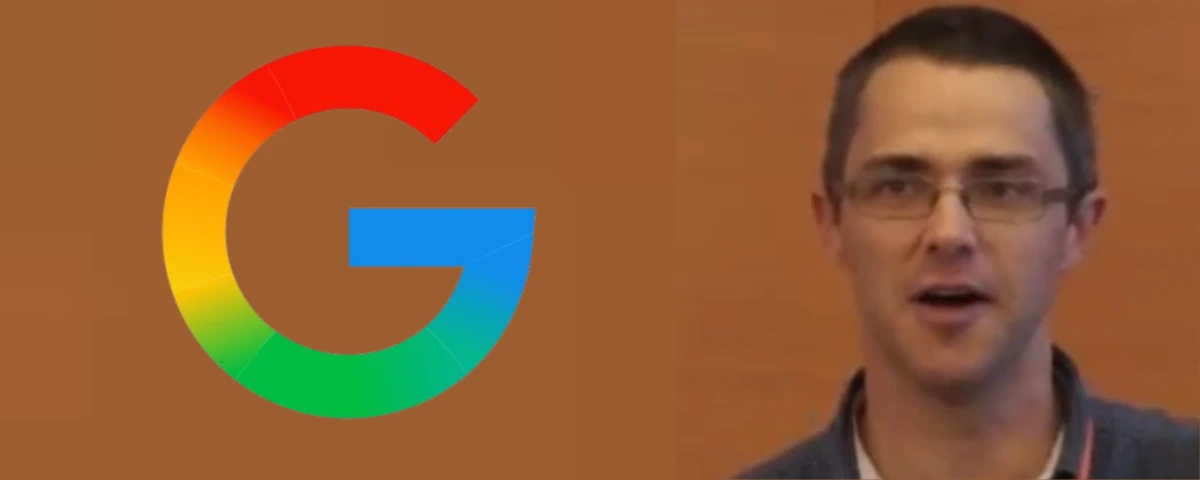
Google engineer Robert O’Callahan resigned from the company because he believed the work he was involved in would accelerate AI at a time when concerns are growing over the push or pause AI development, the risks of increasingly capable systems and where the technology is heading.
The decision was not easy for Callahan. He said he loved his colleagues, his work environment and the work itself, describing the job as being “paid handsomely to solve fun puzzles.” But his team’s goal was ultimately to make AI “much cheaper and lower-latency,” which he did not believe was good for people at this stage.
He said he firmly believed AI progress was “far too rapid” and that he also had doubts about where it was heading. Moving to another Google project that would not accelerate AI was practically impossible, partly because of his ties to New Zealand, where Google prefers “not to do engineering”.
I resigned from Google today.
I enjoyed my work and loved the people, but my GDM team was working on a new generation of chips to make AI much faster and cheaper, and I think AI is already progressing too fast, so I had to quit.— Robert O’Callahan (@rocallahan) September 25, 2026
Callahan said he had been part of Google DeepMind’s GenAI unit, although he was not directly working on AI development. In a discussion on Hacker News, owned by startup accelerator Y Combinator, he said, “FWIW (For what it’s worth) I was in the GDM GenAI unit. Not exactly working on AI directly, or I would have quit earlier, but in the middle of it.”
He said his work involved improving tools for hardware chip design rather than AI capabilities directly. Over time, however, he concluded that the main impact of those tools would be to accelerate the design of a new generation of AI chips, potentially making AI cheaper and faster, and therefore more pervasive and capable.
Callahan said he initially considered the work relatively harmless, but that changed over time. “God forced me to confront the reality that the main impact of these tools will be to accelerate the design of a new breed of AI chips,” he wrote. He said he eventually had an “honest conversation” with his skip manager and told them he was “at best reluctant to see their project succeed.”
Callahan acknowledged that his resignation would have only a small impact given the millions of people contributing to AI acceleration, but said the impact would not be zero because some of his skills are rare. He said he had explored trying to positively influence events from within Google DeepMind, but that his influence there did not seem strong enough. He believed he could also have an impact outside Google.
“It’s tempting to just turn a blind eye to the impact of my work, but that would not be a Jesus-following thing to do.”
Callahan said the timing of his resignation was unrelated to the recent wave of viral AI resignations or “AI slowdown” warnings. According to him, the date had been planned in advance around a long-scheduled ten-day backpacking trip with friends on New Zealand’s Abel Tasman Coast Track and Wangapeka Track.
Why AI Engineer Robert O’Callahan Quit Google?
For Callahan, the decision was not primarily driven by fears of an AI catastrophe. Responding to commenters on Hacker News, he wrote:
“The main reason I quit is not specific fears of AI doom (I’m uncertain about that), but my belief that AI is progressing too fast.”
He said AI capabilities have improved dramatically over the past decade, with no clear sign that the pace of progress is slowing. He believes capabilities will continue increasing as long as development continues, with new capabilities emerging alongside progress on benchmarks.
Callahan said his strongest concern is the rate of change. He argues that AI is developing faster than individuals and institutions can understand and adapt to, making it increasingly difficult for people to plan for the future. He contrasted the current pace with earlier technological shifts such as PCs, the internet and smartphones.
He also takes warnings about AI’s existential risks seriously, while stopping short of saying an AI catastrophe is inevitable. He described the risk as real but uncertain and argued that the uncertainty itself is alarming. He pointed to phenomena including reward hacking, misalignment, deceptive models and model-evaluation awareness as developments that deserve attention.
Beyond existential risks, Callahan said he is concerned about cognitive surrender, AI-induced psychosis and loneliness, concentration of power, economic disruption, cybersecurity and a lack of accountability. He said the potential benefits of AI remain unclear and that, if forced to choose, he would currently expect the negatives to outweigh the benefits, while acknowledging that he remains uncertain.
He also said warnings from people working inside AI labs should be taken seriously. Callahan said he had spoken with people at Google DeepMind and believed their concerns were generally sincere, adding that he had seen no hard evidence that AI risks were being exaggerated to boost company stock prices or disadvantage competitors.
Callahan said the risks are not merely theoretical, pointing to developments already taking place in areas such as education. He also highlighted cybersecurity scenarios in which increasingly capable AI could compromise connected systems and infrastructure.
He argued that cheaper AI models would not automatically democratize access to the technology, since wealthier users could still buy more compute and use it to increase capability.
Faith And The Decision
Callahan, who lives in New Zealand, said he has spent much of his career in technology but considers himself outside both the Silicon Valley and American “bubbles.” He described himself as a Christian who does not identify as a “tech bro” or as part of the self-described “rationalist community,” although he said many of its arguments deserve to be taken seriously.
His Christian faith also influenced how he viewed the ethical responsibility of his work. In the Hacker News discussion, he wrote:
“It’s pretty hard to live in the world and be completely disconnected from anything unethical. Jesus doesn’t seem to demand that (e.g. he didn’t tell centurions to leave the Roman army).”
He said his decision ultimately came down to whether his actions were aligned with his faith:
“My high-level answer is, God’s plan will be done regardless of what I do, but my actions determine (at least from my point of view) whether I’m aligned with the plan or not. And I want to be aligned with the plan.”
Callahan also said that turning a blind eye to the impact of his work would not be “a Jesus-following thing to do.”
Future Plans
Callahan has drawn a clear distinction between using AI and contributing to its acceleration. In the Hacker News discussion, he said:
“But there’s no chance I’ll work on anything that accelerates AI. If I was OK with that, I would not have left Google.”
He added that he still expects to use AI in his own work.
He previously explained the distinction more directly, saying:
“Of course I was using AI a lot in my work at Google, as well as contributing to AI acceleration. Now I won’t be contributing to acceleration and I can be as cautious as I want to be about using it.”
Looking ahead, Callahan said he plans to continue maintaining Pernosco and rr and investigate how AI systems debug code and whether debugging tools could make them more effective. He also has other project ideas, some potentially lucrative, and said he wants his future work to be “unambiguously pro-human.”
He said he remains financially secure but acknowledged that leaving Google came with a personal cost. He found it psychologically difficult to give up the opportunity to make more money at a job he enjoyed.
Callahan’s resignation comes amid a wider debate among AI researchers and engineers over the risks of pushing frontier AI development forward, including Anthropic researcher Jacob Coxon, who resigned in early September, saying that he spent the last three years doing pretraining research at both OpenAI and Anthropic and neither company is acting responsibly. “They are racing straight to self-improving superintelligence and gambling with our lives,” Coxon said.
Endorsing Coxon’s views, Anthropic Alignment Science Lead Evan Hubinger said, “We really do earnestly believe AI could kill all humans”, setting the probability above 10%, within the next decade. He added that Anthropic does not yet have a clear plan to solve alignment for superintelligence and are “not clearly on track to”.
Also Read: David Sacks Upholds Zuckerberg’s Approach: Don’t Call on Others, AI Safety is Routine Work