Every major AI company is competing to build more powerful models. But, very few are competing to build the factories capable of manufacturing the advanced chips those models require.
That imbalance has quietly created one of the most important concentrations of technological power in the world. As governments and technology companies invest billions of dollars into AI, the infrastructure behind that race remains concentrated in a handful of semiconductor manufacturers.
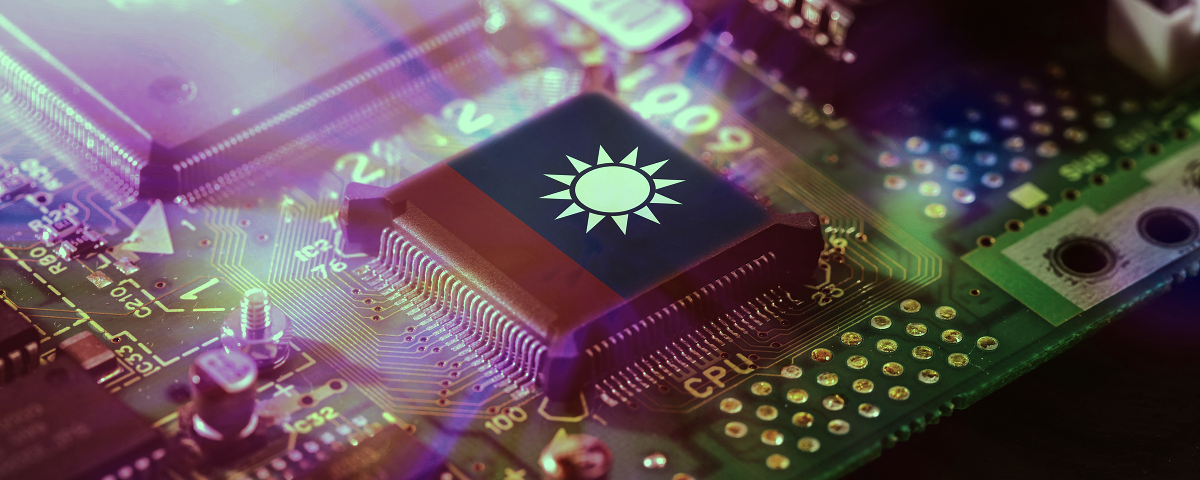
According to the U.S. International Trade Administration, Taiwan accounts for more than 90% of global leading-edge chip manufacturing and for over 60% of global foundry revenue.
At the centre of that ecosystem is Taiwan Semiconductor Manufacturing Company (TSMC), which manufactures many of the advanced chips designed by NVIDIA, Apple and AMD. The semiconductor design firms are among the key customers of Taiwan’s foundries, highlighting the island’s importance to the global technology supply chain.
Taiwan’s semiconductor leadership emerged long before the current AI boom. In 1987, Morris Chang, a former Texas Instruments executive, founded TSMC with backing from the Taiwanese government and local investors. Unlike integrated chip companies that both designed and manufactured semiconductors, TSMC focused on a pure-play foundry model, manufacturing chips for other companies.
Over the following decades, TSMC became the anchor of a broader semiconductor ecosystem encompassing chip design, manufacturing, packaging, testing, research institutions and highly specialized engineering talent. While TSMC grew into the world’s largest contract chipmaker, Taiwan’s advantage today stems from the ecosystem that developed around it as much as the company itself.
The numbers help explain the story. TSMC reported nearly US$122 billion in revenue in 2025, a 36% increase year-on-year, according to its 2025 Annual Report. It serves 534 customers, manufactures 12,682 distinct products and deploys 305 different process technologies. High-performance computing, the segment that includes AI chips, accounted for 58% of TSMC’s revenue in 2025, up from 43% in 2023.
For 2026, TSMC has budgeted between US$52 billion and US$56 billion in capital expenditure, according to guidance provided during its fourth-quarter earnings presentation, reflecting growing demand for advanced semiconductors and AI infrastructure.
NVIDIA, Apple and AMD, whose processors sit at the heart of today’s AI infrastructure, manufacture many of their most advanced chips at TSMC.
TSMC’s nearest competitor in foundry manufacturing is Samsung, which held approximately 7% of the global foundry market as of late 2025, according to TrendForce, global market intelligence. TSMC accounted for roughly 72% during the same period. The company’s position is particularly significant in leading-edge process technologies used in many advanced AI chips.
Why AI Depends on Advanced Semiconductors
Artificial intelligence systems rely on specialized semiconductors to perform the massive computations required for training and running AI models. Many of the world’s most advanced AI processors, including NVIDIA’s GPUs and other AI accelerators, are manufactured by TSMC using leading-edge process technologies.
These chips form the hardware foundation of AI data centres that power large language models, recommendation systems, autonomous technologies and other AI applications.
The Difference Between a Factory and an Ecosystem
Taiwan’s semiconductor ecosystem extends beyond TSMC. Companies including MediaTek, United Microelectronics Corporation (UMC), ASE Technology Holding, Realtek and Novatek operate across areas such as chip design, manufacturing, packaging and testing. Their presence reflects the broader industrial base that has developed alongside Taiwan’s semiconductor sector over several decades.
According to the U.S. International Trade Administration, Taiwan’s semiconductor industry generated over $165 billion in revenue in 2024, representing approximately 20.7% of the country’s GDP.
Advanced packaging has become increasingly important in the AI era. Technologies that connect processors and high-bandwidth memory play a critical role in AI performance, particularly for large-scale AI training systems. Taiwan is home to several leading advanced packaging providers, including ASE Technology and TSMC, making the island important not only in chip fabrication but also in chip integration and packaging.
Semiconductors as Strategic Assets
The semiconductor shortages that followed the COVID-19 pandemic exposed vulnerabilities in global chip supply chains. Many of the affected components were mature-node semiconductors used in vehicles, industrial equipment and consumer electronics. The disruptions prompted governments and companies to reassess supply-chain resilience and expand semiconductor manufacturing capacity.
Governments have responded with large-scale industrial policies. In 2022, the United States CHIPS and Science Act allocated more than US$52 billion for semiconductor manufacturing, research and workforce development. The European Union, Japan and China have also introduced programmes aimed at strengthening domestic semiconductor capabilities.
Taiwan’s geographic position adds another dimension to these discussions. The island lies about 180-km from mainland China across the Taiwan Strait, an area that has been a source of geopolitical tension for decades.
With more than 90% of global leading-edge semiconductor manufacturing concentrated in Taiwan, developments there carry significance for governments and industries around the world.
TSMC is expanding its manufacturing footprint beyond Taiwan through projects in Arizona, Kumamoto in Japan and Dresden in Germany. Despite these investments, industry analysts and market researchers generally expect Taiwan to remain a major centre of advanced semiconductor manufacturing through the rest of this decade.
What Taiwan’s Position Means for other Countries
As governments around the world try to reduce their dependence on a handful of semiconductor manufacturing hubs, many have launched ambitious plans to build domestic chip industries. India is among the countries making one of the most significant pushes.
The country’s semiconductor programme has gathered pace in recent years. According to the Ministry of Electronics and Information Technology (MeitY), the Union Cabinet approved two additional semiconductor projects on May 5, 2026, taking the total number of approved projects under the India Semiconductor Mission (ISM) to 12.
The newly approved projects include Crystal Matrix Limited’s compound semiconductor fabrication and ATMP facility in Dholera, Gujarat, and Suchi Semicon’s OSAT facility in Surat. Together, the projects involve an investment of Rs 3,936 crore (about US$460 million) and are expected to generate 2,230 jobs, according to a government statement.
The government’s efforts extend beyond projects approved under the India Semiconductor Mission. On May 15, 2026, Union Electronics and IT Minister Ashwini Vaishnaw inaugurated Sahasra Semiconductors’ ATMP/OSAT facility in Bhiwadi, Rajasthan. Developed under
Ministry of Electronics and Information Technology’s (MeitY) Scheme for Promotion of Manufacturing of Electronic Components and Semiconductors (SPECS), the facility was described by the PIB as India’s first small and medium enterprise (SME)-led semiconductor facility to begin commercial production of semiconductor chips.
India is also seeking partnerships with established semiconductor players. One of the largest projects currently underway is the semiconductor fabrication facility being developed by Tata Electronics and Taiwan’s Powerchip Semiconductor Manufacturing Corporation (PSMC) in Dholera, according to announcements by Tata Electronics and the Government of India.
Building advanced semiconductor manufacturing capacity also requires access to highly specialized equipment. In May 2026, Tata Electronics signed a technology and equipment agreement with ASML, the Dutch company that manufactures extreme ultraviolet lithography systems used in advanced semiconductor production.
Alongside manufacturing, India has also been trying to strengthen its chip design ecosystem. MeitY said design infrastructure support has been extended to 315 academic institutions and 104 startups under the Design Linked Incentive scheme. As of May 2026, 24 semiconductor design startups had attracted Rs 430 crore in venture capital funding, according to the ministry.
Talking to AI FrontPage, industry experts highlighted Taiwan’s growing importance in the global AI and semiconductor ecosystem.
Dr. Sujata Seshadrinathan, Indian technology and operations expert, said Taiwan’s manufacturing capabilities have become increasingly important to the AI industry. “The global AI industry is at an extraordinary inflection point based on the exceptional manufacturing skills and core capabilities of Taiwan,” she said.
Her observation reflects Taiwan’s growing importance as demand for AI infrastructure accelerates. The island’s semiconductor ecosystem now sits at the centre of supply chains supporting many of the world’s largest AI companies.
That dominance is also visible in the foundry market. According to TrendForce, TSMC accounted for roughly 72% of the global foundry market in late 2025.
Hirak Raval, Global Business Analyst, said the company’s market position has made it a critical part of the global technology industry. “TSMC has approximately 70% of the worldwide foundry marketplace,” he said. “This is not just another manufacturer; this is one of the strategic cornerstones of today’s digital infrastructure.”
For comparison, India’s approved semiconductor projects involve cumulative investment commitments of approximately Rs 1.64 lakh crore (about US$19 billion), while TSMC has guided for between US$52 billion and US$56 billion in capital expenditure in 2026.
Conclusion
TSMC may be the most recognizable name in Taiwan’s semiconductor industry, but Taiwan’s role in the global chip industry extends far beyond a single company. Decades of investment in manufacturing, research, engineering talent and supply-chain development helped turn the island into the world’s leading centre for advanced semiconductor production.
As demand for AI infrastructure continues to grow, Taiwan’s semiconductor ecosystem is likely to remain central to the technology industry for years to come.
Also Read: Why Taiwan Still Sits at the Center of the US-China AI Race