NVIDIA has launched a set of open source physical AI skills and tools designed to help developers turn complex robotics, autonomous vehicle (AV), vision AI and industrial digital twin workflows into agent-executable tasks.
According to the company, the tools are intended to reduce the cost, time and complexity of building physical AI workflows at scale.
NVIDIA is enhancing its entire physical AI stack for agents by turning libraries, models and frameworks into agent-callable tools. This includes NVIDIA Cosmos world foundation models for physical world reasoning and generation, NVIDIA Omniverse libraries for simulation and digital twins, NVIDIA Isaac for robotics simulation and robot learning, NVIDIA Metropolis for vision AI, NVIDIA Alpamayo for autonomous driving and the NVIDIA Jetson platform for edge AI development.
The company also introducing new skills as part of the NVIDIA Agent Toolkit to turn physical AI development processes into repeatable instructions that coding agents can follow. This includes which tools to call, what outputs to produce and how developers can validate results.
The company further said developers can build and deploy autonomous agents using these skills with the NVIDIA NemoClaw blueprint and the NVIDIA OpenShell runtime, which provides policy-based security and privacy governance on local or cloud hardware.
“AI agents are revolutionizing software development, and that shift is now coming to physical AI, extending into the systems that will transform transportation, manufacturing, healthcare and robotics,” said Jensen Huang, founder and CEO of NVIDIA.
“When agents can directly use NVIDIA libraries, models and frameworks, physical AI development will move faster, enabling developers to build the robots, autonomous vehicles and industrial systems of the future at an incredible pace,” he added.
The announcement reflects NVIDIA’s broader effort to expand agentic AI beyond coding assistants and into physical AI development workflows, where tasks such as simulation, synthetic data generation, model training and deployment often require significant engineering resources.
“As AI agents move from writing code to orchestrating entire development tasks, physical AI is the next frontier,” the company said in the release.
NVIDIA physical AI skills, available as part of NVIDIA Agent Toolkit, let agents use NVIDIA libraries, models and frameworks to speed the data generation, simulation, training, evaluation and deployment pipelines behind robots, AVs, factories and labs.
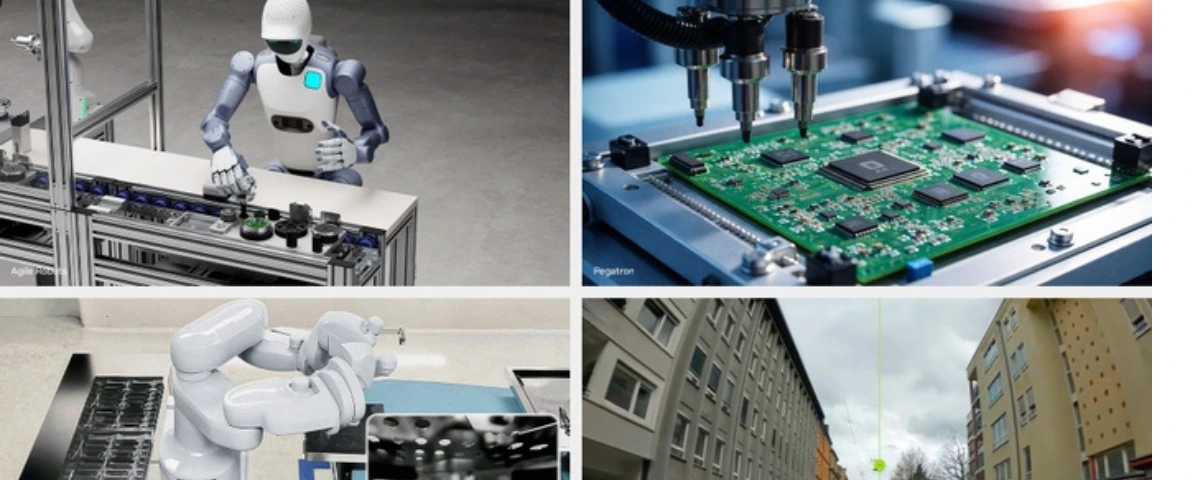
The company said industry leaders across manufacturing, autonomous vehicles, healthcare and industrial software are using NVIDIA physical AI libraries to advance the development of autonomous systems and industrial AI.
As these libraries become agent-ready, developers can use NVIDIA skills to help agents automate setup, execution and iteration across complex physical AI workflows.
The company said its physical AI agent tools and skills are now openly available through GitHub and skills.sh for use with any coding agent.
The release comes as technology companies increasingly explore agentic AI systems capable of autonomously executing multi-step workflows, with physical AI emerging as a key area of investment across robotics, industrial automation and autonomous driving.
Also Read: ADNOC Deploys AI Inspection Robot as Physical AI Expands Into Oil and Gas Industry