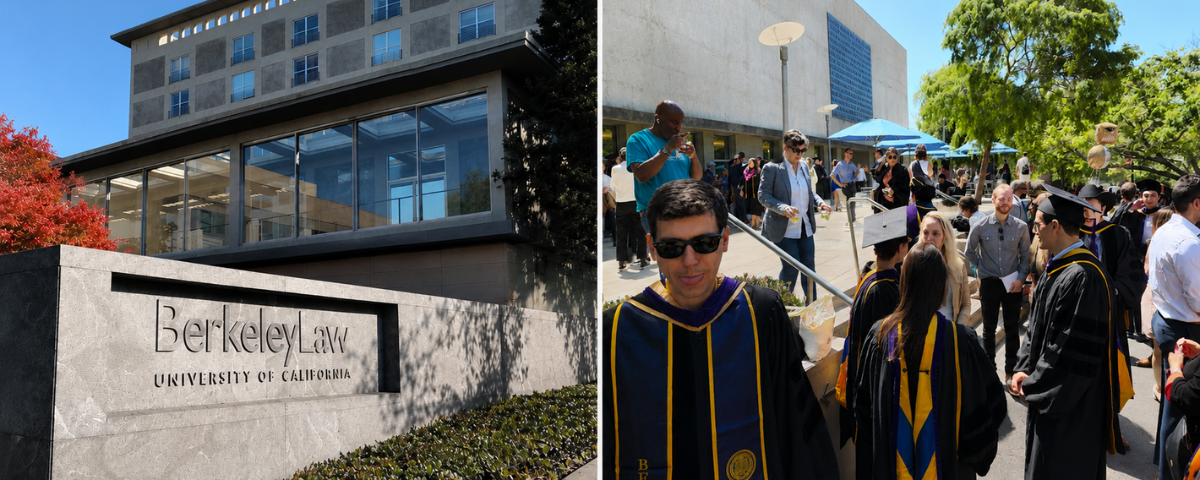
“This policy seeks to ensure that our courses focus on requisite cognitive skills by default. It provides students with the opportunity to develop the skills they need to conceptualize, outline, draft, revise, and edit their work by forbidding the use of AI for these purposes in connection with work submitted for credit,” read a statement by the law school.
Berkeley law has introduced a new, much stricter AI policyhttps://t.co/wlNs2cUrKz pic.twitter.com/IFT6fLnU6U
— Chris Hoofnagle (@hoofnagle) May 21, 2026
The policy states that future lawyers may need to use AI fluently, but its use must be accompanied by cognitive skills needed to strategically deploy the technology, critically assess its work product, and uphold ethical obligations to clients and the legal system.
“In short, thinking remains the sine qua non of good lawyering (and of a quality legal education),” the policy stated, describing independent thinking as essential to legal education.
The policy further prohibits AI use for conceptualizing, outlining, drafting, revising, translating, or editing academic work submitted for credit, and bans AI use for any purpose during examinations.
The school listed several prohibited AI activities, including asking an AI tool to brainstorm a paper topic or thesis, propose an organizational structure for a paper, compose a paragraph summarizing a legal rule, identify repetitive passages that should be cut, correct grammatical mistakes, generate an exam outline, or translate a paper written in another language into English.
As per the policy, students cannot upload course materials such as assignments, readings, slides, class recordings, or other class content into generative AI systems.
“AI can be used for research on papers ONLY for the limited purpose of identifying sources, such as cases, statutes, or secondary sources,” the policy stated.
“Citations to sources that do not exist will raise a presumption of prohibited AI use. Instructors have the discretion to deviate from this default rule, provided that they do so in writing and with appropriate notice and require students to disclose any authorized AI use,” the policy stated.
“If a student has a question about whether a particular use of AI violates this default rule or an instructor’s alternative rule, they must ask their instructor and receive clarification in writing before engaging in the use,” it further added.
The policy states that its purpose is to equip students with skills necessary for lawyers, including mastering primary texts, applying legal reasoning to novel legal questions, independently developing creative solutions, and promoting fairness and administrability.
Also Read: “AI Cannot Replace the Trained Mind of a Lawyer”: India’s Supreme Court Judge Vikram Nath