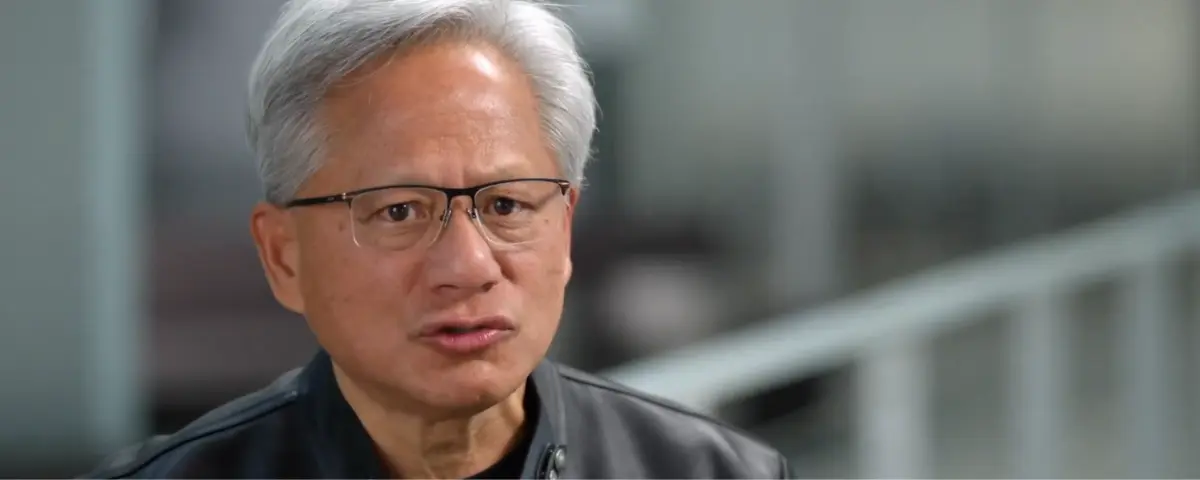
Society will accommodate itself with artificial intelligence (AI) as it did with cars, opined NVidia CEO Jensen Huang, while arguing for a broader embrace of AI saying the technology is only going to get better and safer.
In an exclusive interview with Associated Press (AP) on Wednesday, Huang said society needs to create new social norms for AI.
“Back in the old days, people said cars killed children. What is it about cars that would hunt down a child to kill them? Well, the reason was in the old days, when kids were growing up, they used to play in the streets, said Huang.
“When cars came along, you obviously can’t play in the streets. We no longer have kids playing in the streets, we have sidewalks, crosswalks and jaywalking is discouraged. So all of that combination of social norms, regulations, safer cars, seat belts and all the technology that comes along,” he added.
Huang was also asked about the importance of Taiwan in U.S. taking the AI lead ahead of China, Huang added, “Since the start of this year, U.S. is getting more goods imported from Taiwan than China. Taiwan makes the world’s best chips and is the epicenter of world’s technology ecosystem…..if not for Taiwan, we would not have labs in Arizona and factories in Wistron and Foxcon.”
When asked about the recent decision of U.S. government to put controls on export of frontier AI models ‘Claude Fable and Claude Mythos’ of Anthropic, Huang said,” U.S. government has to be concerned about national security and export control is a powerful tool that has to be used precisely and specifically, it could be quite effective. Beyond that point, we just got to be careful not to over-exercise export so that it doesn’t create unintended consequences.’
As Huang points out, AI is both closing the gap between computer technology and the general public and allowing people to perform sophisticated tasks (e.g., building a website, analyzing a document, conducting research, or designing a product) without the necessity of learning how to program.
According to Huang, AI represents the foundation for the new industrial revolution in which companies from industries as diverse as health care and transportation to manufacturing will be transformed. Furthermore, he stated that substantial funding would need to be allocated to energy, computer chips, data centers, AI models, and application development over the next ten years.
Also Read: Nvidia’s Jensen Says AI Won’t Kill Jobs. Data Says Otherwise