After a Germany based Digital Rights advocacy group lodged a criminal complaint against Meta for sale of Ray-Ban Meta AI Glasses in alleged violation of country’s privacy laws, Meta has defended its products claiming that these glasses were approved by a federal regulator and fulfil privacy safeguards.
In an exclusive conversation with AI FrontPage, a Meta spokesperson confirmed the filed criminal complaint by HateAid group and said that their most important defense is that the AI glasses were approved by BNetzA, the German federal agency for electricity, gas, telecommunications, post and railway markets.
“They (Meta AI glasses) passed review by the German regulator BNetzA in 2022, and were built with privacy safeguards from the ground up that go beyond what any smartphone offers.” said a Meta Spokesperson to AI FrontPage.
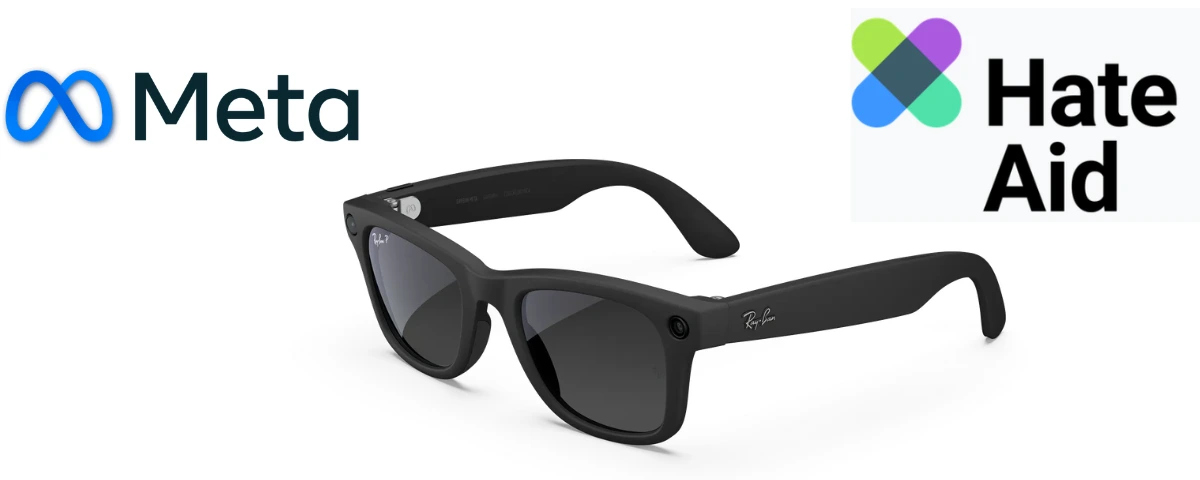
Meta claimed that the AI glasses do not secretly record unsuspecting people as it comes pre-equipped with an LED flashlight that blinks during video recording and flashes in photo capturing.
The tech giant, which is under fire for privacy violations over Meta AI glasses, said that the LED light on Meta AI glasses have undergone testing to ensure sufficient levels of brightness even during daytime.
“A capture LED will blink bright white when you take a photo or video you can save or share which you cannot switch off, so both people wearing the glasses and those around them feel comfortable. They also feature tamper detection technology and if someone covers or damages the LED, the camera is disabled,” said the Meta spokesperson.
Further explaining the anti-tampering technology, Meta said that if a user tampers with the LED light on AI smart glasses including placing blockers over it, the camera will not function.
HateAid group has demanded a ban on sale of Meta AI glasses in Germany, accusing the tech giant of allowing a product that secretly records thus constituting a criminal offense.
The group has asked BNetzA to put Meta’s AI glasses under the list of prohibited espionage devices.
According to HateAid, the sale of Ray-Ban Meta Smart Glasses in Germany violates the Telecommunications, Digital Services, and Data Protection Act (TDDDG).
“With the sale of Ray-Ban Meta glasses, profits are once again being prioritized over safety. It is unacceptable that corporations like Meta once again try to get away with breaking the law – and profiting from it to enrich themself. Everyone involved in the sales of smart glasses must be held accountable,” said Josephine Ballon, HateAid CEO, in a written statement.
The group has demanded that these smart glasses may only be sold if they are clearly identifiable as smart glasses.
“For example, through color-coded camera markings, and that clear limits apply to recordings, as already exist for dashcams and body cameras,” HateAid said.
Meta also informed that it is taking steps to address the menace of cyberbullying and harassment on Meta platforms like Facebook and Instagram.
The company informed AI FrontPage that it has removed “thousands of pieces of violating content” from its social media platforms as blocked ‘search terms’ and ‘hashtags’ associated with such content including terms like “rizz”, “pickup artist” and “cold approach.”
The comments by Meta come in the wake of the Indian government summoning its officials over their alleged failure to tackle child sexual abuse material (CSAM), AI-generated deepfakes, and the removal of a video of Prime Minister Narendra Modi from Facebook.
A court in India had recently allowed a union minister to file a civil suit against Meta and other social media platforms for propagation of deepfake videos and misleading AI-generated content against him.
Meta AI Glasses in Europe have been developed with EssilorLuxottica, that also allows users to listen to music, make calls and get live translation on the go.
Also Read: Google, Apple Challenge EU AI Assistant Rules, Cite Privacy and Security Risks