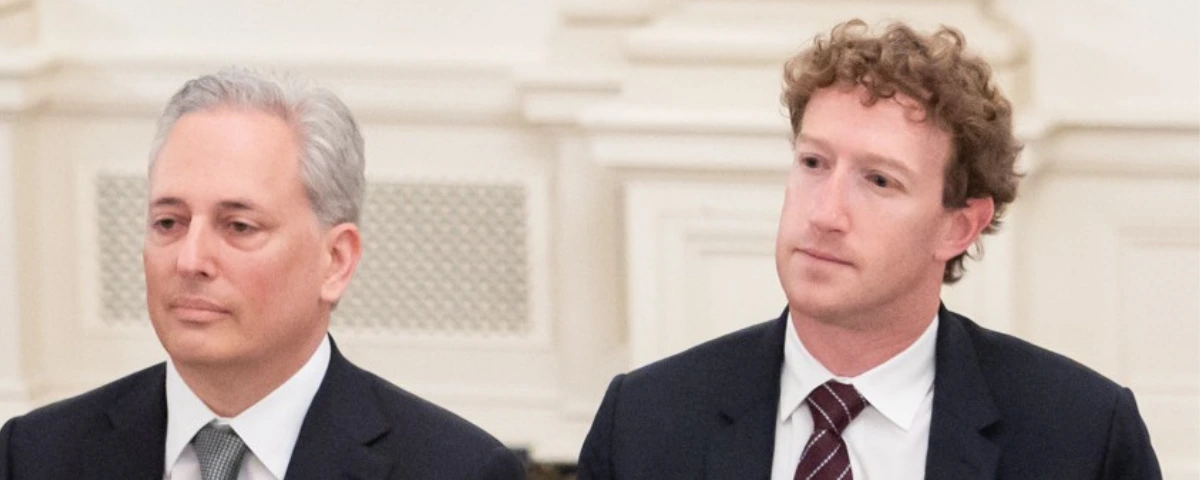
David Sacks, the chair of the President’s Council of Advisors on Science and Technology, has highlighted Meta CEO Mark Zuckerberg’s message on Wednesday that AI safety should be treated as part of a lab’s routine work, rather than something companies should wait for others to undertake collectively.
Sacks shared Zuckerberg’s remarks on X, amplified Zuckerberg’s statement that Meta delayed shipping its Muse system for several months to focus on safety and security. Zuckerberg said other AI labs could adopt independent evaluators and advisers themselves, pointing to Meta Superintelligence Labs’ use of them in several areas.
Mark Zuckerberg: “Meta delayed shipping Muse for several months to focus on safety and security. We didn’t call for everyone else to do this before we would. We just did it as part of our day-to-day work because it was clearly the right thing for people and for us.” https://t.co/cGBwNdGCo2
— David Sacks (@DavidSacks) September 16, 2026
“We didn’t call for everyone else to do this before we would. We just did it as part of our day-to-day work because it was clearly the right thing for people and for us,” Zuckerberg wrote.
He said every AI lab has the responsibility and incentive to move at the pace required to train its models safely, and the ability to take its own actions to ensure that happens.
Zuckerberg also argued that the debate over whether to slow AI capability development until alignment catches up overlooks the growing competitive importance of trust and alignment. Labs that fail to focus on alignment, he said, risk falling behind as users favor agents they can trust and that reliably follow their instructions.
“There is a lot of debate about slowing progress on capabilities until alignment catches up,” Zuckerberg wrote. “My view is that trust and alignment are quickly becoming the most important capabilities that will differentiate agents and models. Any lab that doesn’t focus on alignment will fall behind.”
Zuckerberg said maintaining the “right balance of power” will be key to building a positive future with AI, arguing that “this is within our power to do.”
His remarks come days after Anthropic CEO Dario Amodei called for AI companies to “pace the frontier.” In his September 2026 essay, Amodei argued that the rapid advancement of AI capabilities needs to be slowed down so that safety measures can keep pace.
We Must Pace the Frontier: I’ve written a new essay on why the AI industry should slow down, with a three-part plan for doing so.
Anthropic is unilaterally committing to the first of these steps. We’ll provide third-party evaluators with permanent, employee-level access to our…
— Dario Amodei (@DarioAmodei) September 12, 2026
Amodei proposed a three-step framework: embedded third-party evaluators at frontier AI companies, coordination among companies in democratic countries on common safety standards and limits on unchecked AI progress, and broader global coordination.
OpenAI CEO Sam Altman has also supported the idea of pacing frontier AI development.
On September 13, Sacks responded to Dario Amodei’s call to “pace the frontier” and Sam Altman’s agreement by telling the two CEOs to “go ahead.” He said that by any reasonable metric, including market share, revenue growth and model capability, “the two of you have a duopoly on frontier intelligence.” He also said they should stop pretending that the motivation to slow down is purely altruistic.
Also Read: No OpenAI IPO in 2026; What Happens to Anthropic’s IPO?