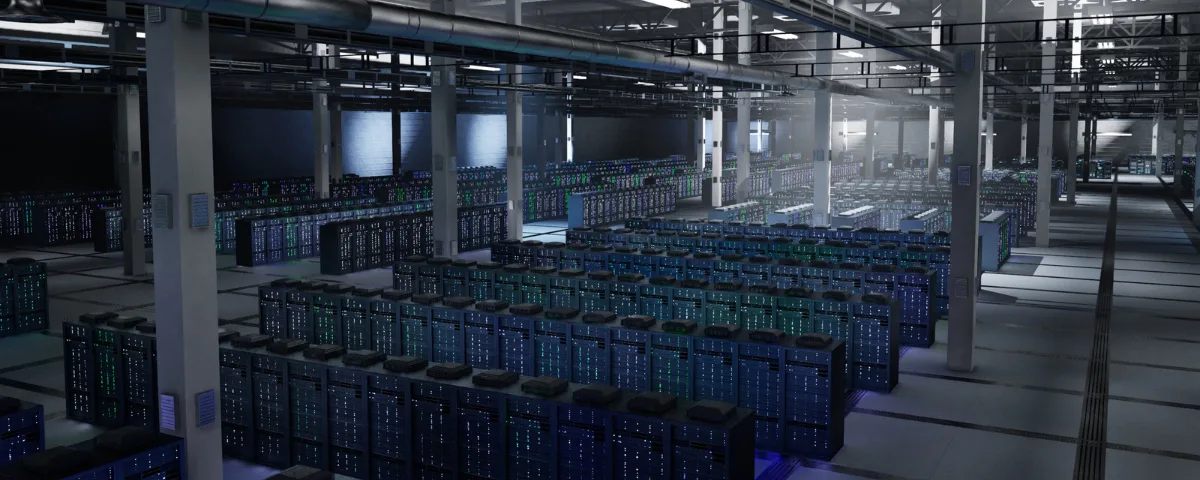
The Brazil government announced a supercomputing infrastructure project valued at 1.3 Billion reais, developed with Chinese technology companies Huawei Technologies and iFlytek at Rio de Janeiro, which is expected to support the development of large language models for general and sector-specific applications
Additionally, the government has announced investments of about 2.3 billion reais ($444.2 million) to strengthen its artificial intelligence ecosystem, that includes another 1 billion reais allocated through a competitive tender to acquire a supercomputer that Brazil expects to rank among the world’s 10 most powerful AI-processing machines. The system will be installed in Rio Grande do Norte, a northeastern state selected for its strong renewable energy potential. The government expects the machine to become operational by the end of next year.
Brazilian officials have indicated that U.S. chipmaker Nvidia is expected to win the tender, although the final decision will follow the bidding process. Science and Technology Minister Luciana Santos previously said Nvidia was likely to supply the equipment.
The government said its strategy is to avoid dependence on a single company, technology or country while strengthening Brazil’s control over data and critical technologies.
The investments will be financed through Brazil’s National Fund for Scientific and Technological Development, with funding released in phases. The announcement comes as China continues to expand its economic role in Brazil, while the United States remains the country’s largest source of foreign direct investment.
Lula’s government also announced plans to develop semiconductors with Spain using the open-source RISC-V architecture, create a Brazilian cloud-computing service through public-private partnerships, and establish a national center focused on algorithmic transparency and trustworthy AI.
Also Read: Countries Buying Sovereign AI Remain Dependent on US Big Tech: Stanford Report