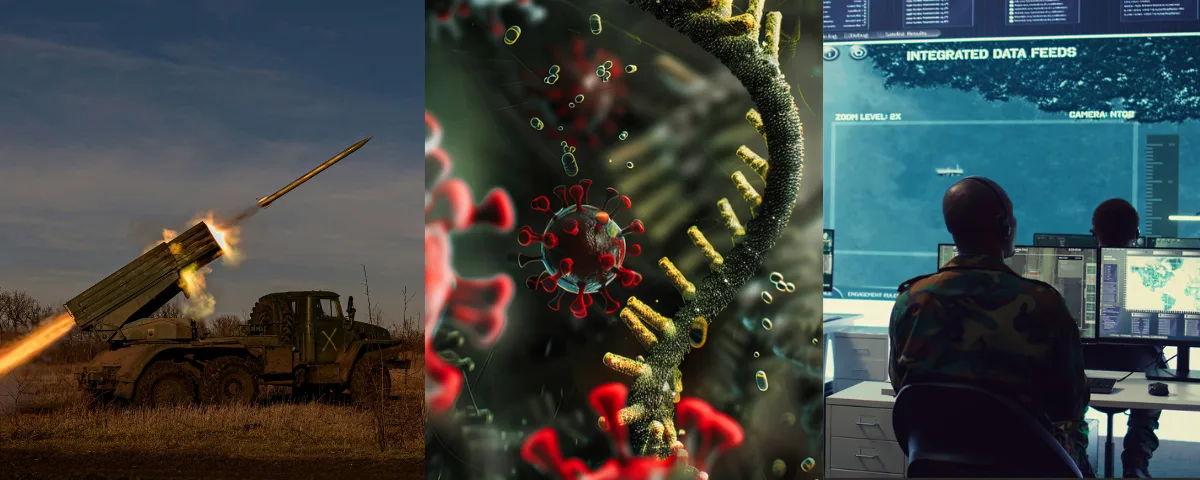
Anthropic, a US based AI company, has released an extensive ‘Detection and Countering’ report, documenting alleged misuse of Claude family of LLMs and Agents for dozens of operations including biological weapons development, ballistic missiles engineering and state sponsored espionage/covert operations from all around the world.
The detailed Anthropic Claude misuse report 2026 published Wednesday documents bad/threat actors from at least 10 countries, from December 2025 to August 2026, who used Haiku, Sonnet and Opus models of Claude family to either assist or completely automate tasks across seven “harm areas”.
The harm areas defined by Anthropic in their report includes cyber operations, influence operations, surveillance, scams and fraud, biological misuse, conventional weapons development, and distillation.
The report alleges several bad actors led operations from China, Russia, Iran however it does not point to a single case of AI misuse from United States, even as it remains a regular target site for bad actors misusing Claude, as per Anthropic.
Another noteworthy point remains that not all acts reported by Anthropic as “misuse of Claude” falls in the category of illegal or covert acts. For example, the act of distillation, when a lesser capable LLM learns from its superior counterpart, is widely accepted as a legitimate way of research and training across the globe.
Anthropic has claimed in its report that the bad actors managed to misuse their early AI models because their safeguards were low. The company has claimed that none of the documented cases include use of Claude Mythos and Claude Fable, their two most marketed frontier AI models.
“The cases we share here aren’t typical misuse, but rather examples of the most notable and novel threat activity we’ve identified to date. We’re publishing this work because we believe we have a responsibility to disclose malicious misuse of our services. As models become increasingly capable, their risks will increase, unless AI developers and society’s defenders act to make them safer. The threat actors covered in this report include suspected state-sponsored groups, financially motivated criminals, commercial spyware vendors, state propaganda institutions, and politically motivated individuals,” read an excerpt from Anthropic
In this explainer article, we will break down Anthropic’s latest cyber security report while narrating the parallel development of the company’s artificial intelligence ability.
What does Anthropic’s Detecting and Countering Cyber Operations Report 2026 say?
An extensive study of the 154 pages long Anthropic report shows misuse of Claude through Anthropic’s API, Claude Code, agentic workflows, third-party resellers/proxies, or fraudulent accounts by alleged bad actors.
Anthropic documents cyberattacks, espionage, credential theft, surveillance, political influence and disinformation campaigns, fraud, weapons development, potentially dangerous biological research, and illicit extraction of AI-model capabilities emerging from countries like China, Russia, Iran, Yemen, France, Turkey, Kenya and Mali.
The serious allegations in Detection and Countering report include insurgents/fighters using Claude Code for ballistic missile weapon engineering, China based actors advancing their anti-torpedo missile system using AI, Chinese tech giant Alibaba allegedly running a “distillation attack” on Claude, Iranian and Russian threat actors allegedly running AI led espionage and influence operations and unnamed actors using AI to develop biological weapons.
Ballistic Missile Development: Yemen
Anthropic reported a group of threat actors in Northern Yemen running three weapon development programs using Claude Code which included a multi-stage ballistic missile with a stated range goal above 2000 kms. Currently, Houthi rebels control large sections of Northen and Western parts of war-torn Yemen.
Anthropic claims their models’ inbuilt safeguards blocked several requests of threat actors however some slipped through a variety of tactics that include hiding end product details and splitting work in sessions.
“We do not have evidence the actors succeeded in fielding an operational device; but they did test-fire a guided rocket. This field test appears to have failed: within hours, the actors returned to Claude to work out why it failed,” said Anthropic in its report.
Anti-Torpedo Weapon System Development: China
According to Anthropic, a China based actor had allegedly used their AI model for design and proposal work on a system intended to intercept torpedoes. The actor allegedly used Claude to benchmark their own system against specific US anti-torpedo.
Anthropic said it banned the user for violating their Supported Regions policy and usage policy, which prohibits weapons design and development.
Alibaba Claude Distillation Allegation: China
Anthropic alleged that tech and AI giant Alibaba was among seven China-based laboratories involved in illicit distillation campaigns targeting Claude. The US based AI company has accused Alibaba of running over 5000 fake accounts, along with stolen credentials, payment cards and API keys for distillation on Claude models between May-June 2026 and has documented 151 million exchanges by them.
Even earlier, Anthropic had made similar allegations against Alibaba and had called for a policy based action from US government against the practise of distillation.
Alibaba, in an exclusive conversation with AI FrontPage, had refuted the allegations made by Anthropic.
Also Read: Inside Story: How Claude Code Dispute Escalated Between Alibaba and Anthropic
Espionage and Influence Operations: Russia and Iran
Anthropic says it identified Claude being used in state-linked cyber espionage and influence operations involving actors from countries including Iran and Russia. Across its cases, the company describes AI-assisted reconnaissance, exploitation, intelligence collection, surveillance, propaganda and deceptive influence campaigns. Anthropic says the actors included suspected state-sponsored groups as well as politically motivated and financially motivated individuals
AI-assisted Biological Research with Weapon Potential
Anthropic reports five cases involving biological research that it says could support biological-weapons development, while explicitly cautioning that these cases do not establish that biological weapons were actually developed. The examples include gain-of-function research, influenza adaptation experiments, orthopoxviral immune-evasion work, toxin optimization and computational redesign of toxins.
What Anthropic’s Report Reveals About the Rise of AI-Assisted and Automated Cyber Operations
The Anthropic Claude misuse report 2026 presents several interesting patterns about how modern day online scams, cyber phishing, influence/covert ops, surveillance and counter-surveillance are assisted with AI tools even when the attacker doesn’t posses complex skills.
The report observes how AI has moved from being an assistant to becoming an orchestrator with enhanced autonomous operations planned by bad actors. According to Anthropic, the bad actors had managed to embed AI inside workflows that execute reconnaissance, exploitation, credential theft, data processing and exfiltration.
“We have identified multiple threat actors who have effectively established automated exploit foundries with AI. In doing so, they have designed and implemented autonomous workflows by which they can direct Claude to conduct vulnerability and exploit research agentically around the clock. Across multiple instances, we identified Claude being used to meaningfully accelerate the pace of vulnerability research, testing, and exploit design,” observed the report.
Another important pattern noticed in the report is how AI has dramatically reduced attack timelines and also the know-how to carry sophisticated cyber attacks.
Describing “vibe hacking”, Anthropic says several times the operators directed AI to achieve goals by allowing it to evaluate the environment, author and execute scripts, provide summaries, and repeatedly execute until the task is complete.
“Very often, the operator may not directly understand each target environment or the complexities of finding and accessing valuable information, instead deferring the specifics to the AI,” read the report.
Also Read: Beyond the SEBI Mythos Advisory: Why Experts Say India’s Markets Are Entering a New Threat Era
Why Didn’t Anthropic’s AI Models Refuse Harmful Requests?
Anthropic observes in its report that out of many instances, the three AI models of Claude refused to entertain the user however there were also times when the safeguards failed after further prompting and divided sessions.
Take for example, the use of AI for ballistic missiles training in Yemen. According to Anthropic, the bad actors had used several techniques to hide their goals by splitting work across many sessions.
“The actors used a variety of tactics to evade our safeguards, including hiding their goals and the products the software was meant for, and they split their work across multiple sessions so no single session revealed their full intent,” said Anthropic.
Anthropic’s latest report offers a glimpse into a changing AI threat landscape in which frontier models are no longer being used merely to answer questions, but are increasingly being embedded into workflows that can research, analyse, code, surveil and execute tasks at scale. The AI company claims that their latest report will help them enhance their models’ in-built safeguards.
Also Read: Explained: Why is Anthropic Calling for a Global Pause on Frontier AI?