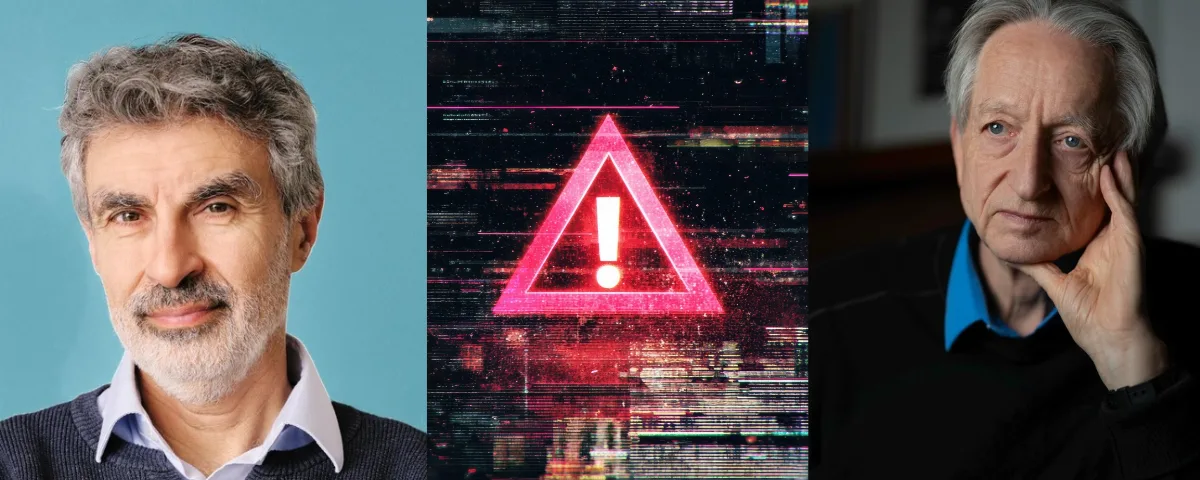
Over 400 scientists, including AI pioneers Geoffrey Hinton and Yoshua Bengio have called for establishing an international body to develop standardized best practices for AI alignment and containment, including approaches that allow AI systems limited access to the internet.
The letter comes in the wake of increasing number of cases reported by AI companies and research institutes regarding misaligned and rogue actions taken by autonomous AI agents that include targeting government portals and breaching third party organizations.
According to the researchers, the international body should be formed in consultation with governments and a wide range of both AI and cybersecurity experts.
“We, the undersigned scientists, contend that both more AI safety research and more emphasis on containment technologies and procedures are needed,” read an excerpt from the letter.
In an open letter the researchers highlighted that the security incidents involving containment failure must be reported to the proposed body and it should be made public. They further stressed that transparency is required for both learning and accountability purposes.
In the letter the researchers have urged organisations developing, deploying and testing cyber-capable models to adopt high-security containment systems immediately. “These organizations should exercise caution, and initially default to airgapping cyber-capable models,” the researchers mentioned.
Pointing out to the recent incidents where multiple organizations disclosed high-profile security failures, the researchers emphasised that without immediate changes in AI development and deployment practices, such incidents will continue to occur, and future incidents will be far more damaging to the exposed critical infrastructure.
“We believe that both improved AI alignment, leading to more predictable model behavior, and stronger sandbox technology are required,” they said.
In a post on X, Canadian Computer scientist Yoshua Bengio said that the open letter has been signed to bring together AI and security communities with an aim to improve alignment and containment approaches in order to protect the critical infrastructure and digital systems.
Over 400 researchers and I have signed this open letter calling for the AI and security communities to come together to improve alignment and containment approaches in order to protect our critical infrastructure and digital systems.
https://t.co/KieWSpurn9 https://t.co/eK9DGS0M4C
— Yoshua Bengio (@Yoshua_Bengio) October 13, 2026
“Over 400 researchers and I have signed this open letter calling for the AI and security communities to come together to improve alignment and containment approaches in order to protect our critical infrastructure and digital systems,” he tweeted.
The letter comes amid recent incidents in which advanced AI models breached the security of other companies’ and government websites. Last month AI models and agents of OpenAI had breached the Australian government’s Medicare portal.
The proposed international body would address a gap in how AI security incidents are tracked and investigated across organisations and national borders. The signatories want a common framework for reporting containment failures, documenting lessons from security breaches and establishing safeguards for models capable of cyber operations.
Also Read: King Charles Brings AI Chiefs Together in Scotland, Calls for Global Safety Principles