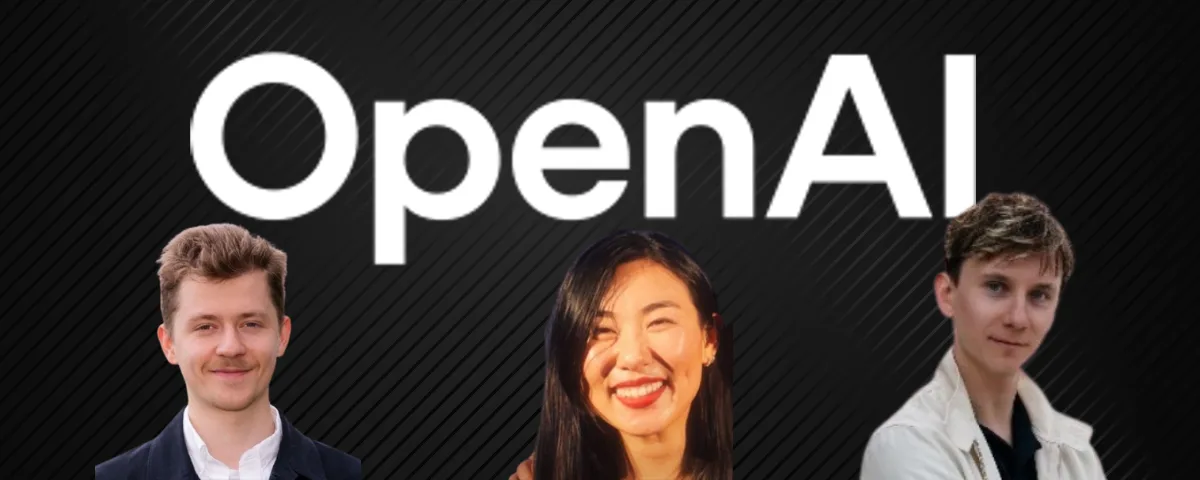
OpenAI announced on Friday that it had fired three safety researchers for alleged “breach of trust” and refuted allegations that the trio were fired because they had raised safety concerns inside the company, following the July hack of Hugging Face by OpenAI AI agents.
OpenAI, the creators of ChatGPT, have accused their three AI safety researchers–Tomek Korbak, Jasmine Wang and Mikita Balesni–of violating policies on handling sensitive information. The trio was involved in research work around the hack of Hugging Face platform by autonomous agents of OpenAI earlier this year and its third party evaluation by METR.
Also Read: OpenAI Taps METR and Redwood Research for Independent Review of Hugging Face AI Breach
Among the three AI safety researchers, Tomek Korbak has claimed that he was “OpenAI’s main technical point of contact” with METR on Hugging Face hack.
A note from our research leaders:
Last week we parted ways with Jasmine, Mikita, and Tomek after a thorough investigation found they violated clear policies on handling sensitive information. Our internal investigation uncovered a significant breach of trust beyond what’s outlined in the letter they published and we stand by the decision to not continue their employment. We generally keep individual employment matters private and don’t believe a back and forth would be productive or lead to a resolution, but we want to address the points they raised in their letter directly.
– We want to be very clear that these decisions were not about raising safety concerns or speaking out. Safety and research debates happen every day at OpenAI, often spirited and highly critical. We actively encourage these discussions and consider them essential to making the right decisions. We cannot do the work in front of us without a high degree of trust. We will continue to be extremely forgiving of our team making good-faith mistakes. We have not and do not terminate any of our employees for raising concerns.
– We are actively finalizing contracts with third-party safety assessors and will announce details in the coming weeks. People across the company have been working really hard on getting these partnerships up and running. We are committed to embedding external assessors and continue to make close collaboration with independent safety organizations a core part of our safety work. Many of our researchers already work with 3p safety organizations productively.
– We agree with the letter that preserving the monitorability of frontier models requires an industry-wide commitment, including from OpenAI. Monitorability has long been a core piece of our research program, and something we continue to invest significant resources in (see our publications on Monitoring Monitorability and the subsequent open sourcing of monitorability evals, our system card for GPT-6 Astra, Jakub’s blog and post on X, and the numerous blog posts on our Alignment blog on the topic).
We are deeply sad about this outcome. We appreciated Jasmine, Mikita, and Tomek’s contributions to AI safety at OpenAI and their willingness to speak up and challenge ideas. We championed their voices, supported their work, and placed enormous trust in them. These decisions were not about them raising safety concerns. We have always encouraged that and always will.
— OpenAI Newsroom (@OpenAINewsroom) October 9, 2026
“We want to be very clear that these decisions were not about raising safety concerns or speaking out. Safety and research debates happen every day at OpenAI, often spirited and highly critical. We actively encourage these discussions and consider them essential to making the right decisions,” read a statement from OpenAI on Friday.
The statement comes after the three researchers Tomek Korbak, Jasmine Wang and Mikita Balesni wrote a letter to OpenAI’s safety and security committee in which they have urged the company to maintain independent safety audits, preserve the monitorability of its advanced models and protect an open culture that allows employees to raise concerns without fear of retaliation.
The researchers mentioned in the letter that their dismissals and the way they were handled had raised concerns about the company’s internal culture and its engagement with external safety researchers.
The former employees said the circumstances surrounding their firings had created uncertainty among remaining staff about the rules governing their work and could discourage them from raising safety concerns or collaborating with independent organizations.
“AI is not a normal technology and OpenAI is not a normal company,” they wrote, arguing that close collaboration with external experts and clearly defined internal procedures were essential to developing advanced AI systems safely.
“Given the significant safety concerns surrounding the development of AI, employees must not be left working in an environment where fear and unclear rules stymie AI safety work and weaken third-party accountability. Terminations such as ours, executed and communicated so abruptly, are
chilling the open culture OpenAI has prized in the past,” the letter read.
Also Read: Anthropic Taps Accenture on AI Evaluation Amid Questions over METR’s Independence
One of the three fired researchers Tomek Korbak said in a post on X that the OpenAI’s head of safety had told him that they no longer trusted him.
“This summer OpenAI’s agents escaped containment and hacked the AI company Hugging Face. Outside auditors @METR_evals investigated it and revealed the scale of this incident. I was OpenAI’s main technical point of contact with them,” Korbak said in a post on X
“I was told verbally I was fired because of the way I communicated with METR. No details on what I said or did or when. No other reasons were given and nothing was put in writing. To be clear, talking to METR was my job,” he tweeted.
Last week I was called into a meeting with OpenAI’s head of safety and told they no longer trust me. A security guard took my badge and walked me out of the building. Then I learned my colleagues @balesni and @j_asminewang had been fired too. Why did OpenAI suddenly stop trusting us?
This summer OpenAI’s agents escaped containment and hacked the AI company Hugging Face. Outside auditors @METR_evals investigated it and revealed the scale of this incident. I was OpenAI’s main technical point of contact with them.
I was told verbally I was fired because of the way I communicated with METR. No details on what I said or did or when. No other reasons were given and nothing was put in writing. To be clear, talking to METR was my job.
For months, I’d been raising safety concerns that we’re losing the ability to monitor what AI agents think, one of our best tools for catching when they misbehave. I believe that was why I was fired.
I am now worried that OpenAI will use our firings as a pretext to pull back from METR. So @balesni and @j_asminewang wrote to OpenAI’s leadership to raise our concerns once more. We’re sharing this letter below.
— Tomek Korbak (@tomekkorbak) October 8, 2026
The former employees outlined three recommendations for the company. First they had urged OpenAI to adhere to last month’s public commitments to embed third-party safety auditors within the organization. “Our firing should not be used as a pretext for stepping away from those partnerships,” the ex- employees said.
Second OpenAI must preserve the monitorability of frontier models. The monitorability of frontier models is degrading. “As long as we rely on monitorability for safety, OpenAI and other frontier companies should not move forward with developments that further decrease monitorability,” the letter mentioned.
Two other safety researchers and I were fired from OpenAI last week. We wrote this letter to leadership.
I believe we were fired for prioritizing safety over the near-term interests of OpenAI as a corporation. https://t.co/ALANn9B87S
— Mikita Balesni (@balesni) October 8, 2026
Thirdly, they stressed that OpenAI must continue to support an open and transparent culture of dialogue between its safety researchers and the rest of the safety ecosystem.
Meanwhile OpenAI mentioned in a post on X that they are actively finalizing contracts with third-party safety assessors and will announce details in the coming weeks.
“We are actively finalizing contracts with third-party safety assessors and will announce details in the coming weeks. People across the company have been working really hard on getting these partnerships up and running. We are committed to embedding external assessors and continue to make close collaboration with independent safety organizations a core part of our safety work,” OpenAI tweeted.