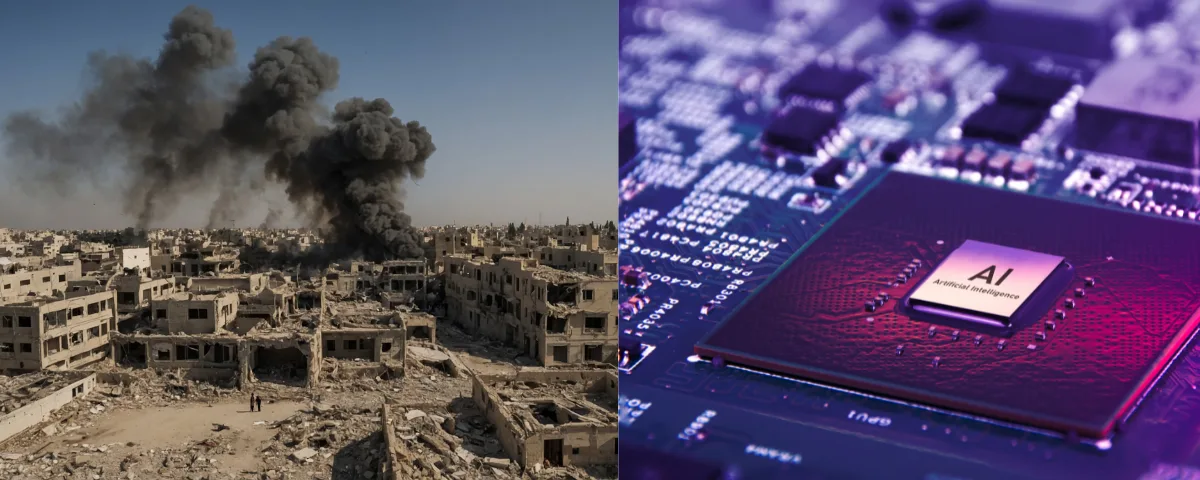
Artificial intelligence is emerging as a key driver of global growth, helping offset some of the economic impact of the ongoing Middle East conflict, according to the International Monetary Fund’s (IMF) July 2026 world economic outlook update.
In its report, the IMF projects global growth at 3.0 percent in 2026 and 3.4 percent in 2027. While sounding optimistic for AI investment led prospects, the IMF report also warns of the widening divide between countries spearheading the AI led developments and those with limited participation.
“The modest slowdown reflects the effects of the war in the Middle East being partly offset by accelerated demand-driven momentum in the global technology cycle thanks to advances in artificial intelligence (AI) and its adoption,” the IMF said.
According to the report economies with strong exposure to AI hardware manufacturing and semiconductor exports have emerged as the biggest beneficiaries. It highlighted that countries which export AI-related hardware including Taiwan Province of China, Korea, Thailand, and Malaysia outperformed economic forecasts by a wide margin as demand for AI technologies surged. Their economies grew an average of 4.4 percentage points more than expected, while most other countries slightly missed growth expectations.
“Korea, despite its heavy reliance on imported energy from the Middle East, surprised with a 7.5 percent growth rate, more than four times the 1.8 percent projected in April, powered primarily by a semiconductor and AI-hardware export boom,” the report mentioned.
July update from the IMF is out. Iran conflict and AI supercycle driving the outlook. AI-driven productivity increases not yet in the baseline. Inflation is a bigger concern. The good news (for now) is that financial conditions are peachy. https://t.co/4OQoSQoe0n pic.twitter.com/UKKA5l3FtQ
— Gita Gopinath (@GitaGopinath) July 8, 2026
The IMF noted that countries participating in the AI-led developments are experiencing stronger economic activity even when they are net energy importers, highlighting the growing importance of technology in cushioning external stocks. In contrast economies with limited participation in the AI related advancements, specially many low income and energy importing countries are expected to face slower growth as higher fuel and food costs weigh on demand.
The IMF said that continued investment in AI could boost the global economic growth if AI-related capital spending remains strong and will also help in reducing the impact of geopolitical tensions, trade fragmentation and weak policy buffers but it cautioned that AI hype and exuberant financial markets could, at the same time, sow the seeds of macro financial instability.
The IMF stressed that governments can maximize AI’s economic benefits by investing in energy, digital infrastructure and critical supply chains while making it easier for workers to move into new industries.
“If the recent surge in AI-related investment were to translate more rapidly into broad-based deployment and efficiency gains, medium-term growth could strengthen. The gains would likely be larger and more persistent if accompanied by policies that ease energy and infrastructure constraints, increase access to critical inputs, and facilitate labor reallocation across sectors,” the IMF said. While in low income countries the benefits of AI can only be reached after improving electricity supply, digital infrastructure, and skills.
However, the IMF warned that the AI boom also poses significant risks. If expectations around AI-driven profits and productivity prove overly optimistic, investment in technology-intensive sectors could fall sharply, triggering a correction in stock markets, particularly in economies heavily dependent on AI exports and technology companies. Such a market correction could weaken consumer spending, tighten global financial conditions and slow economic activity beyond the technology sector through trade, investment and capital flows.
The IMF also warned that AI could increase cybersecurity risks to digital infrastructure and can disrupt financial intermediation and payment systems.
Also Read: AI Creating Two-Track Labor Market, AI ‘Professionals’ Get 42% Higher Wage