Note: To protect the identities of former Oracle employees who said they are still completing post-employment formalities with the company, this article does not disclose their names, departments or precise job titles.
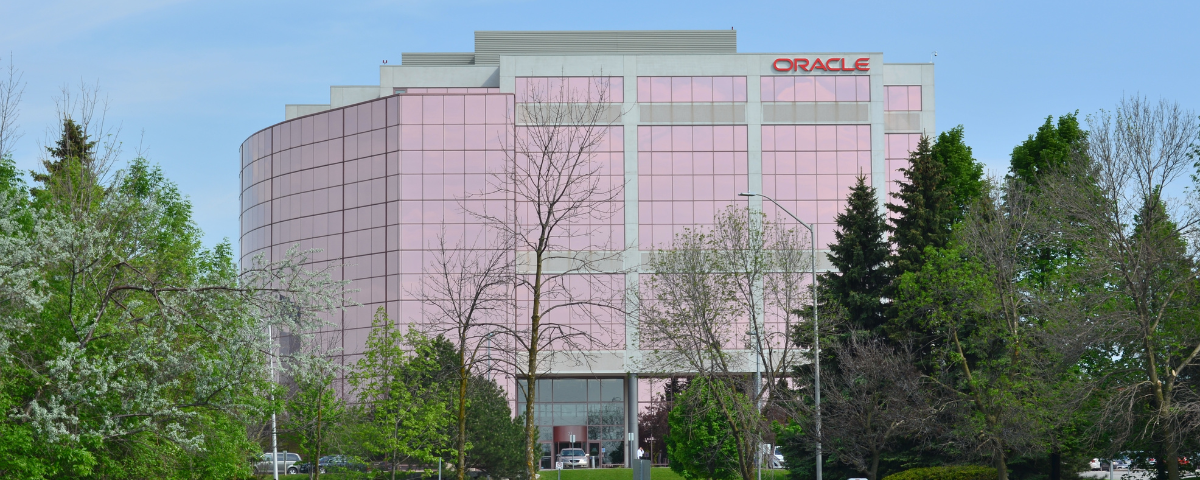
For 45-year-old Merugu Sridhar from Hyderabad city of India, last Tuesday March 31 brought a “I told you so” moment as news came in of Oracle axing up to 30,000 employees globally, in what industry analysts described as company’s restructuring tied to spending on AI infrastructure.
Media reports indicated that India was among the regions most affected, with Hyderabad cited repeatedly as a major centre impacted by the layoffs.
Sridhar, an IT Cloud Consultant with Oracle for 11 years, was fired in September 2025, months after he had approached the state human rights body and labour commissioner with complaints regarding what he described as a 16-hour work schedule. Oracle has not publicly responded to those allegations.
He says his phone hasn’t stopped ringing ever since Oracle laid off employees in its Hyderabad office.
“More than a hundred ex-employees of Oracle have now reached out to me in distress. One person is a cancer-survivor undergoing treatment, a friend had just purchased his house– these are people who have EMIs and bills to pay. The severance package is bare minimum and the way they were fired with a 6 am email without any HR exit process is shocking ,” said Sridhar.
Recently, former MP and president of Telangana Jagruthi Party, Kavitha Kalvakuntla called for severance packages paid to employees displaced by AI-related restructuring to be exempted from income tax.
Also Read: Exclusive: “Waive Income Tax on AI Layoff Severance”: Kavitha Kalvakuntla
Sridhar adds that he is compiling complaints from ex-Oracle employees regarding the manner in which they were laid off, the severance package offered and pending invoice for overtime.
“I am going to lodge a formal complaint against Oracle with the Labour Commissioner office of Telangana. I understand that these people fear repercussions from the company and their fears are not baseless. So I will be representing them and if need arises, I will also stage a protest outside the Oracle office in Hyderabad,” said Sridhar.

Oracle, a U.S. based multinational tech giant founded almost 50 years ago, has not confirmed the lay off figures but as per industry reports, it has trimmed roughly 18% of its global workforce of 162,000 people. The hardest hit divisions were Revenue and Health Sciences (RHS) and SaaS operations (SVOS), each losing 30% of their staff along with NetSuite’s India Development Centre in Hyderabad.
The pink slip arrived in the form of a brief email at 6 am on March 31st, with employees getting automatically logged out of their systems in a day and no exit interview by HR.
As media reports emerged the next day on the lay-off numbers, the mood was grim on LinkedIn.
Several ex-employees of Oracle had put the green badge of #OpenToWork on their profile pictures while a few veterans had taken this opportunity to bid emotional adieu to a company where they forged lifetime friendships. One year, 10 years, 20 years, 30 years of work experience- all shown the exit door with a 6 am email.
Some analysts and former employees pointed to Oracle’s rising debt levels and increased spending on AI infrastructure as possible factors behind the restructuring announced on March 31. As per media reports, industry sources indicate another round of mass layoffs planned by Oracle as they advance towards a more centralized automated workforce.
AI FrontPage reached out to several ex-employees of Oracle, from the U.S. to India, who were fired in the latest lay off drive. A few declined to speak, while others shared their stories requesting anonymity.
In this exclusive report, AI FrontPage editor Vaibhav Jha speaks to ex-employees of Oracle who describe the after effects of a massive lay-off, their fears for the future of the IT workforce and their admiration for all the frontier technology—-artificial intelligence.
We have also reached out to the special labour commissioner Pamela Satpathy and IT Minister of Telangana Sridhar Babu for their comment on the developing story.
“First Reaction was Shock, Wanted a Human To Tell Me I am No Longer Needed”
For this senior employee at Oracle in the U.S., the first reaction was shock.
“I’ve survived so many layoffs, and thought I had a good relationship with the new team. News was sudden, without warning, from an impersonal email sent at 3 am. But that’s all public. No meeting, no voicemail, no slack message, no personal email from an identified human, nothing,” she said.
She claims the organization gave her lifelong friendships built over decades.
Back when I joined Oracle, it was an absolutely stellar place to work. Everything was to help develop great products with quality and features. So much support, respect, collaboration, attention to quality. We were given a great deal of autonomy, and the opportunity (challenge) to create critical and time-sensitive systems and practices from scratch. The work was challenging, fun, and rewarding,” she adds.
“We Trained AI, Now it is Replacing Us”
Former employees told AI FrontPage that, in the months before the layoffs, they had been asked to document their workflows and identify tasks that could potentially be automated using AI tools.
“We were asked to document our entire workflow as part of our new KRAs. We were asked to suggest ways AI can help us in our jobs, I had no idea I was training AI to replace me eventually,” says a 28-year-old Cloud consultant from Vishakhapatnam.
The same was confirmed by Sridhar and four other former employees AI FrontPage spoke to.
For this mid-senior employee from the Noida office in Delhi-NCR, Oracle was an opportunity he received during covid pandemic.
“I was hired in 2020 and I really saw a future in this company, rising through the ranks to become team lead. My juniors, who survived the axe, are now messaging me on social media for leads. It’s unbelievable,” he said.
He says the firings in India, Canada and U.S. have been across verticals.
“My friends from Austin to Bengaluru have been texting since two days, there is not much I can reveal regarding the company’s compensation policy right now,” he said.
Is AI the scapegoat?
Sridhar says blaming AI as a flat reason for massive lay-offs is more of a smokescreen.
“I do not believe AI alone explains these layoffs,” he said. “The company also appears to be under pressure to reduce costs while investing in new technology.”
Similar sentiments are echoed by a veteran professional of Oracle who was also fired last Tuesday.
“I think this layoff has been badly mischaracterized as a large layoff because AI is taking our jobs. Sure, eventually, there may be a trend in that direction. But that hasn’t happened yet – at least from what I’ve personally seen. These jobs aren’t gone because AI took them. They are gone because Oracle is investing heavily in AI, and there isn’t infinite money to be had,” she said.
Oracle Declines to Comment on AI FrontPage Questions
AI FrontPage had sent a detailed questionnaire to Oracle, however, the company management refused to answer.
“Thank you for reaching out. We will decline comment,” said Oracle.
Conclusion: What’s Next for Oracle’s Laid Off Employees?
For many ex-employees of Oracle, the road ahead seems uncertain. Talent will find its path undoubtedly but Indian as well as global job markets are also shaky at the moment. According to the State of Working India 2026 Report, prepared by Azim Premji University, nearly 40% graduates among the 15-to 25-year-olds are unemployed, while 20% graduates among the 25-to-29-year-olds are unemployed.
Telangana CM Revanth Reddy had recently proposed the concept of “People’s Credit” taxation on companies to compensate for any AI induced job loss. It remains unclear whether we can see a pan India level implementation of the scheme.
The former oracle employees interviewed by AI FrontPage never once claimed hate or prejudice against AI or emerging tech, in fact many of them, acknowledged the role of AI tools for helping them streamline their work. They say, it was more about the lack of human connection than automation that has left them dejected.