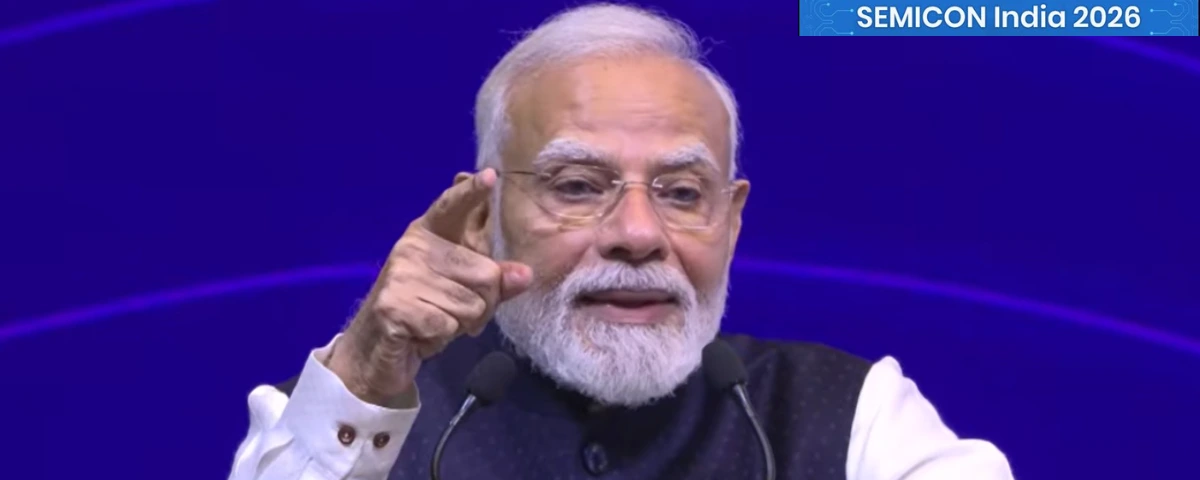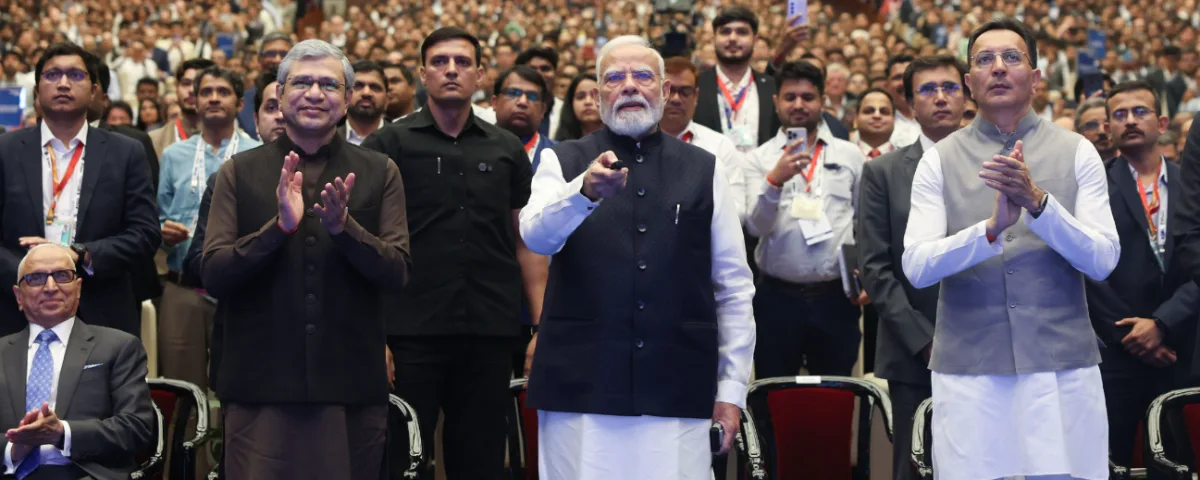
India’s semiconductor push has entered a new phase, with Prime Minister Narendra Modi virtually inaugurating commercial production at Suchi Semicon’s advanced semiconductor assembly and testing (OSAT) plant in Surat, Gujarat, on the opening day of SEMICON India 2026.
The ₹868-crore facility, approved under the India Semiconductor Mission in May 2026, has an annual production capacity of 1,033.20 million semiconductor chips and will undertake chip assembly, advanced packaging and testing. Its target markets include power electronics, automotive and electric vehicles, industrial automation, consumer electronics and energy management.
💠 Prime Minister @narendramodi inaugurated SEMICON India 2026; Unveiled India’s Ambitious Roadmap for Transition to Semicon 2.0, with Expanded Support for Design, Manufacturing, Packaging, R&D and Talent Development
💠 PM interacted with Young Chip Designers and Students;… pic.twitter.com/2NvnkDy6VF
— PIB India (@PIB_India) September 18, 2026
The Suchi Semicon OSAT plant project was approved by the union cabinet in May 2026 under the India semiconductor mission. The plant has also entered into a technology collaboration with Japan based ROHM semiconductor.
Meanwhile the Indian government claimed to have secured an investment of around $11-12 billion under Semicon 2.0, union electronics and IT minister Ashwini Vaishnaw informed on Thursday.
Speaking at the SEMICON India 2026 event, the minister said the commitments cover semiconductor equipment, materials, gases, chemicals and substrates, with the investments expected to materialize over the next two to three years.
⇒ Semicon 2.0 to deepen India’s semiconductor ecosystem with focus on design, equipment, fabs, advanced packaging, R&D and talent
⇒ Around ₹1 lakh crore investment commitments received; close to 1 lakh new employment opportunities expected across the ecosystem
⇒ Semicon… pic.twitter.com/cYCmF7cjRa
— PIB India (@PIB_India) September 18, 2026
Vaishnaw highlighted that the companies would decide the location of their semiconductor projects based on factors such as policy certainty, government support and strength of the surrounding system.
“Industry chooses the location depending upon where they feel more comfortable, how much policy certainty they see, what kind of support they see from governments, from the other ecosystem fields,” he said.
SEMICON 2.0 was approved with an outlay of Rs 1.27 lakh crore and focuses on chip design, semiconductor equipment and materials, fabs, advanced packaging, research and development and talent development.
On the second day of SEMICON India 2026, Tata electronics also signed an agreement with Ascendas First Space to develop a 363-acre vendor park in Gujarat’s Dholera to build a supplier ecosystem around its semiconductor fab.
It has also signed agreements with Fujifilm to localise critical semiconductor materials and with JSR corporation for photoresists and advanced chemicals for the Dholera fab.
Meanwhile L&T Semiconductor Technologies Limited, a wholly owned subsidiary of Larsen & Toubro, unveiled 40 semiconductor products at the SEMICON 2.0 event. The company said the 40-product portfolio reflects its focus on strengthening the country’s semiconductor capabilities across three strategic priorities. These are national security, digital sovereignty and energy resilience.
TCS has launched custom system-on-chip (SoC) design services for automotive OEMs and semiconductor ecosystem companies. According to the company this advanced range of services will help auto manufacturers conceive, design, verify, implement, and validate custom SoC solutions for the next-generation of software-defined vehicles.
The prime minister on Thursday said India has entered the second phase of its semiconductor mission, as he warned that the growing “weaponization” of global supply chains has made the country’s semiconductor push more important.
Addressing the fifth edition of SEMICON India 2026 on September 17, Modi said semiconductor ecosystems elsewhere had taken decades to develop, while India had worked on several parts of the industry at the same time.
So far, 12 semiconductor projects have been approved, he said, adding that the scope would expand in the next phase.