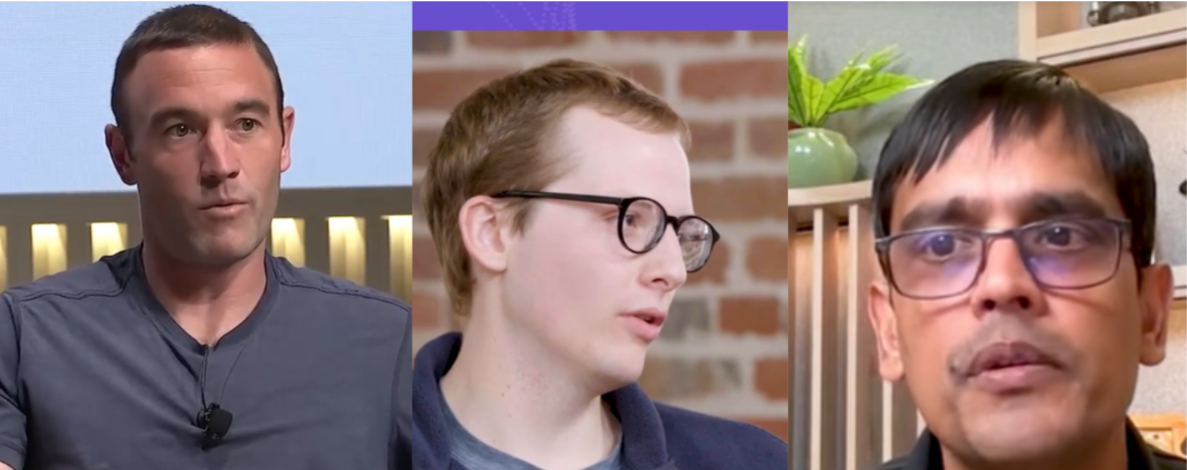
In an unusual same-day development, three senior OpenAI executives – Kevin Weil, Bill Peebles, and Srinivas Narayanan – announced their departures in separate posts on X, marking the latest in a pattern of leadership churn at the artificial intelligence startup. OpenAI has not issued a formal announcement on the exits, though reports suggest the changes are part of a broader effort to streamline operations and unify product strategy.
Weil said his exit comes as OpenAI restructures its scientific efforts, noting that “OpenAI for Science is being decentralized into other research teams.” He described his two-year stint, spanning product and research roles, as “mind-expanding,” and said accelerating scientific discovery will be one of the most significant outcomes of the push toward AGI, as the company increasingly aligns its research with product and commercial priorities.
Today is my last day at OpenAI, as OpenAI for Science is being decentralized into other research teams. It’s been a mind-expanding two years, from Chief Product Officer to joining the research team and starting OpenAI for Science. Accelerating science will be one of the most…
— Kevin Weil 🇺🇸 (@kevinweil) April 17, 2026
Peebles, who led development of the Sora video model, reflected on his time more personally, calling it “the honor and adventure of a lifetime.” He recalled an early breakthrough – a surreal test clip featuring a “land shark” moving through desert cacti – where the model preserved fine visual details with unusual consistency. “That’s when we knew we were onto something,” he wrote, describing one of several “oh-shit moments” that marked Sora’s progress. What once seemed unlikely, high-quality, multi-shot video generation, was achieved in just seven months.
sora roadmap update: in the spirit of building this app openly, here’s what we’re landing soon.
first, more creation tools. character cameos are coming in the next few days: you’ll be able to cameo your dog, guinea pig, favorite stuffed toy, and pretty much anything else you… pic.twitter.com/GX7CJXWRcZ
— Bill Peebles (@billpeeb) October 22, 2025
Also read: OpenAI Shuts Sora Over “AI Slop” Criticism; $1B Walt Disney Deal Collapses
Narayanan, who led OpenAI’s B2B engineering team as well as its earlier applied engineering efforts, said he is stepping down following a wave of major product launches, noting that this “felt like the right time to step back.” He described his tenure as “an incredible journey that felt more like ten,” pointing to the team’s role in building “some of the fastest-growing products in history,” including ChatGPT and the API, often without a clear playbook. He plans to spend time with his aging parents in India before deciding what comes next.
After 3 incredible years, I am leaving OpenAI at the end of next week.
I shared my decision with the OpenAI leadership team at the start of the month and here is a shorter version of what I shared with my team earlier this week.
===
Hi Team,
I have decided to leave OpenAI. The…— Srinivas Narayanan (@snsf) April 17, 2026
Each exit carries its own context from restructuring, milestones reached, or personal timing but together they highlight an unusual moment: three senior leaders stepping away within hours of each other. At a time when the company is scaling rapidly and facing intensifying competition, leadership continuity – and who stays or leaves – carries outsized weight.
The exits come amid growing unease within OpenAI and renewed scrutiny from some employees and shareholders questioning CEO Sam Altman’s leadership and outside interests, according to media reports. Concerns reportedly center on his external investments and focus as the company moves toward a potential IPO.
The departures follow earlier high-profile exits including Ilya Sutskever, who left to launch a new AI venture; Jan Leike, who raised concerns about OpenAI’s safety direction; Caitlin Kalinowski, OpenAI’s robotics and hardware leader, who resigned over the company’s reported deal with the U.S. Department of Defense (Pentagon) involving AI use in classified U.S. military systems, raising concerns over surveillance and autonomous weapons. Miles Brundage, who stepped down to pursue independent research highlights continued leadership churn as OpenAI navigates competing pressures across research, commercialization, and the growing role of AI in defense.
Also Read: OpenAI Taps Kiran Mani to Lead APAC Expansion Amid Growing Backlash