Distillation, the machine learning technique when an inferior or smaller AI model learns from a superior, more complex AI model, remains a hotly contested topic in the AI industry.
AI Model Distillation or Knowledge Distillation has the American AI and tech companies divided. Some see it as a standard practice in academia and research while some see it as brazen theft of intellectual property rights. Some also see the irony.
Companies like Anthropic have openly criticized the practice of distillation calling it “illicit extraction” and accused China based AI labs of “stealing” data from their indigenous Claude family of models.
Similarly, OpenAI recently released a report claiming they’ve blocked “adversarial distillation” attempts on their AI models, fearing that the “student model” might not be equipped with the internal safeguards that otherwise come with OpenAI models.
On the other hand, there are tech giants like Google, Meta, NVIDIA, Microsoft, IBM, Alibaba and other AI companies that endorse distillation as a legitimate learning practice in the AI field and in the broader context, also support open weight AI models.
Recently, Clement Delangue, co-founder and CEO of Hugging Face portal, lauded Google for publishing its latest report ‘Supervised and Distillation fine-tuning for open models’ like Llama 3.1 via its Gemini platform, enabling smaller student models to learn from larger teacher models.
Distillation is good and healthy in AI. It’s one of the few things limiting extreme concentration of power, capabilities and wealth (and very similar to how AI companies got successful distilling the web). Great to see @Google promoting it! https://t.co/LDMuX2upMA
— clem 🤗 (@ClementDelangue) November 27, 2026
“Distillation is good and healthy in AI. It’s one of the few things limiting extreme concentration of power, capabilities and wealth (and very similar to how AI companies got successful distilling the web). Great to see Google promoting it,” said Clement in a post on X.
On the other hand, Sarah Heck, Head of Public Policy at Anthropic, lauded OpenAI for their recent statement on thwarting adversarial distillation attempt on their models.
Great to see this from @OpenAI. Every American lab is a target for illicit distillers, and it’s important that we all take these steps. We’ve invested heavily in our own defenses, and the early results are encouraging. https://t.co/Y3qeiOPwuq
Stopping illicit distillation is one part of protecting America’s AI lead and protecting our national security. The other is limiting China’s access to the most advanced chips. We’ve long championed the AI OVERWATCH Act, the MATCH Act, and the Chip Security Act, and we urge Congress to swiftly pass them.
— Sarah Heck (@SarahKHeck) November 22, 2026
“Every American lab is a target for illicit distillers, and it’s important that we all take these steps. We’ve invested heavily in our own defenses, and the early results are encouraging. Stopping illicit distillation is one part of protecting America’s AI lead and protecting our national security. The other is limiting China’s access to the most advanced chips. We’ve long championed the AI OVERWATCH Act, the MATCH Act, and the Chip Security Act, and we urge Congress to swiftly pass them,” said Heck.
What is Distillation in AI Models?
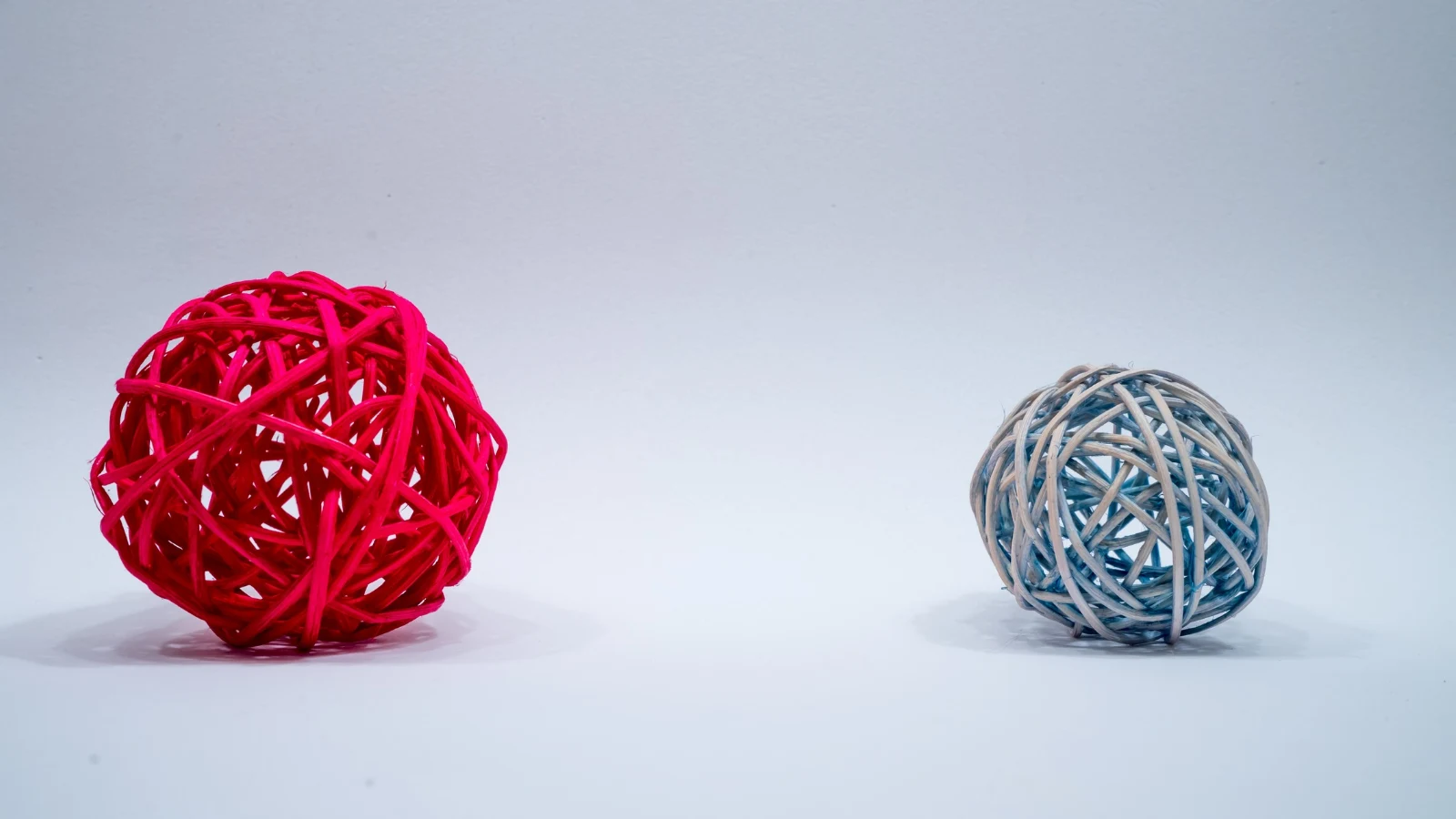
Knowledge distillation (or model distillation) is a machine-learning technique for transferring knowledge from a large, high-capacity “teacher” model to a smaller, more efficient “student” model.
Introduced in its modern form by Hinton, Vinyals, and Dean in 2015, the process trains the student to match the teacher’s output probability distributions (soft targets) rather than hard one-hot labels. Soft targets convey richer inter-class relationships and “dark knowledge,” allowing the student to generalize better than it would from hard labels alone.
According to a documentation by Google, there are two major ways–supervised fine-tuning and distillation fine-tuning– in AI models. While Supervised fine-tuning (SFT) trains a pre-trained model on curated input-output examples to specialize in a task or style, while distillation transfers capabilities from a larger “teacher” model into a smaller “student” model to lower latency and serving costs.
“Distillation fine-tuning is most effective when the teacher model is substantially more capable than the student on the target task. It is recommended for transferring complex, multi-step reasoning capabilities from a larger teacher to a smaller student, including Math and quantitative reasoning; scientific, medical, and other domain-specific question answering that requires step-by-step reasoning and other tasks where a strong teacher model with “thinking” or chain-of-thought behavior consistently produces higher-quality responses than the student” read an excerpt from Google Cloud Documentation.
Why is Distillation in AI Models Controversial?
In July, over 200 U.S. based technology companies wrote a joint letter to Congress urging them to support open-weight AI models in the interest of a shared global AI ecosystem. The letter also defended distillation calling it a standard practice in academia and research.
The joint letter was signed by every major tech company in the U.S. including Google, IBM, Microsoft, META, NVIDIA, Cloudflare, OpenAI except Anthropic.
Back in February 2026, Anthropic accused three China based AI companies DeepSeek, Moonshot and MiniMax- of illicitly extracting capabilities of their Claude model through “distillation” to train their indigenous models at a much cheaper rate.
Who Supports Distillation in AI?
Geoffrey Hinton, the Godfather of AI, in his foundational 2015 paper Distilling the Knowledge in a Neural Network, along with Oriol Vinyals and Jeff Dean, formalized the modern distillation approach.
Similarly, other notable names who have openly endorsed knowledge distillation in AI include NVIDIA CEO Jensen Huang, META CEO Mark Zuckerberg, Hugging Face CEO Clement Delangue and AI scientist Yann LeCun.
Who Opposes Distillation in AI?
In its latest report, Anthropic claims it has introduced stricter safeguards to prevent distillation of their AI models, especially by China based Frontier AI labs.
“We’re concerned about illicit distillation for two reasons. First, distillation enables companies to build models that approach the capability frontier, but which have, in practice, been released without proportionally robust safeguards. This means that distilled models could be used to cause significant harm in areas like biology and cybersecurity…Second, illicitly distilled models present a national security risk. The companies that distill US models are integrating the capabilities they gain from distillation into foreign military, intelligence, and surveillance systems,” read an excerpt from Anthropic’s report.
Recently, US government officials including Michael Kratsios, Director of the White House Office of Science and Technology Policy (OSTP) accused China based Moonshot AI of conducting mass-scale distillation on Anthropic’s Claude Fable model to train its own Kimi K3- an open-weight AI model.
What about China and Distillation Allegations?
Responding to the allegations put forth by US government officials, a spokesperson from the Ministry of Commerce (MOFCOM) of China had replied “It is understood that many American AI companies have distilled Chinese models in their research and training. Notably, numerous American companies have publicly opposed the US threat to sanction Chinese AI companies. Nearly 200 American startups have urged the US government not to cut off access to Chinese open-source models, arguing that this would weaken the competitiveness of American companies. Some large American multinational corporations have stated that model distillation is a widely used technique across industries and that American companies should be allowed to use Chinese open-source AI models.”
Conclusion: Who Owns Knowledge Anyway?
Beyond the distillation debate, critics have questioned the moral compass of AI models opposing distillation technique while they are simultaneously engaged in massive copyright lawsuits from writers, filmmakers, journalists and artists for allegedly training their AI models without fair compensation to the original authors.
While distillation has remained a widely accepted practice in AI related research and development, the frontier AI labs in U.S. are already fencing the yard.
Also Read: With Anthropic, AI Companies are Finally Realizing How It Feels to be Scraped