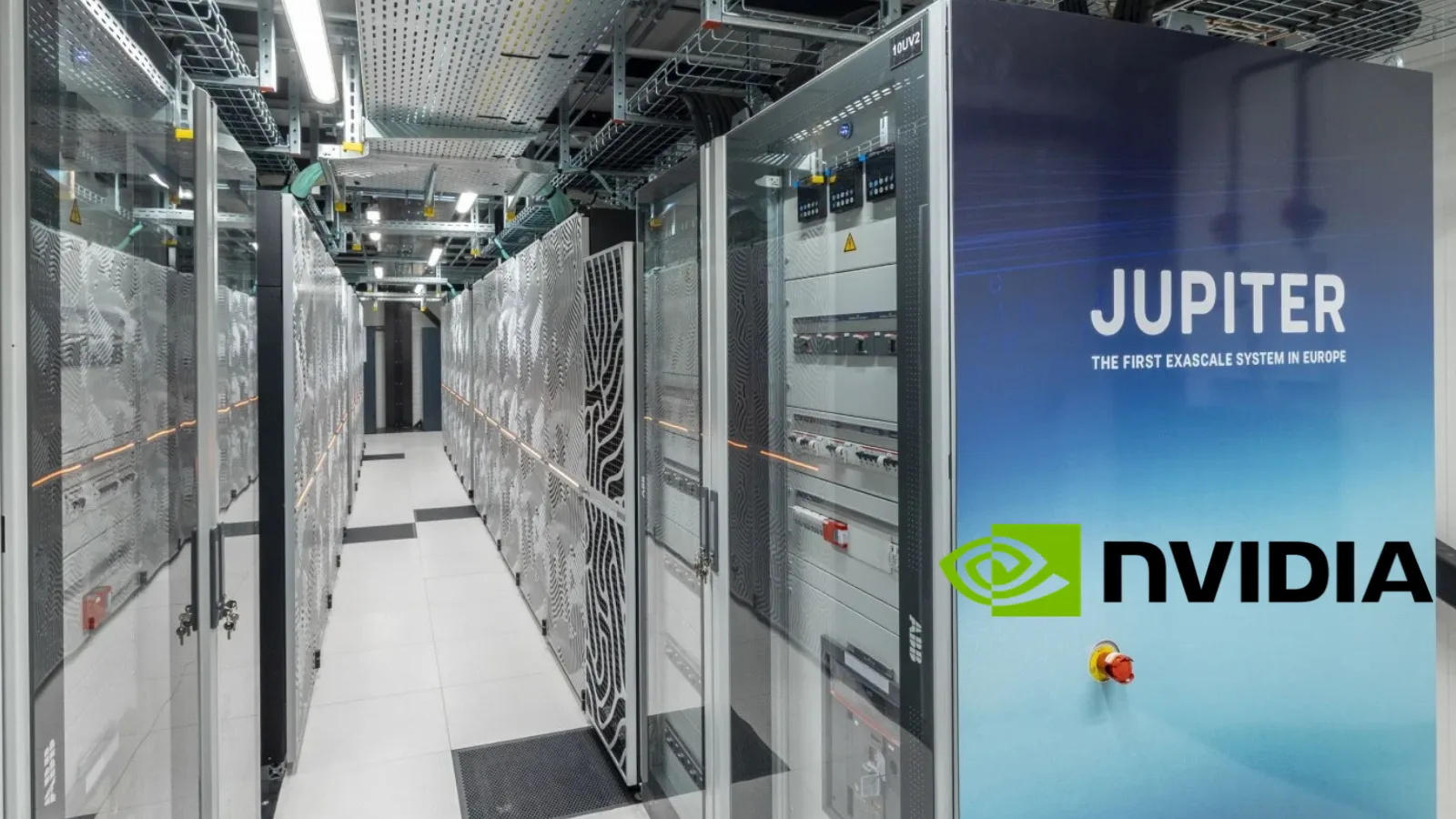
NVIDIA has conducted a 104-qubit simulation of a fault-tolerant quantum processor on Jupiter, Europe’s first exascale supercomputer, validating a method of producing magic states that the company says requires 90 percent fewer qubits than previous approaches.
The simulation, conducted at the Jülich Supercomputing Centre in Germany using NVIDIA GH200 superchips, is the largest comprehensive simulation of a fault-tolerant quantum processor to date, according to NVIDIA. It models magic-state cultivation under realistic hardware noise, helping researchers assess how errors affect quantum computing operations.
Magic states are essential resources for fault-tolerant quantum computing, which aims to perform reliable calculations despite errors arising from the noise inherent in quantum hardware. Improving their production could reduce the resources needed to build practical quantum computers.
“Useful quantum computing will require fantastically complex, fault-tolerant systems — and understanding how they behave at scale is essential to building them. Our results from Jülich show how quantum processors and GPU supercomputers can work together to tackle research that would otherwise be out of reach — accelerating the discovery of transformative quantum applications,” said Jensen Huang, founder and CEO of NVIDIA.
NVIDIA said the simulation would help researchers evaluate quantum processor designs before building hardware, reducing reliance on trial and error and potentially accelerating applications in drug discovery, financial modelling and materials science.
The project builds on earlier research at Jülich that simulated 50 qubits under ideal, noiseless conditions. The latest work extends the simulation to realistic hardware noise, providing data to assess the performance of quantum computing methods under more practical conditions.
“An NVIDIA GB200 NVL72 system at the NVIDIA Accelerated Quantum Research Center (NVAQC) served as the development platform for the JUPITER project, enabling researchers to scale tests from four GPUs to hundreds before moving to 8,192 GPUs on JUPITER,” NVIDIAsaid.
According to the company, researchers used the center to accelerate the development and testing of their simulation methods, compare results with JUPITER and explore how accuracy scaled with additional computing resources. This work helped reduce a weekslong simulation effort to days while preparing the team to use JUPITER’s exascale computing capacity effectively.
“Europe’s investment in JUPITER gives researchers the ability to investigate questions that were previously beyond reach. Working with NVIDIA, we’re bringing that capability to quantum computing — helping scientists make better-informed decisions about the designs most likely to deliver useful applications,” said Kristel Michielsen, director of the Jülich Supercomputing Centre at the Forschungszentrum Jülich facility.
Also Read: Explained: How NVIDIA Became the Company Every AI Model Depends On