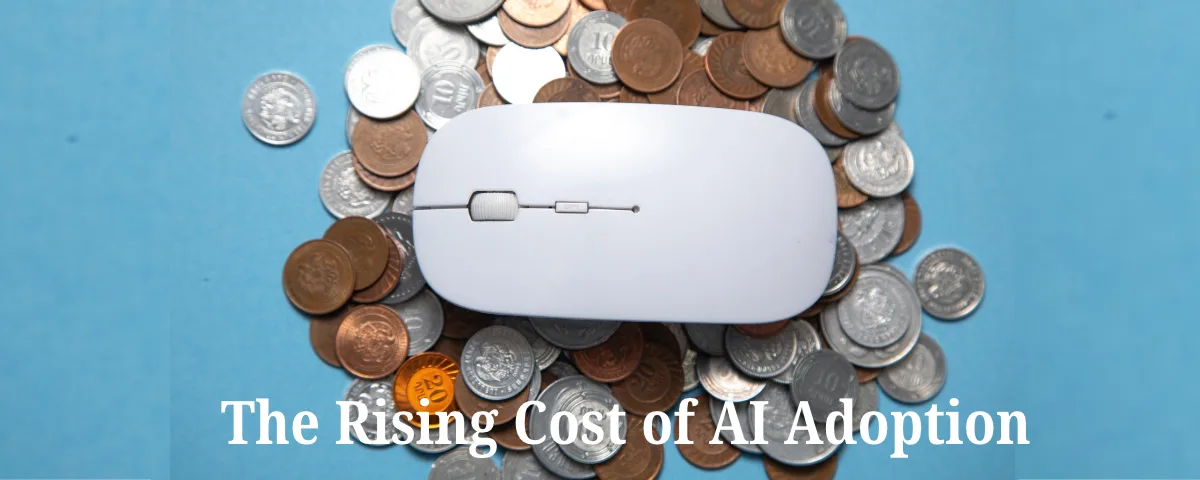
Multiple reports from September and October 2026 suggest companies reducing artificial intelligence spending, moving from the rapid, unconstrained expansion to greater discipline and even ration-ing of tokens in their everyday workflow.
While overall infrastructure investment remains substantial, multiple indicators point to moderation driven by higher-than-expected costs, questions about returns, financing constraints, and internal efficiency measures.
The latest 2026 wealth and asset management report from Oliver Wyman and Morgan Stanley ‘Breaking from the Pack: The Race for Above-Market Growth, suggests that half of asset and wealth management CEOs have reported either “no AI-driven cost savings” or still too early for assessment. The same stands true for revenue, the report noted.
The same report suggests that AI is now moving away from collection of pilots and point solutions to being scaled across the enterprise, therefore forcing businesses to rethink their operating model. It also stated that ‘tokenization’ has become a real sector for enterprises to make selective capability investments.
“Most firms are still deploying AI as isolated tools. That can make individual tasks faster, but the gains reach the profit and loss only when firms remove work, redesign end-to-end workflows, or use the freed-up capacity to serve more clients and generate more revenue,” read an excerpt from the report.
Reuters reported that Asian share markets mostly fell on Monday due to continuing unease over AI’s enormous funding.
Another key report from Morgan Stanley data, published by the Financial Times in early October, shows global AI-related debt issuance falling to $23 billion in September—less than half the August volume and well below the June peak of $113 billion.
In the US investment-grade market, AI-linked bond issuance effectively halted after roughly $306 billion was raised from January through August. Year-to-date issuance reached about $466 billion, compared with $101 billion in the same period of 2025.
Morgan Stanley attributed the AI investment slowdown primarily to front-loaded borrowing earlier in the year, alongside growing investor concerns over long-term returns and political opposition to data-center construction.
Major companies like Microsoft and Accenture are also imposing tighter controls on internal AI usage. Similarly, Meta saw internal users of Claude Code drop from roughly 60,000 to about 30,000 as it promoted its own tools, MetaCode and Muse Code, though it continued significant external spending in some periods.
Also Read: Andrew Ng Maps 4 Key AI Engineering Skills Developers Need in 2026