The conversation around Artificial Intelligence (AI) in India is no longer about “what if.” It is now about scale, speed, and who gets there first.
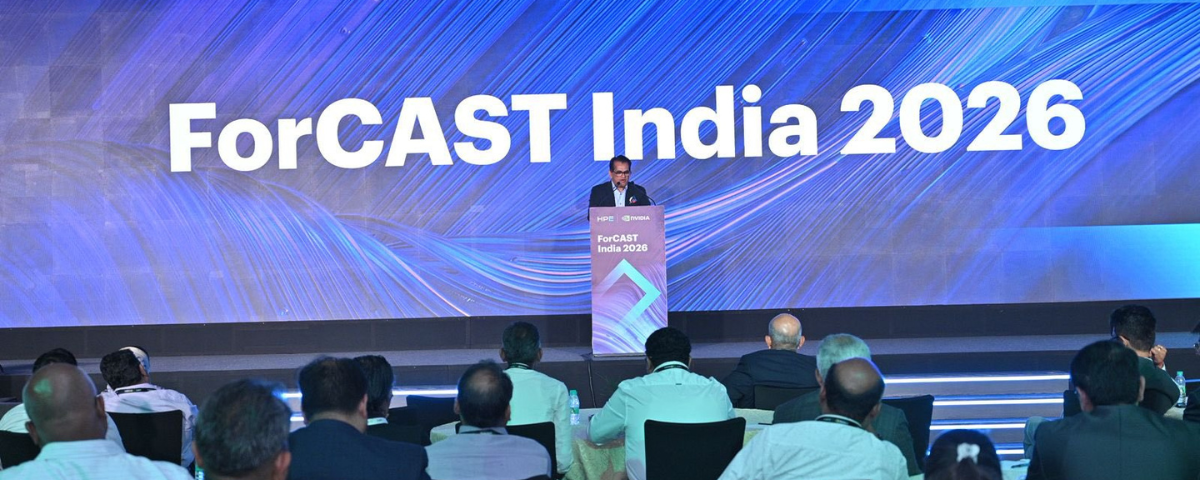
That shift was on full display at the 9th edition of the Dr. APJ Abdul Kalam HPC & AI Awards, held during HPE ForCAST India 2026 in Goa, where policymakers, scientists, enterprise leaders, and technology companies gathered to discuss how India can lead the next phase of the global AI race.
Former CEO of NITI Aayog, India’s public policy think tank, Amitabh Kant focused on the rapid rise of generative AI and India’s role in the evolving global AI ecosystem. Kant said, “Generative AI hit 53% global adoption in 3 years, faster than the PC and the internet.”
He also said the cost of an AI query has fallen 280-fold in the last 18 months, while claiming that 20% of the world’s AI training data comes from India.
Kant, the G20 Sherpa, also identified Energy, Compute and Infrastructure as the most crucial enablers cutting across every node in the AI ecosystem.
He highlighted that India has 283 GW of non-fossil fuel capacity, sovereign AI models across 22 Indian languages, and a Digital Public Infrastructure (DPI) stack built at scale. He also said India ranks first globally in AI skill penetration.
According to Kant, the real test of AI will be whether it reaches those who need it most. He said AI must improve outcomes at the grassroots level, from giving farmers a 7-day warning instead of a 2-day warning to enabling AI systems to work effectively in Indian languages including Tamil, Odia and Bengali.
“We need to build AI that inverts the pyramid. It needs to work for everyone, and the race has only just begun,” Kant said.
Also Read: After NeurIPS Boycott, China Calls for Inclusive and Fair Global AI Governance