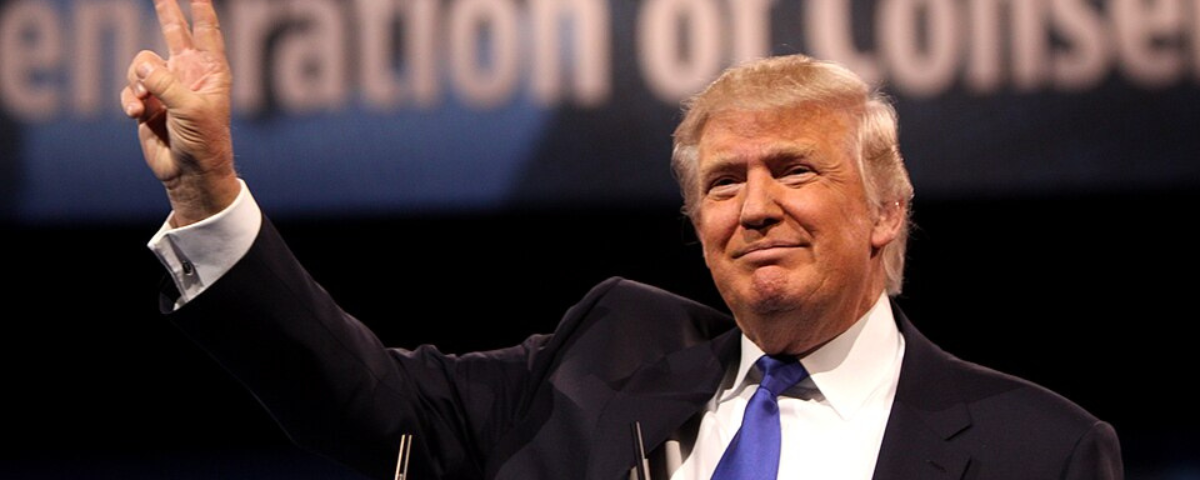
The US government is preparing to sign an executive order that would require AI companies to give the Federal Government access to their most advanced models at least 90 days before release to the public. Reports suggest US President Donald Trump is expected to sign the executive order on Thursday, May 21, 2026.
According to sources briefed on the discussions, as reported by CNN and Axios on May 20, the draft order has two main sections. The first addresses cybersecurity and the second defines a category called “covered frontier models” and creates a framework for pre-deployment government review.
Axios reported that the cybersecurity component is aimed at securing the Pentagon and other national security agencies, boost their cyber hiring, and shore up cybersecurity systems across the country at places like hospitals and banks.
The aim is to encourage threat sharing about breaches between the AI industry and the government. The frontier model component, on the other hand, would involve multiple players of the government reviewing the to determine what qualifies as covered frontier models and then to assess such models prior to their public release.
The report suggests that the draft in its current form is a voluntary framework and is established. Under this framework AI Labs would share their models with the government at least 90 days before public release. The idea is to give certain critical infrastructure providers early access. However, it is not entirely clear what part of the government would be involved in this framework, but both national security and civilian agencies appear to have roles in the enforcement of the Executive Order.
Bloomberg, on the other hand, reported that OpenAI is partnering with the White House and the Trump administration on a deployment strategy for ChatGPT 5.5 Cyber, which is designed to improve cyber defense efforts.
Axios reported a White House official as saying that any policy announcement will come directly from the president and that any discussion about potential executive orders is speculation.
The immediate trigger for this reaction from the US government, probably was Anthropic’s Mythos model, which the company released in limited form in April this year.
Prior to any external release, Anthropic had briefed senior US government officials on Mythos’s offensive and defensive capabilities. An Anthropic official confirmed to The Hill on April 14, that the model can autonomously identify decades-old software vulnerabilities. Anthropic said Vice President JD Vance also called the CEOs of OpenAI, Anthropic, Google, and Microsoft in April to discuss the risk. Vance reportedly told the executives that AI models capable of finding vulnerabilities could begin cyber attacks on banks, hospitals, water plants that local governments were not equipped to defend against.
Regulatory Reversal
This order by the US government is a significant departure from its earlier position, with a stated reposition over the last 16 months. On January 20, 2025, Trump revoked Biden’s Executive Order 14110 on the safe, secure, and trustworthy development and use of artificial intelligence. This required developers of large AI systems to notify the government and share safety test results before deployment.
At the time, the Trump administration described that order as an attempt to paralyze the AI industry, according to the White House text of its replacement order, Executive Order 14179, signed January 23, 2025.
Later in December 2025, Trump signed Executive Order 14365 titled Ensuring a National Policy Framework for Artificial Intelligence. The document described agencies to challenge state AI laws and established a Department of Justice AI Litigation Task Force. That order did not re-impose any pre-deployment review requirements on AI companies. The current draft would be the first Trump administration action to do so.
The US-China Dimension
The executive order arrives one week after Trump concluded a 36-hour state visit to Beijing on May 14th and May 15th. During the summit, Trump and Xi Jinping agreed to launch a formal government-to-government dialogue on AI. China’s foreign ministry spokesperson, Gao Jiekun, confirmed this in a post-summit briefing. This, however, was not formally acknowledged by the White House.
The proposed AI talks were first reported by the Wall Street Journal. This report cited people familiar with the matter. Washington and Beijing were considering whether to place AI on the agenda for the Beijing summit focused on the Frontier Model Risk and Autonomous Military Application.
The US and China held a first AI-focused summit dialogue in Geneva some time in May 2024, but this was under the Biden administration. That meeting did not produce any results because the US sent technical experts who were ready to discuss Frontier Model Risk, while China sent foreign policy officials focused on lifting export controls. Both countries were not aligned and had different approaches to the issue.
The Beijing summit this year too also produced no signed AI governance document. China’s foreign ministry described the broader bilateral talks as an effort to expand further pragmatic cooperation. This was according to a Commerce Ministry statement dated May 14, 2026.
What This Means For the Sector
The 90-day pre-release window, even under a voluntary framework, would change the pace at which AI companies are bringing models to the market. The pace of releases from OpenAI, Google, Anthropic has only increased sharply since 2025 and 2026.
The Stanford University’s 2026 AI index report concluded that the US-China AI model performance gap has effectively closed.
The US Department of Defense’s (DODs) relationship with Anthropic also remains contested. The Pentagon has placed Anthropic on a supply chain risk blacklist after the company resisted pressure to deploy its Claude AI model in ways it opposed.
Despite the blacklist, the DoD has been using Mythos to identify cyber vulnerabilities. The National Security Agency has access to the model, the Cybersecurity and Infrastructure Security Agency reportedly does not.
The US House Homeland Security Committee Democrats have requested a classified briefing from Anthropic. The committee’s Cybersecurity Committee chairman has announced a public hearing on mythos. A committee aide who attended a closed briefing on May 14th told Cyber Scoop that the session included a live demonstration of the model identifying and reasoning through software vulnerabilities. The aide said that the demonstration reinforced the urgency of ensuring Federal civilian cyber defenders can access advanced US AI models.
Anthropic has not released Mythos publicly. The company launched Project Glasswing, committed up to USD 100 million in usage credits to limited groups of cybersecurity companies for defensive use. OpenAI has released a comparable model to a small set of companies through an existing trusted access program.
The White House has declined to comment on the executive order, CNN reported.