Seoul’s top policymaker has floated the idea of ‘citizen dividend’ where the government gives back its citizens a share of money earned from “unprecedented excess tax revenue” emerging from the AI boom.
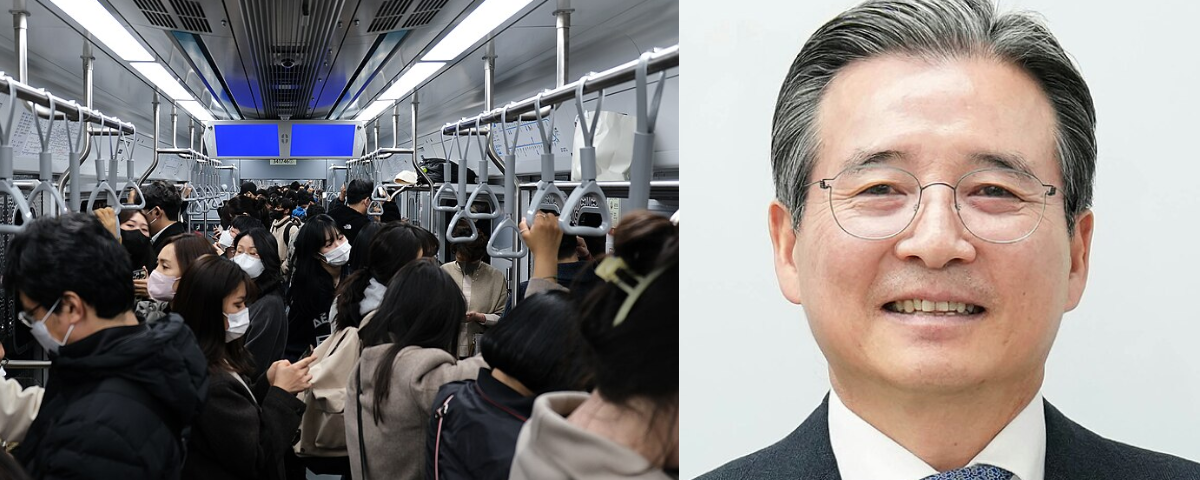
Yongbeom Kim, the chief presidential secretary for policy of South Korea, shared a Facebook post on Monday, proposing the tentatively named policy “Citizen Dividends — A New Social Contract’”.
“The gains of the AI infrastructure era are not the result of individual corporations alone. They emerge from the industrial foundation built collectively by the entire population over half a century. Therefore, some portion of those gains should be structurally returned to all citizens…..A rare historical possibility now lies before Korea. Not merely becoming a supplier of AI infrastructure, but becoming the first nation to return the excess profits of the AI era back into human life. ,” said Kim in the post.
Kim opines in the Facebook post that South Korean economy is poised to turn into a “technology monopoly economy” owing to the structural scarcity of full-stack manufacturing capability and the country’s integrated supply chain spanning memory semiconductors, batteries, displays, precision manufacturing, power equipment, and industrial automation.
However, that AI boom and subsequent “excess profits” would result in K-shaped inequality in South Korea, said Kim. A K-shaped inequality is an economic scenario where post-recession, different sectors and income groups recover at vastly disproportionate rates (simply, the rich gets richer, poor gets poorer).
“By nature, excess profits in the AI era concentrate. Shareholders of memory companies, core engineers, and metropolitan-area asset holders — groups already possessing access to productive assets — are highly likely to receive enormous benefits through market mechanisms. Meanwhile, much of the middle class may experience only indirect effects such as improved purchasing power from a stronger won, limited fiscal transfers, and some asset appreciation,” said Kim.
Kim’s proposal lands amid an escalating labor standoff at Samsung Electronics, where the National Samsung Electronics Union has set a general strike from May 21 to June 7, with up to 40,000 chip workers expected to participate. The union is demanding that 15% of the semiconductor division’s annual operating profit be paid out as performance bonuses on a recurring basis, a formula that analysts estimate could translate to roughly $400,000 per worker — and the removal of an existing cap on bonuses.
Kim said that while the policy is in its nascent stage, the idea of specific programs for the “excess AI revenue” is up for a debate.
Also Read: Telangana CM Revanth Reddy proposes Taxing AI Companies for Job Losses