UAE is advancing its ambitions in climate-resilient agriculture with the introduction of Seedelligence, an artificial intelligence platform designed to anchor the National Food & Seed Sovereignty Institute.
Developed as a next-generation agritech architecture, Seedelligence departs from conventional siloed farm software by acting as a centralized “nervous system.” The platform integrates and manages a wide spectrum of agricultural variables — from autonomous robotics and hydroponic systems to seed genetics and energy optimization — within a single decision-making framework.
According to Riccardo Ammendola, Chairman of Red Rock Technology, the system represents a paradigm shift in how farms operate. “Seedelligence is not a monitoring system; it is a mind,” Ammendola said. “It perceives the entire farm as a single organism.”
Designed for Harsh Environments
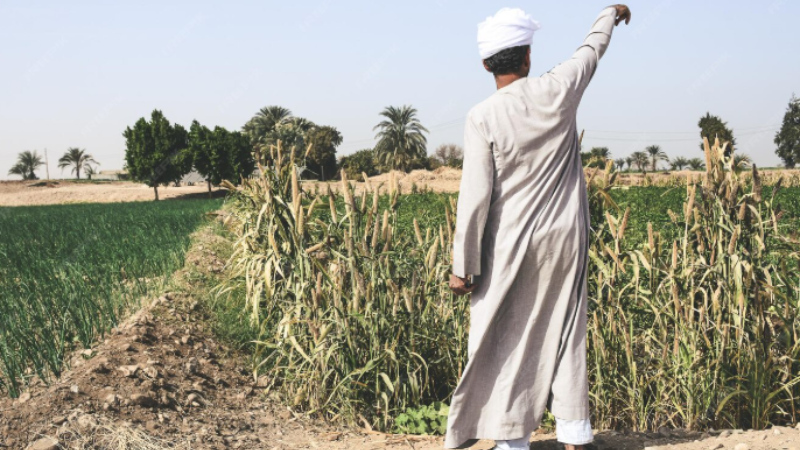
The Institute is being positioned as a strategic response to increasing climate volatility and global resource scarcity. Its infrastructure is a self-contained ecosystem designed for hot, dry and semi-dry conditions.
The Institute will combine robotic production facilities with a high-end genetic research laboratory, designed to yield scalable agricultural systems applicable to desert-edge cities. Designed to use less water while maximizing yield efficiency, such systems tackle one of the most pressing challenges in a region like the Middle East.
Eye in the Sky
While the immediate objective is to strengthen terrestrial food security, project leaders say the long-term vision extends far beyond Earth. The same closed-loop, autonomous ecosystems being developed for desert agriculture could serve as prototypes for sustaining human life in space.
Red Rock Technology has indicated that the Institute will function as a testing ground for infrastructure applicable to future lunar and Martian settlements — environments where resource efficiency and system autonomy are essential.
“We are evaluating several pilot locations in sustainability-focused urban hubs across the UAE and will share more details as the project progresses.” If Seedelligence succeeds, industry watchers agree it could reshape agricultural systems in extreme environments — creating a template applicable to regions grappling with both water scarcity and environmental stress—which might even help prepare humanity for the stars.
Also Read: India’s AI Agriculture Dream: A Thousand Miles Between Policies and Farmlands