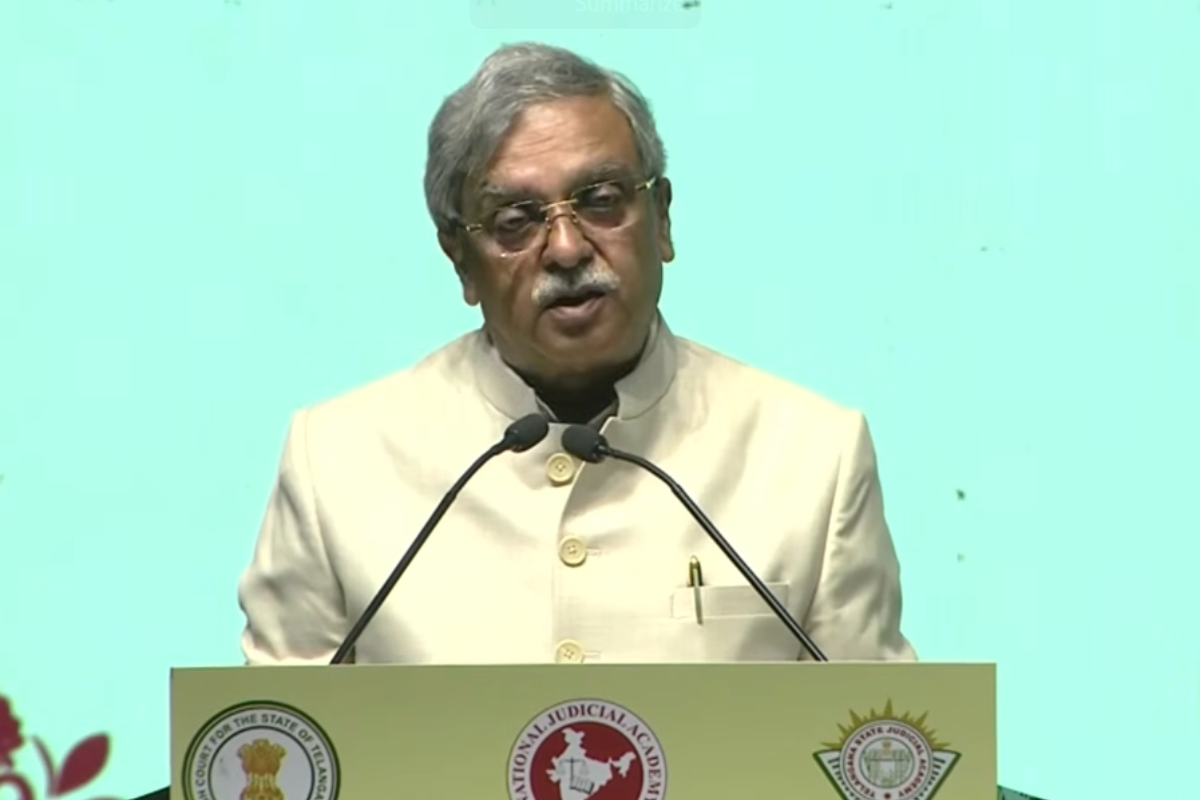
Addressing the South Zone-II Regional Conference on “Advancing Rule of Law Through Technology: Challenges and Opportunities” in Hyderabad on March 14, Justice Vikram Nath, a judge of the Supreme Court of India, reflected on the growing influence of technology in the justice system, cautioning that while digital tools can assist legal work, they cannot replace human judgment.
“But a tool must remain a tool. It cannot replace the trained mind of a lawyer, the ethical responsibility of an officer of the court or the disciplined judgment required of a judge,” Justice Nath said.
He began by acknowledging how technology has transformed modern society. According to him, digital platforms have given individuals a voice, but they have also amplified misinformation and sensationalism, sometimes pushing accuracy into the background. Transparency in the digital age, he noted, should strengthen trust in institutions rather than turn public discourse and legal processes into spectacles.
Justice Nath pointed out that technology has not only created new kinds of crimes but has also changed the way evidence is produced and examined. In today’s investigations, crucial evidence may lie in smartphones, cloud servers, deleted messages, transactional logs, and metadata. Such digital footprints often cross geographical boundaries, making jurisdiction and investigation more complex for authorities.
Yet, he stressed that the answer to these challenges is not to step away from technology. Instead, institutions must adapt. Strengthening investigative tools, building institutional capacity and developing a deeper understanding of digital systems are essential for the justice delivery system to remain effective. The law, he said, must equip itself to deal with technological change rather than isolate itself from it.
Turning to artificial intelligence, Justice Nath urged legal professionals to maintain a balanced perspective. AI, he said, is often discussed with exaggerated fear or exaggerated confidence, neither of which is helpful. Artificial intelligence cannot replace legal thinking, professional training or judicial reasoning. However, when used responsibly, it can assist lawyers and judges by organizing case materials, summarizing lengthy documents and identifying patterns in data that may improve efficiency.
He also expressed concern over recent incidents where AI-generated content was used carelessly in legal submissions, including citations of cases that do not exist. Such mistakes, he warned, are serious because they undermine the credibility of legal arguments and the integrity of the judicial process.
“Technology may help draft a note, but it cannot be permitted to invent the law. At the same time, the misuse of AI cannot lead us to the opposite extreme of refusing to engage with it altogether. The answer is informed use, ethical discipline and professional standards. We must learn how to use these tools efficiently, carefully and with full awareness of their limitations,” he said.
Also Read: Two Singapore Lawyers Fined $10K For Citing Fake Cases Using AI