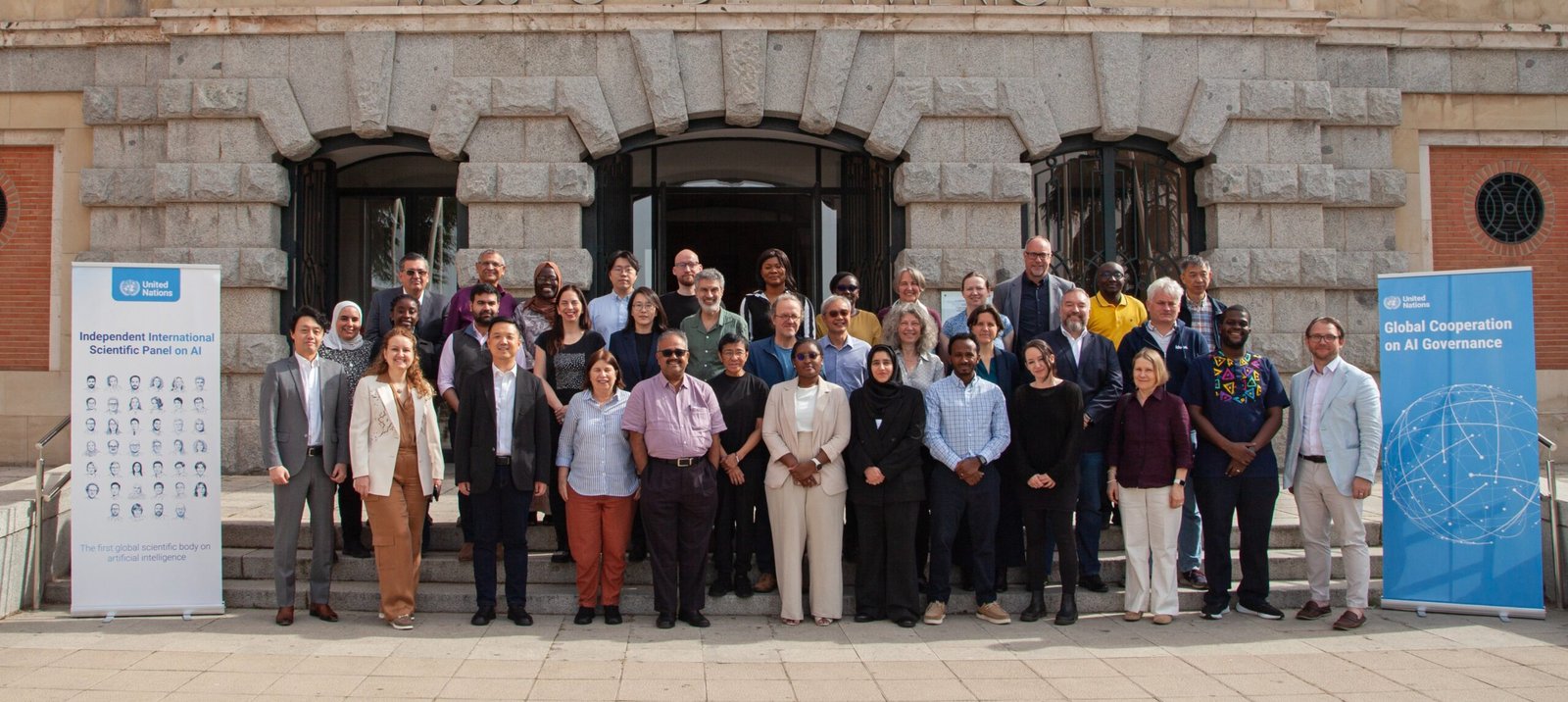
The United Nations’ Independent International Scientific Panel on Artificial Intelligence convened its first in-person meeting last week in Madrid, marking a significant step toward building a global, evidence-based framework for AI governance.
Held in Spain’s capital, the gathering brought together 40 experts selected from more than 2,600 candidates across over 140 countries. The panel, established by the UN General Assembly earlier this year, is tasked with examining the risks, opportunities and societal impacts of artificial intelligence.
UN Secretary-General António Guterres addressed participants remotely via video message, warning that AI’s rapid development is unfolding during a period of growing geopolitical tension and declining public trust.
“Every week brings new capabilities and new uncertainties,” Guterres said. “No single government, company or research lab can answer these questions alone. But an independent scientific voice, trusted across borders, can help move the global conversation from competing claims to shared science,” said Guterres in the video message.
The panel is co-chaired by journalist and Nobel Peace Prize laureate Maria Ressa and Canadian computer scientist Yoshua Bengio. Their work will contribute to the UN’s Global Dialogue on Artificial Intelligence Governance, scheduled for July in Geneva.
I’m in Madrid this week for the first in-person meeting of the United Nations Independent International Scientific Panel on AI.
I’m thrilled to be part of this distinguished group of 40 international experts appointed to provide an evidence-based scientific assessment of the… pic.twitter.com/9Ft8k1WzcU— Yoshua Bengio (@Yoshua_Bengio) April 23, 2026
Spanish Prime Minister Pedro Sanchez used the opening session to call for stronger international cooperation on AI oversight.
“We need an artificial intelligence that is responsible, humanist, and serves the well-being of all without leaving anyone behind,” Sanchez said. He cautioned that AI progressives growingly concentrated in the hands of a handful of companies and countries, with potential to lead to unequal access and power imbalances.
The cities-wide discussions in Madrid explored misinformation, AI safety, democratic accountability, the implications for work and ethical governance. Panel members also explored how AI can be developed in ways that strengthen public trust and include voices from developing nations.
The group’s first findings are expected to be released ahead of the July summit, providing governments with scientific guidance on one of the world’s fastest-evolving technologies.
Also Read: The Elders Group Urges Immediate AI Regulation by Governments