“Yes, Dario could have done better. He could have not dropped this commitment to pause,” says 29-year-old filmmaker and former AI Safety researcher Michael Trazzi, referring to Dario Amodei, the CEO of Anthropic AI.
He was answering our question on whether Anthropic, which claims to be a safety conscious AI company, set a wrong precedent in February this year by quietly amending its policy to pause frontier AI development if the model is deemed dangerous.
Trazzi shot into the limelight in September 2025 when he had sat on a 7 day hunger strike outside Google DeepMind office in London U.K. demanding answers from its CEO Demis Hassabis on AI safety.
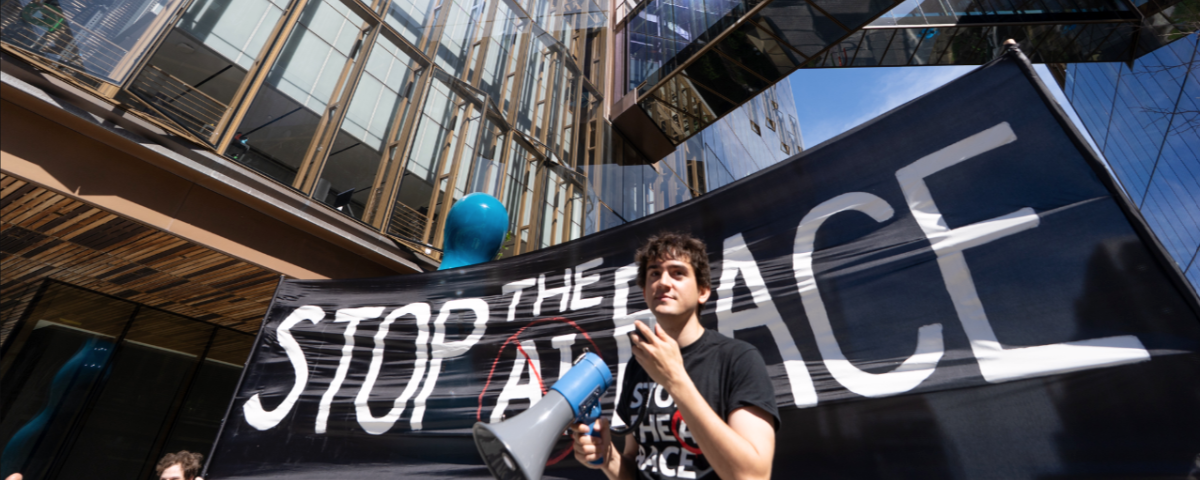
On March 21 this year, Trazzi organized the largest public demonstration against AI companies in the U.S. where over 200 protestors marched through the streets of San Francisco, holding placards and banners that read “stop the AI race”.
Trazzi, along with fellow activists, picketed outside the offices of Anthropic AI, OpenAI and xAI, demanding that their respective CEOs-Dario Amodei, Sam Altman and Elon Musk- commit to a conditional pause on advanced AI research.
“Dario could be more public about wanting to pause if everyone else pauses, which is what we’re asking,” says Trazzi.
The activists warn that uncontrolled expenditure and resources into research of advanced AI models could see the occurrence of “super-intelligence” which could lead to possible human extinction.
Their goal is to convince every major CEO to commit to a conditional pause on frontier AI models if everyone else does too.
In this exclusive interview, French filmmaker Michael Trazzi speaks to AI FrontPage editor Vaibhav Jha, where he shares his journey from AI safety researcher to a filmmaker documenting the impending “superintelligence” crisis.
When asked whether he sees a shift in public sentiment towards frontier AI research, Trazzi says, “there’s been more and more public demonstrations targeted at AI Labs in the past two years. We are witnessing protests, hunger strikes outside offices of Google DeepMind, Anthropic along with QuitGPT protests. The turnout for these protests have been increasing and Stop the AI Race protest was the largest one”
Trazzi has been vocal about the perils of “superintelligence” and the harms it would bring to humanity. Superintelligence refers to a theoretical AI system that is so advanced that it surpasses human intelligence across all domains. Superintelligence would outperform humans in reasoning, creativity, scientific research, social manipulation and many possible domains.
Trazzi credits author philosopher Nick Bostrom’s popular book ‘Superintelligence- Paths, Dangers, Strategies’ for introducing him to the perils of uncontrolled AI research.
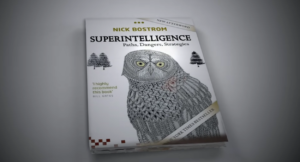
“The argument was simple. If humans were to build machines that were better than us at everything, what guarantees do we have that they would still care about us? After all, when humans create a new house, do they really ask the ants for permission beforehand,” opines Trazzi in his YouTube short film narrating his protest.
The jury is divided on the risks of reaching a theoretical superintelligence stage where the very existence of humanity is challenged by computation systems.
While there are rationalists and philosophers like Bostrom predicting arrival of superintelligence in less than a decade based on current AI trajectory, there are other experts like Geoffrey Hinton who believe current LLMs are impressive but fundamentally limited.
When asked about the possibilities of Superintelligence, Trazzi says, “We don’t know yet how to make a superintelligence robustly honest and harmless. We believe a pause is required to have enough time to make those models safe.”
The activists demanding pause on advanced AI research say that CEOs should at the least, commit to a voluntary pause if everyone else does the same.
But the conditional pause strategy comes with geo-political complexities. U.S. and China are engaged in a tight race for global AI dominance with both accusing each other of unethical means to chokehold resources.
Then there are middle powers like Russia, India, Brazil, UAE developing their own indigenous AI models.
When asked about the challenge of convincing governments, especially China to put brakes on advanced AI research, Trazzi explains their protest framework in three stages, with “the goal of having an international pause.”
The first goal is to get company leaders to agree to a conditional pause, second being ‘US and China agreeing to a conditional pause’ and ultimately, third stage being an international pause.
For now, Trazzi and his fellow activists are focused on stage one, getting a single CEO to say yes.
Also Read: “Stop the AI Race”: Hundreds March at OpenAI, Anthropic and xAI Offices