China says its rapid growth in artificial intelligence is due to strong planning, large scale investments and support for open-source technology, even as its counterpart U.S. sees Open Sourcing as a major threat to its AI dominance.
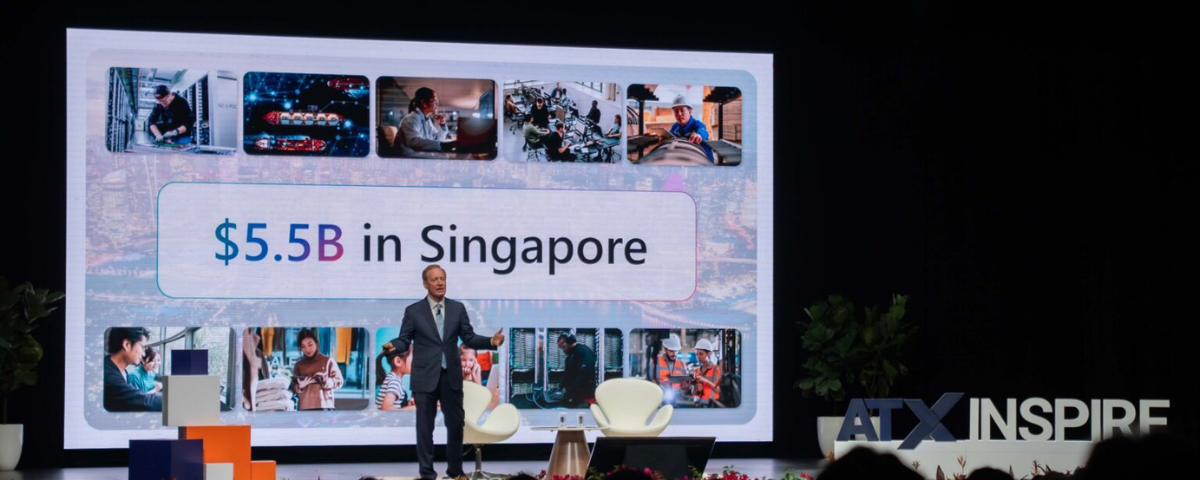
During a recent address at the China Development Forum 2026, Joseph Tsai, co-founder and chairperson of Alibaba Group lauded China’s dedication to open-source AI models and large scale energy investments to fuel the country’s AI infrastructure demands.
“Open-source models have enabled China’s AI sector to break down barriers ensuring that AI is no longer the privilege of a few giants,” said Tsai as reported by South China Morning Post.
Tsai also remarked that the current geopolitical complexities are “deeply affecting supply chain and the sharing of technological achievements.”
Open-source AI models refers to models whose weights (numerical parameters) and at times, the training code are publicly released. Some of the major open-source AI models are Meta’s Llama models, MistralAI and China’s Deepseek and Qwen.
Meanwhile, the U.S. China Economic and Security Review Commission, a U.S. advisory body, has raised alarms against open-source models of China, in its latest report published on Monday.
The report states that China has opted to go all in on an “open-source” approach to AI.
“Most Chinese labs publish model source code and weights. They also charge far less to use high-end products than their global competitors. This has resulted in acceleration of global uptake of Chinese AI and created a feedback loop where widespread adoption drives iteration, then further adoption,” read an excerpt from the report.
The commission’s report highlights Alibaba’s Qwen model that accounted for the largest model ecosystem.
“This open ecosystem enables China to innovate close to the frontier despite significant compute constraints. Chinese labs have narrowed performance gaps with top Western large language models. They have also developed key architectural and training advances that are now industry standards,” read the report.
The open-source approach by China has ruffled weathers in the U.S. as its counterparts accuse Chinese companies of “unethical practices” and scraping training data of major AI companies to build their own cheap models.
Recently, Anthropic has alleged that Chinese companies, including DeepSeek, Moonshot, and MiniMax, have utilized outputs from its Claude model to train their own AI systems through a method known as distillation. Despite the fact that distillation is a regular procedure, Anthropic claims that it was carried out unfairly and dishonestly.
At the same time, Anthropic has faced legal trouble in the Bartz vs Anthropic case, where it was accused of using pirated books to train its models.
This situation shows a larger global debate. China promotes open and shared AI development, while U.S. companies focus on protecting their technology. As countries compete for AI leadership, questions about fairness, data use, and ownership are becoming more important and remain unresolved.
Also Read: Washington Calls It “Promoting Secure Exports.” But Is It a Chokehold on Global AI?