Amid rapid advances in artificial intelligence (AI), Japan’s Defence Minister Shinjiro Koizumi has announced that the Ministry of Defense plans to revise its existing AI policy and unveil a new “Defence AI Vision” by the end of November. The new rules will set out the Ministry of Defense’s and the Self-Defense Forces’ future plans for the use of AI.
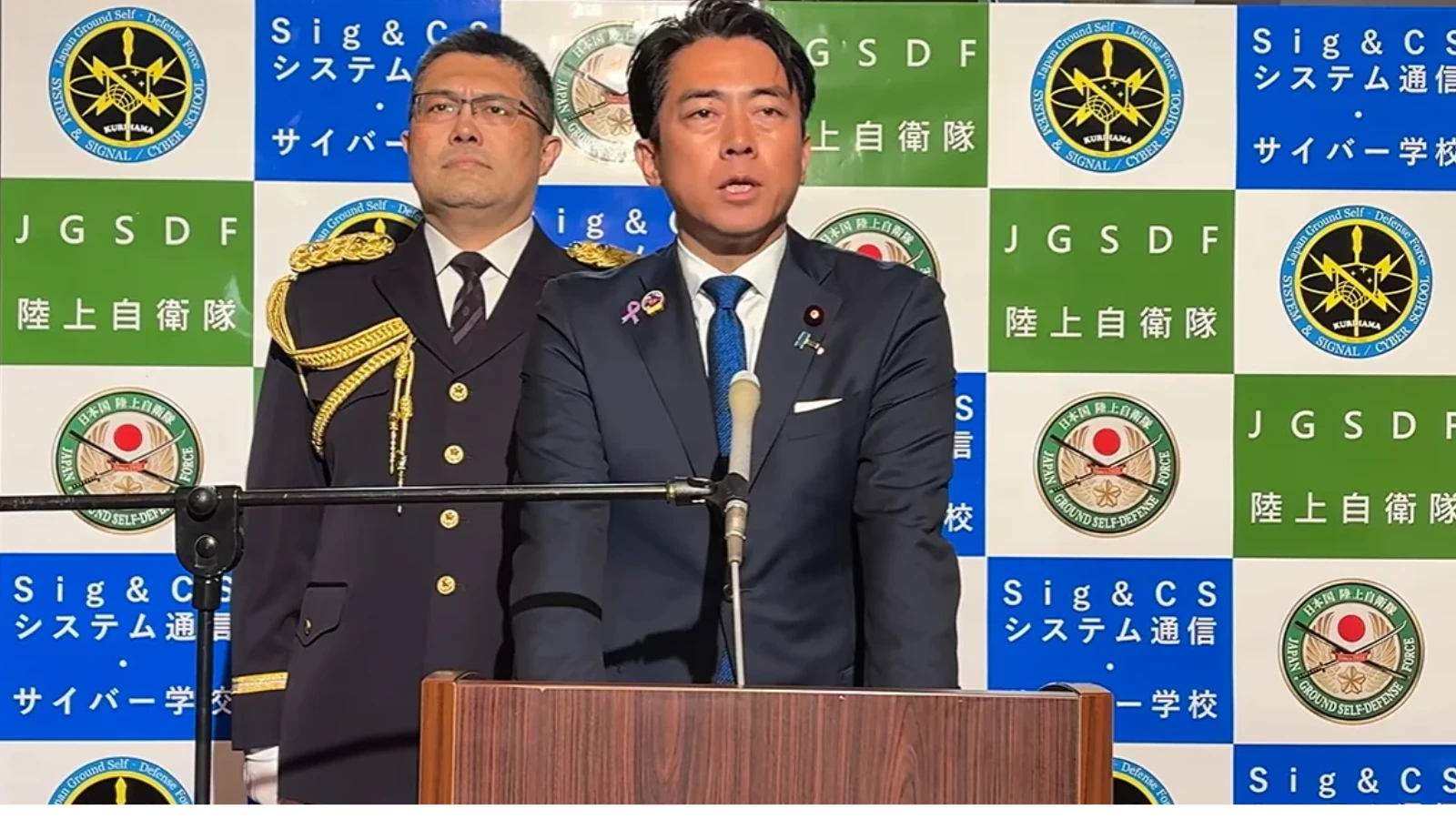
“We have formulated a new ‘Defence AI Vision’ outlining the future direction for AI utilization within the Ministry of Defense and the Self-Defense Forces, and we plan to publish it by the end of November,” Koizumi said.
Koizumi made the remarks during an impromptu press conference following the 76th anniversary ceremony of the Japan Ground Self-Defense Force’s Kurihama Garrison on November 15.
AI is changing the nature of defence, including by supporting decision-making through the analysis of large volumes of data. At the same time, new threats are emerging, including cyberattacks that exploit AI, the minister said.
The Ministry plans to revise its Basic Policy for Promoting AI Utilization of the Ministry of Defense, formulated just over two years ago, in July 2024.
“Precisely because this is a rapidly changing field, we will not hesitate to make necessary revisions,” he added.
Koizumi said the new guidelines would go beyond identifying areas where AI could be used, focusing instead on connecting AI and data to strengthen Japan’s actual defence capabilities and ensuring their practical application in the field.
He emphasized three priorities: retaining human judgement and responsibility, transforming data into a force to protect Japan, and accelerating AI implementation while ensuring safety and security.
On data sovereignty, Koizumi stressed the importance of ensuring Japan’s independent ability to operate and manage the infrastructure supporting AI and data utilization. He said the Ministry is prioritizing the proper management of AI-related data and establishing an environment in which it can be used safely and continuously.
On the proposed cloud environment, Koizumi said that handling highly confidential information, including state secrets, would require thorough preparation and the establishment of appropriate standards.
He added that making AI practically usable by personnel on the ground, including to improve troop operations, would require the necessary infrastructure for handling such data in the cloud.
Japan’s defence AI push is also taking shape beyond the Ministry of Defense. Recently, Japan-based Sakana AI appointed retired US Navy Admiral Michael Rogers, former Director of the National Security Agency (NSA), and Tom Moran, a former senior Central Intelligence Agency (CIA) official, as senior advisers, bringing expertise in military operations, intelligence and cybersecurity.
Also Read: China Accuses Japanese Right-Wing Groups of Using AI to Distort War History