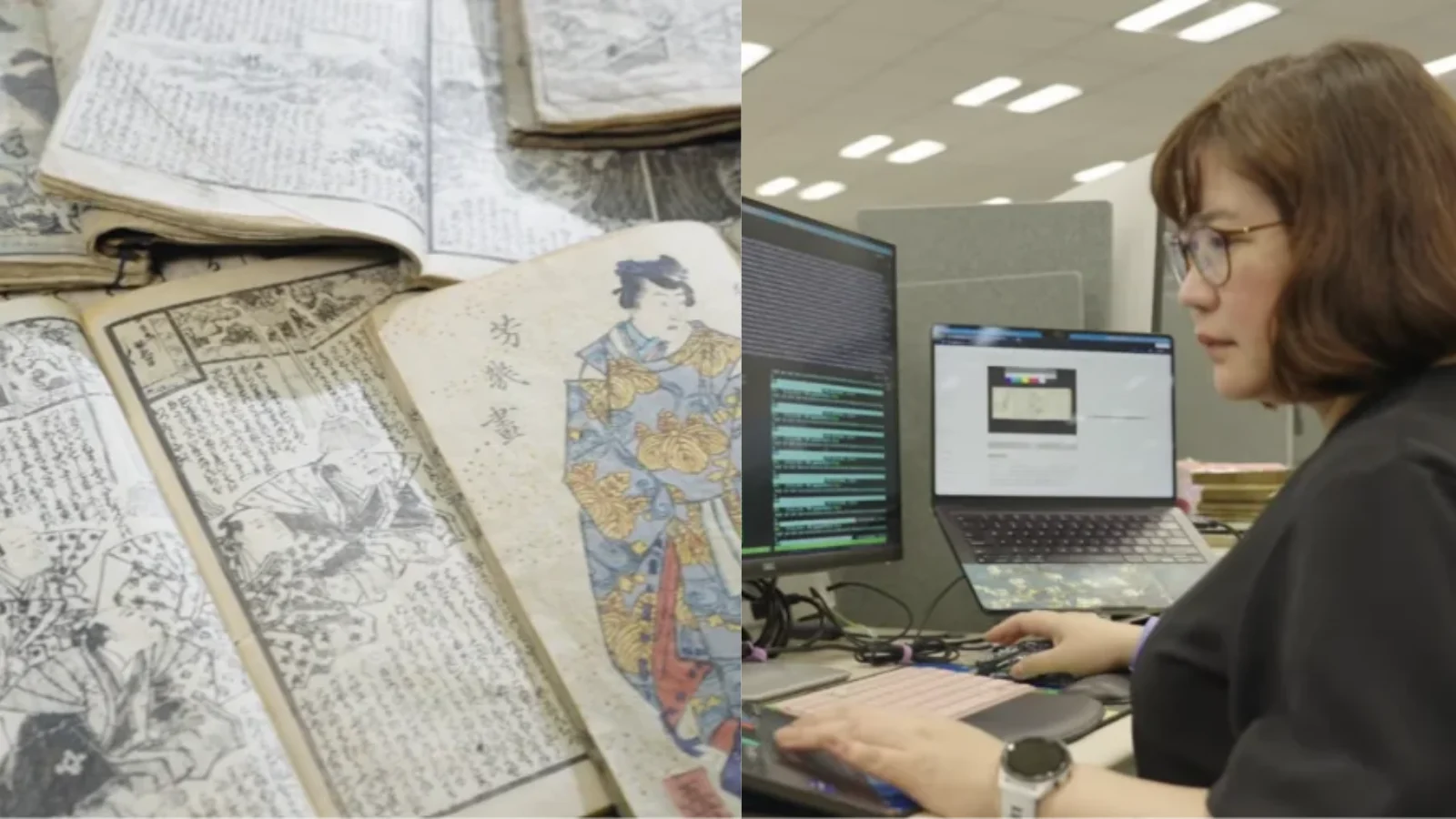
Only 0.01% of Japan’s population today can read kuzushiji –the traditional cursive and abbreviated way of hand-written Japanese. After the Japanese government overhauled its education system and introduced movable type printing in 1900, the kuzushiji writing style slowly became obsolete as modern Japanese took over.
Despite being obsolete, kuzushiji can still be found in vast historical archives, merchant ledgers, literature, and maps in Japan. But now, artificial intelligence is helping researchers demystify the archaic cursive Japanese style of writing and unlocking documents that are over 1000 years old.
According to the government of Japan, a Thailand based researcher Tarin Clanuwat, who studied Machine Learning (ML) from University of Tokyo, has developed an AI model that can easily read the text for its readers.
The model KuroNet, developed by Clanuwat is trained on one million characters from the Kuzushiji Dataset created by the National Institute of Japanese Literature. In 2019, Clanuwat launched a website using the AI model KuroNet to demystify kuzushiji and then developed an app ‘Miwo’ where users could simply photograph a historical document and get its transcript within seconds.
Miwo has been downloaded 250,000 times to date and is reportedly used more than 3,000 times a day on average, primarily by students studying classical Japanese literature, informed the Japanese government.
“Clanuwat says that using AI to decipher historical documents could unlock knowledge from the past, such as information about medicines used at the time and records of natural disasters. Such initiatives could extend beyond humanities research, opening the way for more people to make use of Japan’s rich documentary heritage,” read a statement from the Japanese government.
According to Japanese government, Clanuwat is now employed at Sakana AI, where she is working on gen AI models that create ukiyo-e style images to give a far more accurate representation of Japan’s art and culture.
Also Read: China Accuses Japanese Right-Wing Groups of Using AI to Distort War History