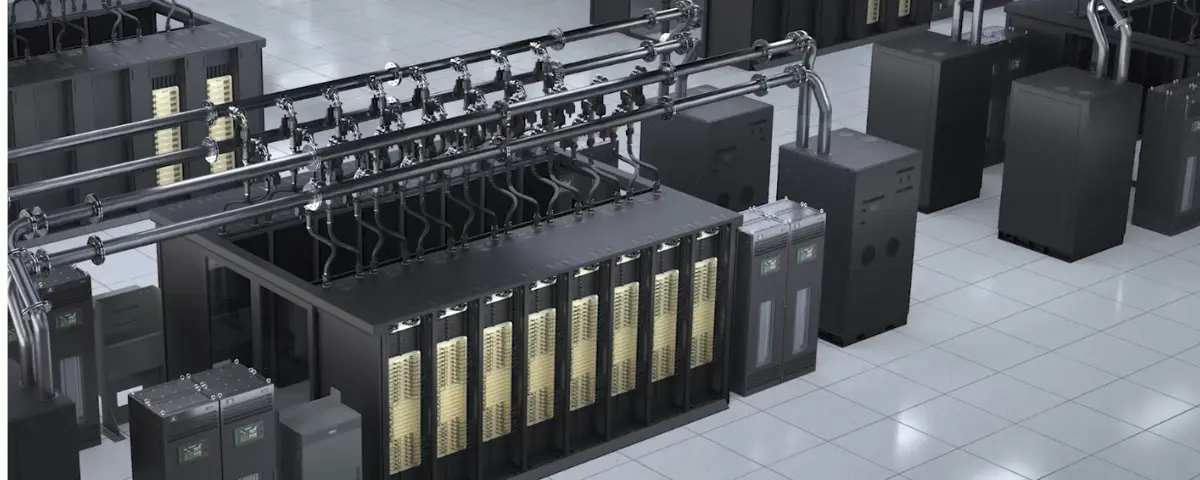
Amid growing debate over the rising environmental cost of AI data centres, NVIDIA liquid cooling has become a fresh talking point. The company claims its Rubin generation of AI infrastructure has achieved ‘100% liquid cooling’ through a closed loop, significantly reducing power consumption.
NVIDIA claims their new 45-degree liquid cooling architecture, as outlined in their recent DSX AI Factory reference design, can enable chiller-less operations (chiller machines are used to cool data centres) with dry-coolers.
The systemic shift in data centers operations with this new methodology can reduce facility cooling water consumption from roughly 2.6 million gallons per megawatt per year to “near zero” in favorable climates, claims NVIDIA.
“The NVIDIA DSX reference design for AI factories has zero water consumption — we have eliminated massive amounts of power usage and pretty much all water usage,” said Ali Heydari, director of data center cooling and infrastructure at NVIDIA. “With dry-cooler-based designs, it’s a closed-loop system with no evaporative water cooling — outside of maybe 1% of the year when we might need chillers in some climates.”
The recent announcement from NVIDIA has earned praises from the likes of Tesla and xAI CEO Elon Musk, Perplexity CEO Aravind Srinivas Hugging Face co-founder Julien Chaumond and other tech industry stalwarts.
May journalists everywhere read this https://t.co/7WJ4W0htvU
— Julien Chaumond (@julien_c) June 22, 2026
“The marginal water consumption of a properly implemented data center for its liquid cooling is almost zero.People confuse water needed for power plants that power the data centers to the water need to operate the data center itself (cooling),” tweeted Srinivas.
How NVIDIA’s 100% Liquid Cooling Saves Power for AI Data Centers?
Conventionally, Data centers use evaporative cooling towers to emit heat and cool chips by using water. According to NVIDIA, their 45-degree liquid cooling methodology, heat is captured directly at the chip and transported through liquid loops operating at much higher temperatures, allowing dry coolers to reject heat.
At 45 degrees, outside air can reject and absorb heat without any mechanical chillers. The same liquid can be recirculated in a closed loop so no new water is consumed to cool the chips.
Also Read: NVIDIA’s ‘Ising’ AI Models Aim to Fix Quantum Computing’s Biggest Weaknesses