Singapore’s lawmakers have backed an AI transition designed to avoid “jobless growth”, where economic growth outpaces job creation, before most firms in the country have even adopted AI. It’s one of the earliest national-level bets on managing AI disruption before it arrives.
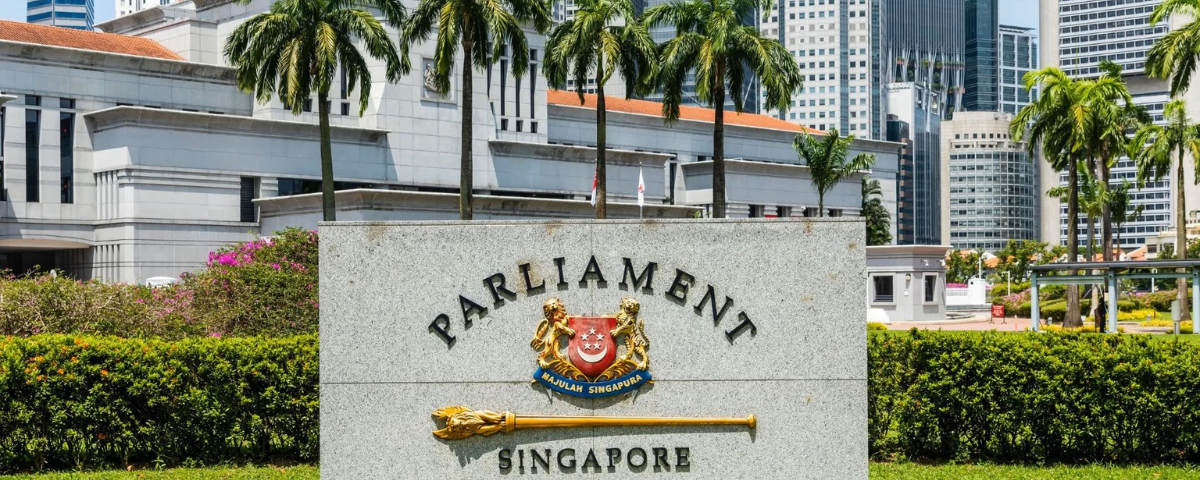
Singapore has made its political position on AI and jobs clear. During parliamentary debates on May 5–6, 2026, lawmakers debated and unanimously supported a motion titled “An AI Transition with No Jobless Growth,” filed by National Trades Union Congress (NTUC) Secretary-General and MP for Jalan Kayu SMC Ng Chee Meng.
The motion comes amid a broader national push to prepare Singapore for AI-driven economic change. At Budget 2026 on February 12, Prime Minister Lawrence Wong placed AI at the centre of Singapore’s economic strategy by announcing a National AI Council he will chair, national AI missions across four sectors: advanced manufacturing, connectivity and logistics, finance, and healthcare; the Champions of AI enterprise transformation programme; an AI park at one-north; and a 400% tax deduction on up to S$50,000 of qualifying AI expenditure per year applicable for Years of Assessment 2027 and 2028 under the Enterprise Innovation Scheme. For workers, those completing selected SkillsFuture AI courses will receive six months of free access to premium AI tools.
Singapore’s urgency reflects the scale of its exposure. A 2024 International Monetary Fund (IMF) Selected Issues Paper on Singapore’s labor market estimated that about 77% of the country’s employed workers are highly exposed to AI, well above the 60% rate the IMF estimates for advanced economies on average, and far higher than 40% for emerging markets and 26% for low-income countries. IMF working paper on AI and the future of work in Asia
The paper found women and younger workers disproportionately exposed, owing to their concentration in clerical, sales, and administrative roles where AI complementarity is low. In Parliament, NTUC and labor MPs framed the at-risk groups more broadly to include Professionals, Managers, and Executives (PMEs), fresh graduates, senior workers, gig and platform workers, and caregivers.
Yet the ground reality tempers the alarm. According to a Ministry of Manpower (MOM) report released on April 30, based on a survey of 2,560 firms employing nearly 500,000 workers, 71.5% of firms have yet to adopt AI at all and among those that have, only 3.8% of firms have integrated AI into core business processes.
Early evidence suggests AI is currently complementing rather than displacing labor, with only 6.2% of firms reporting AI-linked headcount reductions. Singapore is, in effect, legislating for a disruption that has not yet fully arrived – a deliberate attempt to get ahead of it.
Tripartism in the AI Era
On April 30, the Ministry of Manpower (MOM), National Trades Union Congress (NTUC), and Singapore National Employers Federation (SNEF) jointly announced the Tripartite Jobs Council – a coordinated body to support enterprise workforce transformation, expand sectoral training, and provide targeted transition support for at-risk workers.
Also Read: Singapore Acts on AI Job Risk, Plans Workforce Council Before Layoffs Arrive
On May 5, Parliament also passed the Skills and Workforce Development Agency (SWDA) Bill.
The legislation sets the framework to merge SkillsFuture Singapore and Workforce Singapore into a single statutory board, the SWDA – consolidating training, career guidance, and job matching under one roof.
SWDA will operate under joint oversight from the Ministry of Manpower and the Ministry of Education, with current Workforce Singapore (WSG) chief Dilys Boey set to serve as its chief executive. The new agency is expected to become operational in third quarter of 2026.
“Not AI instead of workers. But AI that works for workers. Because in Singapore, every worker matters.” – Ng Chee Meng
Ng anchored the motion in Singapore’s tripartite social compact. “It is not labor versus capital, workers against employers, or one group advancing at the expense of the other,” he told the House. “Transformation in the AI era can be win-win, and our tripartite model in the AI era will ensure this.”
Manpower Minister Tan See Leng drew a pointed contrast with other countries, saying AI has become a “tug of war” in many places, with workers and businesses on opposing sides and progress contested. Singapore, he argued, “does not have to go down that road.” Tan See Leng ministerial response on AI transition
Both sides of the House aligned on four priorities: building market intelligence and foresight for an AI-enabled economy; enabling enterprises to transform with AI in ways that benefit workers; helping workers seize new opportunities; and supporting displaced workers to bounce back with dignity and confidence.
The debate also exposed fault lines. Lawmakers pressed for stronger safeguards around retrenchment support and access to AI tools and training, with particular concern for PMEs, fresh graduates, senior workers, gig and platform workers, and caregivers.
Several MPs pushed for public AI funding to be tied directly to job redesign outcomes and wage growth, and not productivity metrics alone. Proposals included raising Jobseeker Support Scheme eligibility thresholds to the PME median income of around S$8,400.
Since February 2026, more than 4,000 workers have enrolled in AI training courses under NTUC’s AI-Ready SG initiative. From May, NTUC members also gained subsidized access to selected AI tools and training support as part of Singapore’s broader workforce transition push.
Under the National AI Impact Programme announced during the Budget debate, the government has set a target to train over 100,000 workers to become AI-bilingual by 2029, starting with the accountancy and legal sectors.
National Test Case for AI Transition
The debate positions Singapore as one of the earliest national-level test cases for how governments may try to politically manage AI-driven labor disruption before it becomes irreversible. Rather than leaving outcomes to market forces or relying solely on regulation, Singapore is betting on its tripartite model – state, unions, and employers acting in concert – to shape how AI is deployed across the workforce.
That model has navigated past disruptions. Whether it can move fast enough this time is a different question. Globally, governments have historically struggled to fully offset technology-driven labor displacement, particularly for mid-career white-collar workers. The same group now considered among the most exposed to generative AI systems.
For now, with 71.5% of firms yet to adopt AI in any meaningful way, Singapore is legislating for a wave that has not yet broken. The real test will come when it does.
Also Read: Singapore Cautions Banks as AI Accelerates Cyberattacks and Exposes Vulnerabilities